

Table of Contents
- Why Activewear That Transitions to Office Actually Works
- Understanding Fabrics That Perform and Look Professional
- Essential Wardrobe Staples for Athleisure for Work
- How to Style Activewear for Work: Practical Techniques
- Dressy Joggers for Work: When and How to Wear Them
- Building a Hybrid Work Wardrobe That Actually Works
- Fabric Care and Durability: Making Your Pieces Last
- Body Type Specific Styling for Activewear That Transitions to Office
Last Updated: August 2, 2026
Why Activewear That Transitions to Office Actually Works
The modern professional faces a genuine problem: gym clothes look sloppy at the office, but traditional business wear restricts movement during workouts. Activewear that transitions to office solves this by combining performance fabrics with polished silhouettes that work in both settings. The shift toward hybrid work has made this essential, you might train at 6 AM, head to the office by 8, then grab dinner without stopping home. What separates pieces that actually transition from those that just look casual is the fabric technology, the cut, the finishing details, and how you layer them.
Understanding Fabrics That Perform and Look Professional
The difference between "athletic" and "office-appropriate" often comes down to weight, finish, and how the material drapes. The right fabric wicks sweat and moves with your body during training, but also holds its shape, resists wrinkles, and looks intentional in a business casual setting.
Moisture-wicking and breathable materials for all-day comfort
Moisture-wicking fabrics pull sweat away from your skin, keeping you dry through lifting and meetings alike. Polyester blends, nylon, and specialized synthetics like Lycra excel at this, but they need to be dense enough to look structured, thin, see-through athletic fabrics won't work in an office. Look for fabrics labeled "four-way stretch" or "two-way stretch." Four-way stretch moves with you in every direction, which matters for golf swings and cardio. Breathability prevents the clammy feeling that makes clothes look wrinkled and feel uncomfortable. Mesh panels, perforations, or open weave structures improve airflow without sacrificing polish. Kritter Komfort uses breathable, stretch-friendly fabrics engineered to keep you cool during high-intensity workouts while maintaining a clean, put-together look throughout the day.
Wrinkle-resistant and stretch fabrics that maintain their shape
Wrinkle-resistant finishes are essential for activewear that transitions to office. When moving from gym to desk, your clothes compress in a gym bag or car seat. Fabrics treated with wrinkle-resistant technology bounce back without requiring an iron. Stretch fabrics with recovery are equally critical, recovery means the fabric returns to its original shape after being stretched. High-quality stretch fabrics maintain their silhouette through hundreds of washes and intense training sessions. The combination of stretch and structure creates the ideal transition piece. Spandex content (typically 5-15%) provides stretch, while the base fabric, usually polyester or nylon, provides structure and durability. Kritter Komfort designs all pieces to be machine-wash friendly, so you can throw them in with regular laundry without special treatment.
Essential Wardrobe Staples for Athleisure for Work
Building a hybrid work wardrobe means choosing pieces that genuinely work in both settings. This isn't about buying activewear and hoping it looks professional, it's about selecting specific pieces with the right cut, color, and finish.
Elevated basics that bridge gym and office
Start with a foundation of elevated basics: fitted leggings, high-waisted joggers, and form-fitting tops in neutral colors. These pieces should feel like premium activewear, not basic gym clothes. The difference is in the details: clean seaming, precisely finished hems, and fabrics with a subtle sheen rather than a plasticky appearance. Fitted leggings with a high waistband work for both training and office wear. They smooth your silhouette, don't show sweat marks, and pair well with structured outerwear. Look for leggings with pockets, a genuine utility feature that separates professional-grade pieces from basic gym wear.
Dressy joggers are a game-changer for professionals who want comfort without sacrificing polish. They feature tailored fits, structured fabrics, and refined details like pintucks or pleats that make them look intentional rather than casual. Fitted t-shirts and form-fitting long sleeves in performance fabrics work as your base layer. Choose cuts that follow your body without clinging too tightly. Avoid oversized silhouettes, they read as purely casual.
Neutral colors, black, navy, charcoal, white, and earth tones, are non-negotiable for a transition wardrobe. Bold colors and patterns read as more casual. If you want personality, choose one statement piece and keep everything else neutral. Kritter Komfort's bold yet understated designs work because they're confident without being loud, allowing you to express personality while maintaining professional polish.
Structured outerwear and layering pieces
Structured outerwear transforms casual activewear into office-appropriate looks. A fitted blazer, structured jacket, or tailored cardigan instantly elevates athleisure pieces. The key is fit: the jacket should skim your body without bunching and hit at your hip or slightly below. Lightweight structured jackets work year-round. A fitted nylon or cotton-blend jacket with a clean silhouette layers perfectly over leggings or joggers. Cardigans and sweater jackets add warmth without bulk, choose fitted styles with clean lines rather than oversized, slouchy cuts.
How to Style Activewear for Work: Practical Techniques
The styling techniques you use determine whether your outfit reads as intentional or accidental. Most people wear activewear pieces but style them like casual clothes, which makes them look like they just came from the gym.
Layering strategies for business casual environments
Layering creates visual interest and signals that your outfit is deliberate. The formula is simple: fitted base + structured layer + polished accessories. Start with a fitted, breathable base layer, a moisture-wicking tank, t-shirt, or long-sleeve in a neutral color. Add a structured mid-layer: a fitted cardigan, blazer, or structured jacket with clean lines that fit well through the shoulders. Finish with accessories that signal intentionality: a simple watch, minimal jewelry, a structured bag, or a scarf. For office environments, avoid anything that looks purely athletic. Skip visible logos, bright neon colors, and pieces with heavy technical finishes.
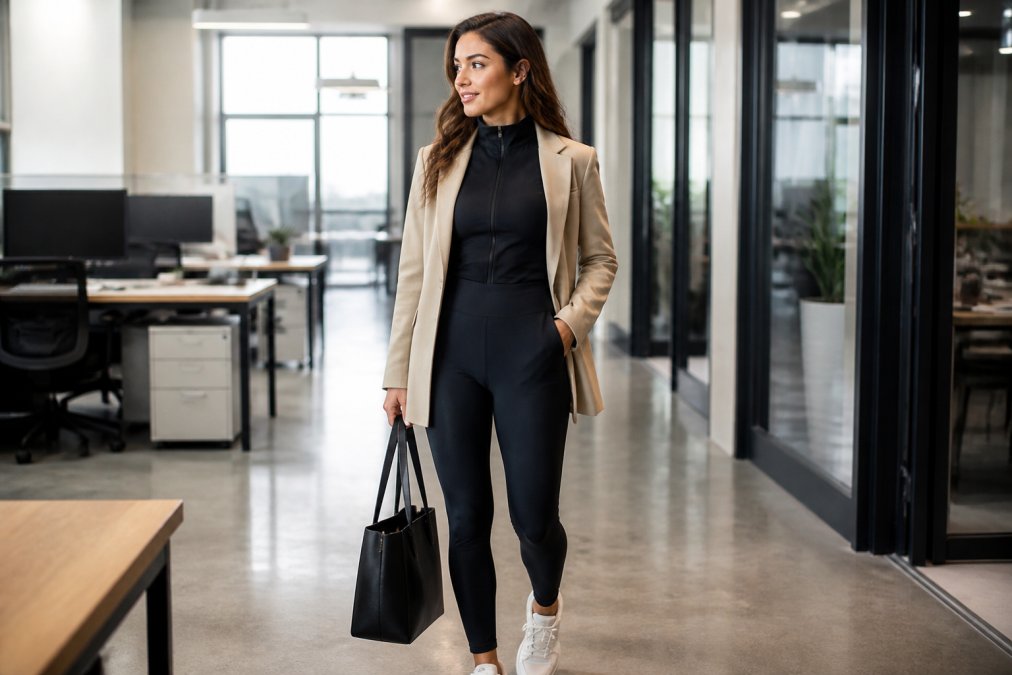
Footwear pairings that elevate athletic silhouettes
Footwear makes or breaks a transition outfit. Avoid pairing nice activewear with athletic sneakers, which signals that the outfit is gym-focused. Minimalist leather sneakers work for business casual environments. Look for clean, simple designs in white, black, or neutral tones without chunky soles or technical detailing. Loafers, slip-ons, and ballet flats pair beautifully with fitted leggings and joggers. Structured boots, ankle boots or knee-high boots in leather, elevate fitted leggings and joggers. For business formal settings, consider keeping a pair of professional shoes at the office and changing shoes when needed.
Dressy Joggers for Work: When and How to Wear Them
Dressy joggers represent a specific category of activewear that transitions beautifully to professional settings. These aren't typical gym joggers, they're tailored, structured pieces that look intentional in business casual environments. Dressy joggers work when they have a tailored fit through the hips and thighs, a structured waistband (not a drawstring), refined details like pintucks or pleats, and a precise taper at the ankle.
In business casual settings, dressy joggers work with a blazer, structured cardigan, or fitted jacket. Pair with fitted tops that define your torso. Oversized or loose tops make joggers look more casual. Avoid pairing with athletic shoes, this combination immediately signals "gym wear" regardless of how tailored the joggers are. Minimalist sneakers, loafers, or boots work best. The key to wearing dressy joggers successfully is making sure every other element of your outfit signals intentionality.
Building a Hybrid Work Wardrobe That Actually Works
A hybrid work wardrobe is built around versatility and quality pieces that genuinely transition between settings. The goal is to maximize the number of complete outfits you can create while minimizing the number of pieces you own.
Capsule pieces that transition seamlessly between settings
A capsule wardrobe approach works perfectly for hybrid professionals. Start with 5-7 neutral base pieces: fitted leggings, joggers, and form-fitting tops in black, navy, charcoal, and white. Add 2-3 structured outerwear pieces: a fitted blazer, a structured cardigan, and a lightweight jacket. Include 1-2 statement pieces that add personality without sacrificing professionalism. Choose 2-3 pairs of shoes: minimalist sneakers, loafers or slip-ons, and boots. Quality matters more than quantity. One pair of well-fitting, durable leggings that you wear three times a week is better than five pairs of cheap leggings that pill and lose their shape.
Maintaining a professional aesthetic without sacrificing comfort
Fit is the most important factor in maintaining a professional aesthetic. Clothes that fit well look expensive and intentional. Take time to find pieces that fit your body precisely. Color choice signals professionalism. Neutral colors, black, navy, charcoal, white, cream, gray, and earth tones, read as professional. Bright neons and bold patterns read as more casual. Finishing details matter. A fitted piece with clean seaming, precise hems, and quality construction looks professional. Accessories complete the look, a simple watch, minimal jewelry, a structured bag, and a scarf signal that you've thought about your appearance.
Fabric Care and Durability: Making Your Pieces Last
High-quality activewear is an investment, and proper care extends its lifespan significantly. Understanding how to care for performance fabrics ensures your pieces maintain their stretch, shape, and appearance through hundreds of washes and intense training sessions.
Machine-wash friendly care that preserves stretch and shape
Wash in cold water using a gentle or delicate cycle. Hot water breaks down elastic fibers and causes colors to fade. Use a mild detergent designed for performance fabrics or a standard gentle detergent. Avoid fabric softeners and bleach, which degrade elastic fibers and reduce breathability. Turn pieces inside out before washing to protect the outer surface from friction and pilling. Avoid the dryer, heat damages elastic fibers and can cause permanent shrinkage. Hang-dry your pieces or lay them flat to dry.
Preventing pilling and wear in high-stress activewear
Pilling is common in activewear, especially in high-friction areas like inner thighs and underarms. Choose fabrics with tighter weaves and higher quality construction. Wash inside out to reduce friction on the outer surface. Avoid washing with items that have rough textures or zippers that can snag your activewear. Rotate your pieces, wearing the same leggings every single day accelerates wear. Rotating between multiple pairs allows each piece to rest and recover, extending the lifespan of all your pieces. Kritter Komfort uses durable stitching specifically designed to withstand intense training, which means high-stress areas maintain their integrity through hundreds of workouts.
Body Type Specific Styling for Activewear That Transitions to Office
Different body types require different styling strategies to look and feel confident while maintaining functionality for training. Broader shoulders look great in fitted pieces that define your shoulders without bunching. Smaller frames benefit from fitted, tailored pieces that don't overwhelm proportions. Pear-shaped bodies look great in fitted leggings and joggers that define your legs without clinging, paired with a fitted top and structured jacket. Apple-shaped bodies benefit from pieces that define without clinging. Hourglass figures benefit from fitted pieces that follow your curves without clinging too tightly. The universal truth across all body types is that fit matters more than size. Kritter Komfort's athletic cuts are true to size, meaning you can confidently order your actual size without worrying about inconsistency.
The professionals who successfully wear activewear that transitions to office share one trait: they've invested in quality pieces and learned to style them intentionally. According to American Athleisure Market Report 2026, the hybrid work trend has driven athleisure adoption in professional settings, with professionals increasingly choosing performance pieces that work across multiple contexts. Kritter Komfort delivers exactly this, breathable, stretch-friendly fabrics with durable stitching and bold yet understated designs that work equally well in the gym and the office. Start with a capsule of neutral basics, add structured outerwear, and choose one or two statement pieces that express your personality. Style intentionally with polished accessories and the right footwear. Your clothes should work as hard as you do, in both settings.
| Strategy | Duration | Application |
|---|---|---|
| Build capsule wardrobe | 2-4 weeks | Choose 5-7 neutral base pieces + 2-3 outerwear pieces |
| Master layering technique | Immediate | Fitted base + structured layer + polished accessories |
| Establish shoe rotation | Ongoing | Minimalist sneakers, loafers, boots for different contexts |
| Implement fabric care routine | Ongoing | Cold water, gentle cycle, hang dry, turn inside out |
| Rotate pieces strategically | Ongoing | Wear different pieces on different days to extend lifespan |
Frequently Asked Questions
Can activewear that transitions to office really work in a professional dress code environment?
Yes, when chosen strategically. The key is selecting pieces with a professional aesthetic: structured silhouettes, neutral or understated colors, and high-quality fabrics that read as intentional rather than purely athletic. Layering with tailored jackets or cardigans, pairing with professional footwear, and avoiding logos or overly athletic branding all help activewear meet office standards. Many workplaces now accept smart-casual or business casual dress codes that explicitly allow well-styled athleisure pieces.
How do I know if activewear will hold up to daily wear between the gym and office without pilling or losing its shape?
Look for pieces made with performance fabrics that specifically mention durability testing. High-quality stretch fabrics with reinforced seams resist pilling better than lower-density materials. Machine-wash friendly construction matters too, fabrics designed to withstand regular machine washing typically use durable stitching and wrinkle-resistant treatments. Before committing to a full wardrobe, test one piece through multiple gym sessions and office days, then machine wash it according to care instructions to verify it maintains its shape and feel.
What makes a dressy jogger actually work for the office, and how do I style it?
Dressy joggers designed for professional settings use tailored silhouettes, premium fabrics with a matte finish, and minimal athletic branding. Pair them with a structured blazer, crisp button-up, or fitted sweater to elevate the look. Choose footwear carefully: loafers, pointed flats, or minimalist sneakers work better than chunky athletic shoes. Avoid joggers with visible drawstrings, excessive pockets, or shiny performance finishes, which read as purely athletic rather than hybrid wear.
How do I build a hybrid work wardrobe with activewear pieces that won't require a complete closet overhaul?
Start with a capsule approach: invest in 3-4 foundational pieces like neutral leggings with a polished finish, a structured athletic jacket, and breathable tops in professional colors. Layer these with items you already own, blazers, cardigans, and professional bottoms. Focus on versatility: pieces that work for morning workouts and office hours reduce the number of items you need. Choose colors and styles that complement your existing wardrobe rather than requiring new accessories or shoes.
This article was written using GrandRanker