

Table of Contents
- Why Breathable Gym Clothes Matter for Cardio
- Moisture-Wicking Activewear: The Foundation of Breathable Cardio Gear
- Best Workout Fabrics for Sweat: Polyester, Spandex, and Beyond
- Ventilation and Mesh Paneling in Breathable Cardio Gear
- Gym Clothes for Hot Weather: Temperature Regulation and Performance
- Performance Activewear for HIIT and High-Intensity Cardio
- Choosing Between Breathable Cardio Tops and Bottoms
- Care and Maintenance: Preserving Breathability and Performance
Last Updated: July 22, 2026
Why Breathable Gym Clothes Matter for Cardio
During high-intensity cardio, your body generates significant heat and sweat. Without breathable gym clothes, moisture gets trapped against your skin, restricting movement and forcing your cardiovascular system to work harder just to cool you down. This wastes energy that could go toward your actual workout. Poor moisture management also leads to chafing, bacterial growth, and reduced thermoregulation. The right fabric choice makes the difference between feeling restricted and moving freely.
How Breathability Affects Your Cardio Performance
Breathability determines how efficiently your body sheds heat and moisture. When fabric allows air to circulate and moisture to evaporate quickly, your skin stays cooler and drier, reducing physiological stress. Your heart doesn't have to dedicate as much effort to thermoregulation, leaving more capacity for cardio work.
A runner in non-breathable cotton feels heavy and sluggish by mile two. The same runner in breathable synthetic fabric feels light and responsive, with lower perceived effort and better sustained performance.
The Science of Sweat Management During High-Intensity Training
Sweat cools you through evaporation. When fabric traps moisture against your skin, evaporation can't happen efficiently, so your body keeps sweating to try to cool down, leading to excessive fluid loss and earlier fatigue.
High-intensity interval training pushes this system to its limit. Breathable fabrics solve this by creating pathways for moisture to move away from your skin and air to reach wet areas. Compression fabrics with strategic mesh panels outperform solid materials because mesh creates channels for airflow while compression manages muscle movement and blood flow.
Moisture-Wicking Activewear: The Foundation of Breathable Cardio Gear
Moisture-wicking combines fabric construction, fiber type, and weave pattern to pull sweat away from your skin and move it toward the outer surface where it can evaporate.
How Moisture-Wicking Fabrics Work
Moisture-wicking fabrics use hydrophobic (water-repelling) synthetic fibers that push moisture outward rather than absorbing it. The fabric's weave is engineered with capillary action in mind, tiny channels that guide liquid away from your skin through gravity, surface tension, and fabric structure.
Sweat is drawn into the fabric by capillary action, moves through toward the outer surface, and spreads across a larger area. This spreading increases surface area for evaporation, speeding the drying process. Well-designed moisture-wicking fabric moves sweat away from your skin 3-5 times faster than absorbent materials like cotton.
Synthetic Fibers vs. Natural Blends for Cardio
Synthetic fibers dominate breathable gym clothes because they're inherently hydrophobic and engineered for specific performance. Natural fibers like cotton are hydrophilic, they absorb water, making them poor for sweat management during intense exercise.
Polyester is the most common synthetic in performance activewear. It's lightweight, durable, and naturally repels moisture. Nylon offers similar benefits with slightly better elasticity. Spandex adds stretch without compromising breathability when blended in the right proportions.
Cotton-poly blends compromise moisture management because cotton holds onto sweat. A 100% polyester or polyester-spandex blend always outperforms cotton-poly blends for sweat management.
Best Workout Fabrics for Sweat: Polyester, Spandex, and Beyond
Not all synthetic fabrics perform equally. Fiber type, weave pattern, and blend ratio all affect sweat management during cardio.
Polyester and Nylon: The Cardio Workhorses
Polyester dominates cardio activewear because it's affordable, durable, and performs consistently through 50+ wash cycles. Most performance polyester is microfiber, much thinner fibers that increase surface area and improve moisture-wicking efficiency.
Nylon offers similar performance with slightly better elasticity and softer feel, but it's typically more expensive without meaningful performance advantages for cardio. Weave pattern matters as much as fiber type. A tight weave with strategic mesh panels balances breathability with support.
Spandex Blends for Stretch and Recovery
Spandex is always blended with other fibers, typically 85-95% polyester with 5-15% spandex. This ratio provides stretch without sacrificing breathability or durability.
Spandex adds stretch and gentle compression that improves blood flow and reduces muscle oscillation during high-impact activities. However, too much spandex (above 20%) reduces breathability and increases UV degradation. The ideal ratio for breathable cardio clothes is 10-15% spandex.
Post-Wash Performance: Why Durability Matters
Breathability degrades with each wash if the fabric isn't treated properly. Detergent residue, fabric softener, and heat reduce hydrophobic properties. After 10-15 careless washes, high-performance fabric can perform like cotton.
Quality breathable gym clothes should maintain 80-90% of original performance after 25+ wash cycles. If your gear feels noticeably less breathable after 10 washes, it was either low-quality or you're using the wrong wash method.
Ventilation and Mesh Paneling in Breathable Cardio Gear
Strategic ventilation separates good breathable gym clothes from great ones. Mesh paneling is engineered placement of lower-density fabric in areas where your body generates the most heat and sweat.
Strategic Mesh Placement for Maximum Airflow
Your back generates significant heat between the shoulder blades. Your sides along the ribcage are another major heat-generation zone. The underarm area has the highest concentration of sweat glands.
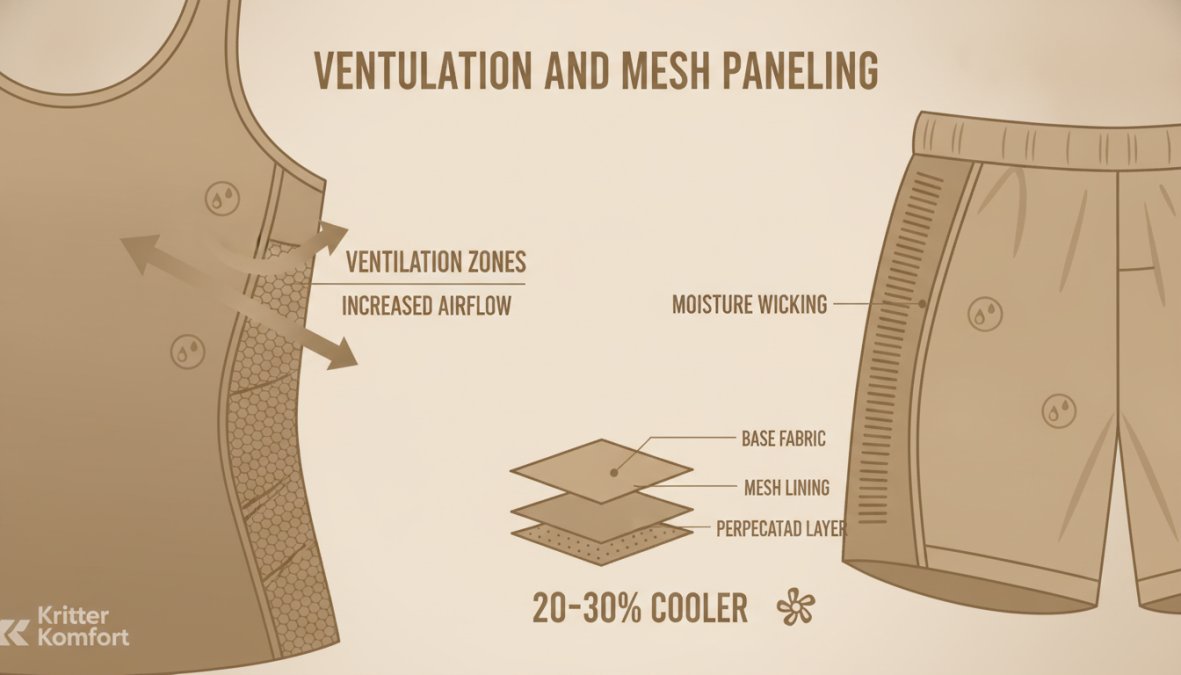
Quality breathable cardio clothes place mesh panels in all three zones. A mesh panel on your back allows air to circulate directly against intense heat buildup. Underarm mesh panels let sweat evaporate from the area producing the most moisture.
The mesh is typically a looser weave of the same synthetic fiber, maintaining hydrophobic properties while increasing airflow.
Seamless Construction and Ergonomic Design
Seams are pressure points where friction and chafing occur. Seamless construction eliminates these points by bonding fabric layers rather than stitching them, especially important in high-friction areas like underarms and shoulders.
Ergonomic design means the garment's cut accommodates your natural range of motion without bunching or creating dead zones where sweat gets trapped. A well-designed breathable top won't shift during jumping jacks or high knees. The fabric should move with you, not against you.
Gym Clothes for Hot Weather: Temperature Regulation and Performance
Breathable gym clothes become critical in hot environments. Your body's cooling system is already working overtime, so fabric choice directly impacts how long you can sustain high intensity before overheating.
Lightweight Fabrics That Don't Sacrifice Durability
Lightweight doesn't mean flimsy. Most performance activewear ranges from 120-180 gsm (grams per square meter). The sweet spot for hot-weather cardio is 130-150 gsm, light enough to minimize heat retention while maintaining structural integrity and stretch.
Lightweight fabrics also dry faster, which matters if you're doing multiple workouts per day. A lightweight breathable fabric dries in 15-20 minutes versus 30-45 minutes for heavier fabric.
Quick-Dry Features and Heat Dissipation Technology
Quick-dry features combine a tight weave on the inner surface (for compression and support) with a looser weave on the outer surface (for maximum evaporation). Some manufacturers add topical treatments that enhance hydrophobic properties and speed evaporation, though these degrade with washing.
Light colors reflect more solar radiation than dark colors, which is why hot-weather cardio clothes are often white or light gray. But fabric technology matters too, a light-colored breathable fabric with good airflow retains less heat than a light-colored dense fabric.
Performance Activewear for HIIT and High-Intensity Cardio
High-intensity interval training pushes both your body and gear to extremes. Heart rate spikes rapidly, core temperature climbs fast, and sweat production can exceed 1-2 liters per hour.
Compression and Flexibility for Explosive Movements
Compression stabilizes muscles during explosive movements like burpees and jump squats, reducing muscle oscillation and fatigue. It also improves blood flow and oxygen delivery.
The best HIIT gear uses graduated compression, tighter in some zones (core and thighs) and looser in others (underarms and back). This allows maximum support where needed while maintaining airflow where you need cooling.
Quality HIIT gear uses spandex-rich blends (12-15% spandex) and strategic panel construction to provide compression without sacrificing mobility.
Fabric Innovation and Odor-Resistant Properties
Odor comes from bacterial growth on sweat residue. Synthetic fabrics resist odor better than natural fibers because they don't absorb and hold moisture. Some manufacturers add antimicrobial treatments, though these degrade with washing.
The real innovation is in weave and ventilation engineering. A fabric that dries completely within hours is far less likely to develop odor than one that stays damp for half a day. Mesh paneling and strategic ventilation prevent the conditions that lead to odor.
Choosing Between Breathable Cardio Tops and Bottoms
Tops and bottoms have different demands. Your top needs maximum breathability and ventilation. Your bottoms need breathability plus durability and support.
What to Look for in Breathable Tops
A quality breathable cardio top prioritizes ventilation. Look for mesh panels on the back, sides, and underarms. The main fabric should be lightweight synthetic (130-150 gsm) with a tight weave that provides structure without trapping heat.
Sleeve construction matters. Sleeveless tops offer maximum airflow but no shoulder support. Short sleeves with mesh panels balance coverage and ventilation. Choose based on your cardio type.
Neckline design affects airflow around your upper chest and shoulders. A crew neck is more restrictive than a v-neck or open back design. For intense cardio, an open back or racerback design maximizes ventilation in the upper back.
Breathable Bottom Considerations for Range of Motion
Cardio bottoms need to support explosive movements without restricting range of motion. Look for high-waist designs that stay in place during jumping and running. The waistband should distribute pressure evenly and prevent digging into your abdomen.
Mesh paneling in bottoms is typically placed along the outer and inner thigh (where friction is highest) rather than across the entire surface. Strategic placement is more effective than maximum coverage.
Fabric weight for bottoms should be slightly heavier than tops (150-170 gsm) to provide durability and support. Spandex content should be 12-15% to balance stretch and compression.
Care and Maintenance: Preserving Breathability and Performance
How you care for breathable gym clothes determines how long they maintain performance. Improper washing degrades breathability faster than actual wear.
Machine-Wash Best Practices
Use cold water (60°F or below) to prevent heat damage to spandex and synthetic fibers. Choose a detergent formulated for technical fabrics or sports gear. Standard detergents contain surfactants that reduce hydrophobic properties.
Avoid fabric softener entirely, it coats fibers with waxy residue that blocks moisture-wicking channels. Skip the dryer; heat damages spandex and synthetic fibers. Air-dry your gear to maintain longevity.
Wash inside-out to reduce abrasion on the outer surface. Use a gentle or delicate cycle to minimize mechanical stress on seams and fabric structure.
Avoiding Common Damage and Performance Loss
The most common damage comes from heat (dryer use, hot water) and chemical buildup (fabric softener, standard detergent). Both reduce breathability and stretch.
Chlorine and salt water are also damaging. If you're doing cardio in a pool or near the ocean, rinse your gear thoroughly in fresh water immediately after your workout.
Keep your gear in a cool, dry place away from direct sunlight. UV exposure degrades synthetic fibers and reduces hydrophobic treatment effectiveness. Most quality breathable gym clothes last 1-2 years with proper care and regular use (3-4 times per week).
| Care Method | Temperature | Impact on Breathability |
|---|---|---|
| Machine wash + air dry | Cold water (60°F) | Minimal; maintains performance |
| Machine wash + dryer | Hot/warm | Severe; degrades within 5-10 washes |
| Hot water + fabric softener | Hot (above 100°F) | Severe; reduces immediately |
| Hand wash + air dry | Cold water | Minimal; best for longevity |
| Cold water + technical detergent | Cold (60°F) | Minimal; optimal for performance |
Choosing the right breathable gym clothes for cardio enables your body's natural cooling system to work efficiently during intense effort. The difference shows up within the first 10 minutes of a hard workout, your core temperature stays lower, sweat evaporates faster, and you can sustain higher intensity longer. Combine lightweight synthetic fabrics, strategic mesh paneling, seamless construction, and proper care to deliver consistent performance whether you're doing HIIT, running, or any other cardio activity.
Frequently Asked Questions
What are the best fabrics for breathable gym clothes for cardio?
Polyester, nylon, and spandex blends are top choices for breathable cardio gear. Polyester excels at moisture-wicking and quick-dry properties, while spandex (typically 5-20% of the blend) provides stretch and recovery. Look for performance activewear that combines these synthetic fibers with mesh paneling to maximize airflow and heat dissipation during high-intensity workouts.
Why is breathability so important during cardio workouts?
Breathability directly impacts sweat management and temperature regulation. During intense cardio, your body generates significant heat and moisture. Breathable gym clothes with moisture-wicking technology pull sweat away from your skin, allowing it to evaporate quickly. This prevents the clammy, uncomfortable feeling and helps maintain core body temperature, which improves endurance and comfort during HIIT and sustained cardio sessions.
How do I maintain breathability in gym clothes after washing?
Machine-wash your breathable activewear in cold water with mild detergent and avoid fabric softeners, which can clog moisture-wicking fibers. Dry on low heat or air-dry to preserve the fabric's elastic properties and sweat-management capabilities. Post-wash performance degradation is common with improper care, so proper maintenance ensures your gear retains its quick-dry and ventilation features through many workouts.
Should I prioritize breathable tops or bottoms for cardio?
Both matter, but focus on breathable tops first, they're in direct contact with your torso where you sweat most during cardio. Look for mesh panels, seamless construction, and lightweight synthetic fabrics. For bottoms, prioritize flexibility and ergonomic design that won't bunch during running or jumping. Many athletes find that a breathable top paired with quality bottoms featuring adequate ventilation delivers optimal performance during high-intensity training.
This article was written using GrandRanker