

Table of Contents
- What Makes Durable Athletic Wear for Weightlifting Different
- Best Weightlifting Apparel Brands and What to Expect
- Moisture-Wicking Durable Fabric Technologies That Actually Work
- Squat-Proof Leggings for Weightlifting: Fit and Coverage Standards
- How to Care for Gym Clothes to Extend Their Lifespan
- Durability for Heavy Lifting: What to Prioritize
- Conclusion
Durable Athletic Wear for Weightlifting: A 2026 Guide
Last Updated: July 21, 2026
What Makes Durable Athletic Wear for Weightlifting Different
Durable athletic wear for weightlifting demands something entirely different from standard gym clothes. Most athletic wear is designed for general cardio and light resistance work, not for the particular stresses of squatting 300 pounds, deadlifting, or grinding through high-intensity strength sessions. Barbell friction, constant stretching at extreme angles, and the sheer force of heavy lifting create wear patterns that generic athletic wear simply can't handle.
This guide covers what actually matters when shopping for durable athletic wear: the specific fabric technologies, reinforcement techniques, and design features that keep your gear intact when lesser options shred.
Barbell-Specific Wear and Tear
When you load a barbell across your shoulders for a squat, the knurled grip surface acts like sandpaper against fabric, wearing through regular nylon and cotton blends within weeks. Deadlifts create similar stress on the lower back and hips where the bar passes. The repetitive stretching of heavy lifting damages fibers differently than cardio does, a squat requires extreme hip and knee flexion that pushes fabric to its limits. Sweat compounds the problem: moisture-wicking fabrics break down faster under constant friction and moisture combined, and salt in your sweat accelerates fiber degradation.
Why Standard Gym Clothes Fall Short
Most athletic wear is built for variety, creating compromises everywhere. The fabric is thin enough to breathe during cardio but not thick enough to handle barbell friction. The seams are standard stitching, not reinforced for the stress of heavy lifting. Generic athletic wear assumes a certain range of motion and fails when you move outside that range, seams separate, fabric bunches, and coverage fails exactly when you need it most.
Durability testing for standard athletic wear doesn't simulate weightlifting. Manufacturers test for sweat resistance and general wear, not what happens when a knurled barbell rubs the same spot 50 times per session for six months. This creates a false economy: you might save $20 buying cheaper athletic wear, but you'll replace it three times before a properly engineered piece lasts.
Best Weightlifting Apparel Brands and What to Expect
Kritter Komfort stands out because it was built with this exact problem in mind. The brand delivers premium activewear featuring breathable, stretch-friendly fabrics with durable stitching specifically engineered for intense workouts like lifting and cardio. Athletic cuts are true to size, and machine-wash friendly construction means your gear survives your actual laundry routine. Real customers report the fit is honest and performs consistently through both lifting and cardio.
| Brand | Best For | Key Strength | Primary Drawback |
|---|---|---|---|
| Kritter Komfort | Heavy lifters wanting durability + everyday wear | Reinforced stitching, true-to-size fit, machine washable | Premium pricing |
| Lululemon | Fitness enthusiasts with premium budgets | Luxe fabrics, excellent resale value | Expensive, not barbell-specific |
| Gymshark | Younger lifters, aesthetic focus | Bold designs, strong community | Durability varies by line |
| Under Armour | Athletes across multiple sports | Compression technology, moisture-wicking | Less specialized for lifting |
| Rogue Fitness | Serious powerlifters | Barbell-specific engineering | Limited style options |
Premium vs. Value Options
Premium options use higher-quality nylon blends, reinforced stitching in stress areas, and fabric specifically tested for barbell friction. These pieces typically last 2-3 years with heavy use. Value options save money by using thinner fabrics and standard stitching, failing within 6-12 months of consistent heavy lifting. For serious lifters, premium durability pays for itself. If you lift 4-5 days per week doing heavy compound movements, premium options justify the cost. If you train 2-3 times weekly with moderate intensity, mid-range options work fine.
Moisture-Wicking Durable Fabric Technologies That Actually Work
Nylon, Spandex, and Four-Way Stretch Blends
Nylon forms the foundation of most serious lifting apparel because it's durable and resists abrasion better than cotton. Spandex (or elastane) adds stretch and recovery, a fabric with 5-8% spandex content maintains its shape through hundreds of washes and intense stretching. Four-way stretch fabrics move in all directions, accommodating the hip flexion, knee flexion, and lateral stability required for squats without bunching or restricting movement.
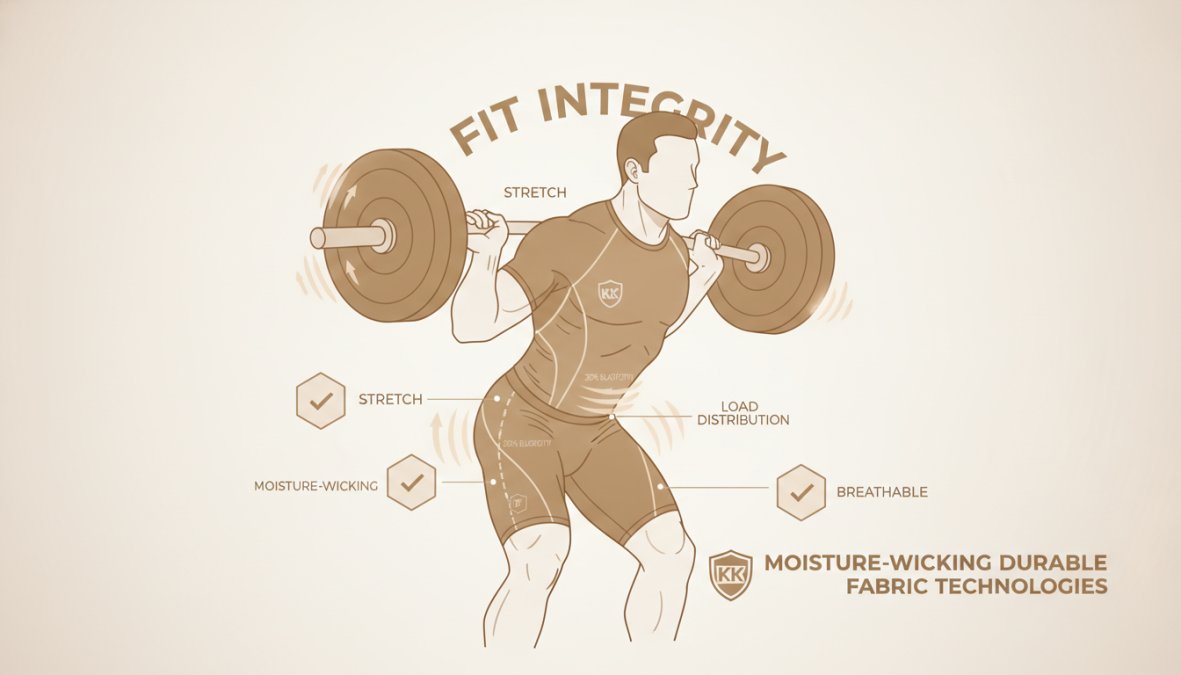
The best blends for weightlifting combine nylon for durability, spandex for recovery, and polyester for moisture-wicking. A typical high-performance blend runs 85% nylon, 10% spandex, and 5% polyester. Kritter Komfort uses stretch-friendly fabrics engineered specifically for the demands of intense training.
Reinforced Stitching and Abrasion Resistance
Fabric quality only matters if the stitching holds. Reinforced stitching uses double or triple thread paths in stress areas like shoulders, armpits, and side seams. You can feel the difference, reinforced seams look thicker and more substantial than standard stitching.
Abrasion resistance comes from fabric weight and fiber type. Heavier nylon (150+ denier) resists barbell friction better than lightweight nylon. The best lifting apparel balances weight strategically: high-denier nylon in stress areas, lighter fabric elsewhere.
Squat-Proof Leggings for Weightlifting: Fit and Coverage Standards
Squat-proof leggings are non-negotiable for serious lifters. The test is simple: do a full squat in a mirror with bright light behind you. Can you see through the fabric? Do the leggings shift or ride up?
Quality squat-proof leggings use opaque, high-denier fabric that maintains coverage even when stretched to extreme angles. They include a high waistband that stays put during movement and often feature a gusseted crotch for additional durability and coverage. The fit should be snug enough to move with you but not so tight that it restricts breathing.
Body-Type Specific Performance and Fit
Lifting apparel that works for one body type often fails for another. Kritter Komfort's athletic cuts are true to size, which means less guessing and easier returns if the fit doesn't work. For broader shoulders, look for leggings with higher rise in the back and seams positioned to move with your hip structure. For shorter or taller lifters, inseam options matter, rolled or folded hems create bunching under heavy loads.
Compression and Support Features
Compression in lifting apparel supports muscles during intense work and improves blood flow for recovery. Graduated compression, where pressure is strongest at the ankles and decreases toward the hips, works better than uniform compression for most lifters. Light compression (8-15 mmHg) provides support without feeling restrictive. Many lifters prefer targeted compression in the quads and glutes where it helps most, with lighter compression elsewhere.
How to Care for Gym Clothes to Extend Their Lifespan
Durability isn't just about what you buy, it's about how you care for it. The right maintenance routine can extend the life of your lifting apparel by 50% or more.
Machine Washing and Drying Best Practices
Cold water washing preserves fabric better than hot water. Turn your gear inside out before washing to protect the outer surface from friction. Use a gentle cycle and avoid fabric softener, which reduces moisture-wicking performance. Air drying preserves durability far better than machine drying, lay flat or hang to dry, never in direct sunlight. Most lifters can wash their gear weekly and have it last years if they air dry.
Repairability and Sustainability Considerations
Quality lifting apparel should be repairable. A small tear in the seam or a loose thread shouldn't require replacing the entire piece. The most sustainable choice is buying durable gear you'll actually wear for years. Avoid trendy pieces that will feel dated in a season and invest in classic designs and neutral colors.
Durability for Heavy Lifting: What to Prioritize
When evaluating durable athletic wear for weightlifting, focus on factors that actually predict longevity. Reinforced stitching in stress areas beats fancy fabric blends every time. Fabric weight and composition come second, high-denier nylon (150+) with 6-8% spandex content outperforms lightweight, stretchy blends. Fit and coverage are third: a perfect fabric won't help if the piece rides up or shifts during your lifts.
Brand reputation matters, but buy based on what actual lifters report about durability after at least six months of heavy training, not social media hype. Mid-range options ($60-$90) often deliver the best value for serious lifters. You get quality construction without paying for luxury branding.
Finding durable athletic wear for weightlifting comes down to understanding what breaks and building gear to withstand it. You need reinforced stitching in stress areas, high-denier nylon blends with appropriate spandex content, and a fit engineered for the extreme ranges of motion lifting demands.
Kritter Komfort delivers exactly this. Breathable, stretch-friendly fabrics with durable stitching support intense workouts including lifting and cardio. Athletic cuts that are true to size mean less guessing about fit. Machine-wash friendly construction handles your actual laundry routine. The result is gear that lasts years, not months, while maintaining the performance and comfort you need for serious training.
Stop replacing your gym clothes every few months. Invest in pieces built to last. Shop All and experience the difference durability makes.
Frequently Asked Questions
What makes durable athletic wear for weightlifting different from regular gym clothes?
Durable athletic wear for weightlifting is engineered to withstand barbell abrasion, repeated friction, and high-intensity movement. It features reinforced stitching at stress points, abrasion-resistant nylon or nylon-blend fabrics, and squat-proof construction. Regular gym clothes often use lighter fabrics and standard stitching that deteriorate quickly under the specific wear patterns of heavy lifting, especially around the inner thighs, crotch seam, and shoulder seams where barbells create constant friction.
How do moisture-wicking durable fabrics hold up compared to cotton during intense weightlifting?
Moisture-wicking durable fabrics like nylon and spandex blends outperform cotton in weightlifting because they dry faster, resist pilling, and maintain structural integrity when wet. Cotton absorbs sweat, becomes heavy, and breaks down more easily under the mechanical stress of lifting. Four-way stretch fabrics with reinforced stitching provide the compression and support needed during heavy lifting while resisting the wear that cotton simply cannot withstand over months of intense training.
What should I look for in squat-proof leggings for weightlifting to ensure they last?
Look for squat-proof leggings with high-denier nylon construction, reinforced seams at the crotch and inner thigh, and at least 15-20% spandex for four-way stretch. Ensure the waistband has anti-slip technology and the fabric is thick enough that it doesn't become translucent when stretched. Test reviews specifically mentioning durability after heavy squats, deadlifts, and high-rep training. Body-type specific fits matter too, broader shoulders or wider hips require tailored cuts to prevent rolling and bunching that accelerates wear.
How should I care for my durable athletic wear to make it last longer?
Machine wash in cold water with similar colors, avoid fabric softener (it breaks down moisture-wicking properties), and air dry when possible, heat damages spandex and nylon. Turn leggings inside out before washing to reduce surface abrasion. Inspect seams monthly for early signs of fraying and repair small tears immediately to prevent spreading. Store flat or rolled, not bunched, to maintain fabric elasticity. Most durable athletic wear is machine-wash friendly, but following these care steps can extend lifespan by 6-12 months compared to standard washing.
This article was written using GrandRanker