

Table of Contents
- What Squat Proof Actually Means (And Why Most Leggings Fail)
- Legging Fabric Types Explained: Which Materials Pass the Test
- How to Test Leggings for Opacity Before You Buy
- The Stretch-to-Failure Threshold: What Happens When Fabric Hits Its Limit
- Best Squat Proof Leggings for Weightlifting: What to Look For
- Undergarment Color, Wear and Tear, and Other Factors That Affect Coverage
- Frequently Asked Questions
Last Updated: September 16, 2026
What Squat Proof Actually Means (And Why Most Leggings Fail)
Squat proof leggings are leggings whose fabric stays opaque when stretched to the depth of a full squat, hiding skin and undergarments at the moment of maximum tension. Most leggings fail because brands test opacity on a flat swatch, not on a body mid-lunge.
At Kritter Komfort, we build our activewear around a simple rule: coverage that holds under load, not just in a fitting room mirror, which is what makes leggings squat proof explained at the material level. This guide breaks down what makes leggings squat proof explained at the material level, so you can judge fabric quality before you spend money.
The failure point is almost always the same. A legging looks solid standing still, then turns sheer the moment the fabric stretches across the glutes and thighs. That is a construction problem, not a size problem, and it comes down to fiber density, knit construction, and how much the fabric recovers after stretching.
Below, we'll show you exactly how to test a pair before you buy, which fabric blends pass, and the point at which any fabric gives out.
Legging Fabric Types Explained: Which Materials Pass the Test
Legging fabric types explained in one line: nylon-polyester blends with 20% or higher spandex content pass the squat test, while thin cotton and low-spandex knits fail. The blend matters more than the marketing name on the tag.
Nylon-Polyester Blends and Spandex Content
Nylon and polyester are synthetic fibers with high tensile strength and low sheerness when knit densely. Nylon adds softness and stretch recovery; polyester adds durability and moisture-wicking performance. Together they form the base of most quality workout gear.
Spandex content, also listed as elastane, is the stretch engine. Higher elastane content means the fabric returns to shape instead of staying stretched thin. The Federal Trade Commission's textile labeling rules require fiber content to be listed on the label, so you can check the actual percentages rather than trusting a product name.
Why Lightweight Fabrics Fail the Squat Test
Lightweight fabrics fail because less material means fewer fibers per square centimeter. A low GSM (grams per square meter) knit has thinner yarn and more open space between fibers. Stretch that fabric and the gaps widen until light passes through.
Fabric weight is the single most underrated spec. A 240 GSM interlock knit holds coverage far better than a 150 GSM knit, even when both claim four-way stretch.
How to Test Leggings for Opacity Before You Buy
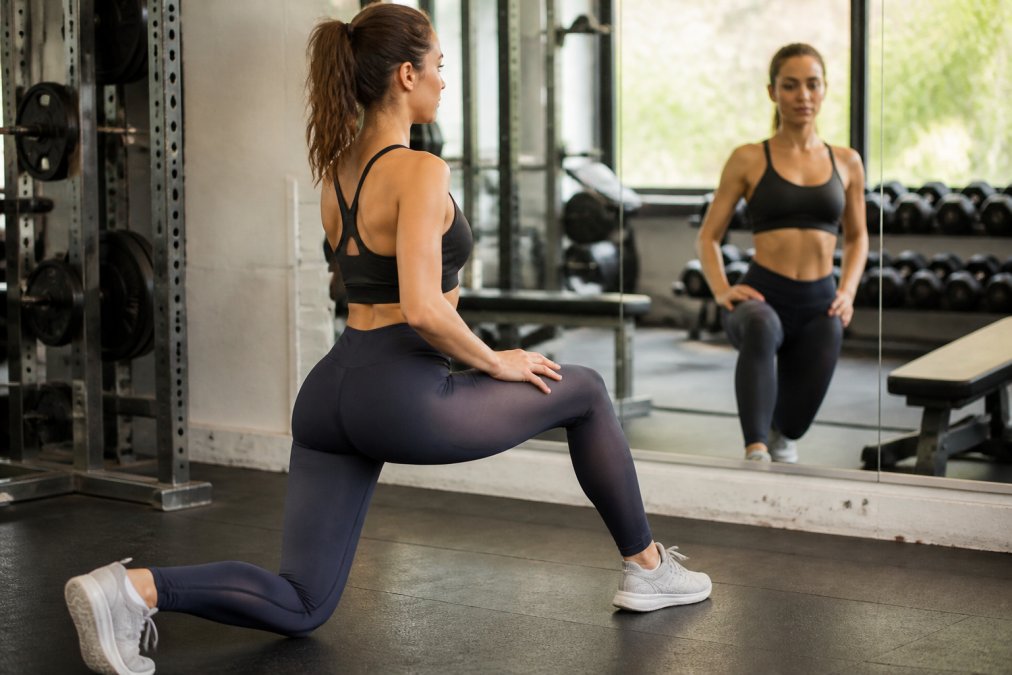
To test leggings for opacity, stretch the fabric over your hand under bright light and check for visible skin tone through the material. If you can see your hand clearly, the fabric will go sheer at the bottom of a squat. That is the quick version. The problem is that most shoppers do this once, in flattering fitting-room light, and call it done. A real test needs a repeatable protocol you can run in a store, at home with a pair you already own, or against a return-window deadline.
The Standardized At-Home Test Protocol
Most practitioners find that three tests, run back to back, catch nearly every pair that will fail in the gym. Run all three, a legging that passes one can still fail another.
1. The Flashlight Test (flat fabric, maximum light). Turn the leggings inside out and hold a single layer taut over the lens of a phone flashlight in a dark room. The fabric should block the beam almost completely. If you see a glowing halo or a visible grid of light through the knit, the fabric is too open to stay opaque under stretch. Repeat on the seat panel and the inner thigh, the two zones that stretch most in a squat.
2. The Mirror-Stretch Test (fabric under tension). Put the leggings on and stand in front of a full-length mirror with a bright overhead light behind you. Drop into the deepest squat you can hold for five seconds. Watch the front thigh, the seat, and the area just below the waistband. Sheerness almost always appears at the point of maximum stretch, not at rest. Then turn sideways and repeat, the side seam is a common failure line because it sits where the knit is joined, not continuous.
3. The Hand-Stretch Test (in-store, no fitting room). If you are shopping in person and cannot try the leggings on, stretch a single layer of fabric over your open palm and pull it taut with both hands. Hold it up to the brightest light in the store, a window or a display spotlight, not the soft bulbs near the mirrors. If you can see the lines of your hand through the fabric at full stretch, it will go sheer on your body.
What Each Test Actually Measures
| Test | What It Reveals | Best For |
|---|---|---|
| Flashlight test | Fiber density and knit openness at rest | Screening fabric before you buy |
| Mirror-stretch test | Opacity at maximum stretch on your body | Confirming fit and coverage together |
| Hand-stretch test | Stretch opacity without a fitting room | In-store decisions under time pressure |
The Online Shopping Checklist
For online shopping, you cannot run the mirror-stretch test before the package arrives, so use this checklist before you commit:
- Check the fabric weight (look for 220 GSM or higher)
- Confirm spandex or elastane content of 20% or more
- Look for an interlock or dense knit, not an open weave
- Read reviews that mention squatting, not just "true to size"
- Buy from a brand with a return policy if opacity fails
The Stretch-to-Failure Threshold: What Happens When Fabric Hits Its Limit
Every fabric has a stretch-to-failure threshold, the point where it can no longer return to its original density and stays thin. Fabrics with low elastane content hit this threshold early and never recover. This is the concept most guides skip entirely, and it is the one that explains why a pair that passed the squat test in month one fails in month six.
How GSM Correlates to Opacity
GSM (grams per square meter) is the single best predictor of whether a knit will stay opaque under stretch, because it measures how much fiber is packed into a given area.
Why Recovery, Not Stretch, Determines Long-Term Opacity
A legging that stretches to 200% but only recovers to 150% will gradually thin out across the seat and knees.
Where Failure Shows Up First
Best Squat Proof Leggings for Weightlifting: What to Look For
| Feature | What to Look For | Why It Matters |
|---|---|---|
| Fabric weight | 220 GSM or higher | More fiber density blocks light |
| Elastane content | 20% or more | Better stretch recovery |
| Knit type | Interlock or dense weave | Smaller gaps between fibers |
| Seam placement | Gusset, flatlock seams | Removes stress points |
| Compression | Moderate, not extreme | Extreme compression thins fabric |
Undergarment Color, Wear and Tear, and Other Factors That Affect Coverage
A few habits protect coverage over time:
- Wash in cold water and skip the dryer
- Avoid fabric softener, which coats fibers and reduces stretch recovery
- Rotate between several pairs to slow individual wear
- Check the seat and inner thigh under bright light every few months
Frequently Asked Questions
What makes leggings squat proof?
Squat proof leggings combine three factors: fabric weight, adequate spandex or elastane content, and dense knit construction like interlock. A nylon-polyester blend with high fiber density prevents light from passing through when the fabric stretches. Thickness alone is not enough; the fabric must also recover after stretching to maintain opacity during high-intensity training.
How can you tell if leggings are squat proof before buying?
Try the lunge test in a fitting room with bright overhead lighting. Stretch the fabric over your thigh and check for sheerness. You can also hold the fabric up to a light source and pull it gently; if you can see your hand clearly through it, it will likely become transparent during squats. Check the GSM rating and spandex content on the label.
Why do some leggings become see-through when stretching?
When fabric stretches, the fibers move apart and the knit openings widen, allowing more light to pass through. Leggings with low spandex content or loose knit construction lose opacity quickly under tension. This is the stretch-to-failure threshold, the point where the fabric can no longer maintain coverage. Fabrics with high fiber density and four-way stretch resist this better than thin, single-knit materials.
Does fabric thickness determine if leggings are squat proof?
Thickness helps but is not the only factor. A fabric can be thick but have a loose knit that still shows through when stretched. Look for high GSM (grams per square meter) combined with high spandex content and dense knit construction. Compression leggings often use thicker fabrics with interlock knits that maintain opacity better than lightweight, moisture-wicking styles designed for hot yoga.