

Table of Contents
- Why Athletic Clothes Bunch and Roll
- Key Features That Stop Athletic Clothes From Bunching
- How to Stop Leggings From Rolling Down
- Workout Shorts That Don't Ride Up
- Seamless Athletic Wear Benefits
- Choosing the Right Fit for Your Body Type
- Best Fabrics for Moisture-Wicking and Shape Retention
- Conclusion
Last Updated: August 14, 2026
Why Athletic Clothes Bunch and Roll
Athletic clothes bunch and roll down for a surprisingly simple reason: the fabric loses contact with your body during movement. When you squat, lunge, or sprint, your muscles expand and contract. If your garment doesn't have enough stretch recovery or grip, it slides down or folds in on itself. The problem compounds if the waistband is too loose, the fabric lacks elasticity, or the construction includes seams that catch and bunch instead of lying flat.
Most activewear fails because it prioritizes softness over performance. Buttery-soft fabrics feel great initially, but they lack the structural integrity to maintain shape through intense movement. A fabric might stretch easily, but if it doesn't recover, snapping back to its original form, it stays bunched. Add a low-rise waistband or inadequate compression, and bunching becomes inevitable during high-impact activities like lifting, running, or dynamic yoga.
The mechanics matter here. When fabric stretches without proper recovery, it stays in the stretched position. Your leggings stretch as you move, then don't shrink back. Over time, this creates permanent deformation. Combine that with a waistband that relies only on elasticity rather than compression or anti-slip technology, and you're fighting gravity and physics with every rep.
Kritter Komfort addresses this by engineering activewear with four-way stretch fabrics that actually recover. The high-rise waistbands include compression and anti-slip technology, so the garment stays locked in place throughout your workout. This isn't accidental, it's the difference between clothes that perform and clothes that just look athletic.
Key Features That Stop Athletic Clothes From Bunching
The best athletic clothes that don't bunch share specific technical features. These aren't marketing buzzwords, they're engineering choices that directly prevent the bunching and rolling that derails your workout.
Four-Way Stretch and Fabric Recovery
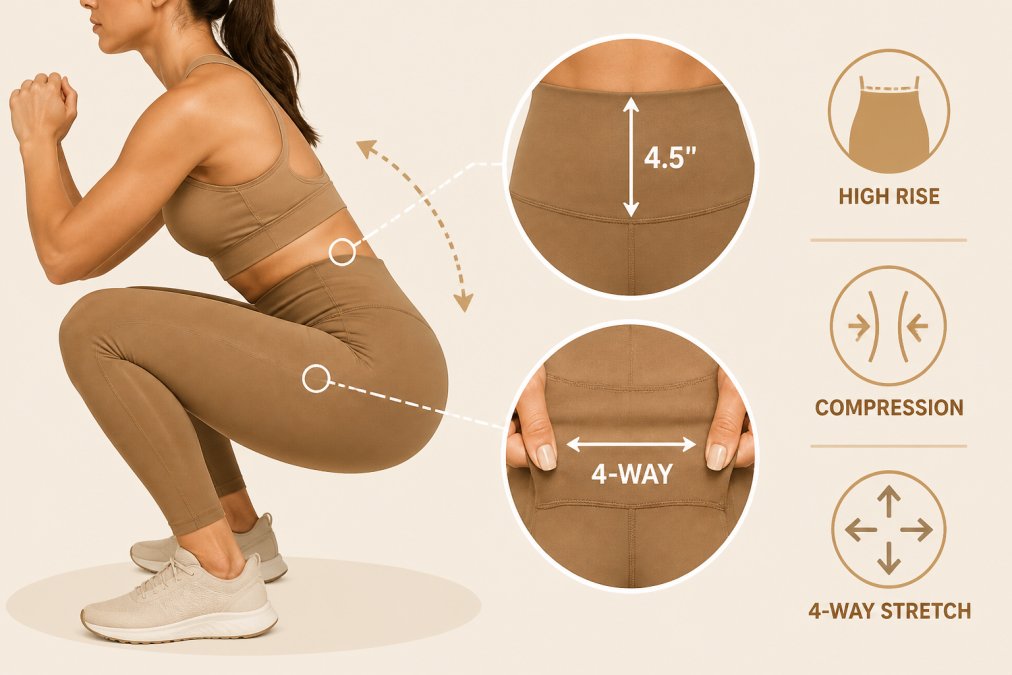
Four-way stretch means the fabric stretches in all directions: horizontally, vertically, and diagonally. But stretch alone isn't enough. The critical factor is fabric recovery, how quickly the material snaps back to its original shape after stretching. A fabric that stretches but doesn't recover will stay bunched.
Look for blends that include Lycra or spandex, which provide elasticity, combined with nylon or polyester for durability and recovery speed. The percentage matters. Fabrics with 15-25% spandex content offer better recovery than lower percentages, especially during high-intensity movement. When you're doing heavy squats or sprinting, the fabric needs to return to shape between reps, not stay in the stretched position.
Synthetic blends generally outperform pure natural fibers in recovery. Natural fibers like cotton or linen stretch minimally and recover slowly. A cotton-spandex blend works better for casual wear, but for athletic performance, polyester-nylon-spandex combinations deliver superior snap-back and durability through repeated intense training.
High-Rise Waistbands and Anti-Slip Technology
High-rise waistbands sit above your natural waist, creating a larger contact area with your body. This alone reduces rolling, but the best designs add compression and anti-slip technology. Compression keeps the waistband snug without digging in. Anti-slip technology, usually silicone grips or textured inner surfaces, prevents the waistband from sliding down during movement.
The waistband construction matters as much as height. Power mesh lining in the waistband adds support without bulk. Some premium options include a drawcord for adjustability, letting you dial in the exact fit for your body. The waistband should feel secure but not restrictive, you shouldn't feel like you're being squeezed, just supported.
Many athletes overlook this detail until they've experienced the difference. A high-rise waistband with anti-slip technology can be the single biggest factor preventing rolling during cardio or high-impact training. If you're doing burpees, running, or intense HIIT, this feature becomes non-negotiable.
Gusset Design and Seamless Construction
A gusset is a triangular or diamond-shaped piece of fabric at the crotch area, designed to move with your body during dynamic motion. It reduces chafing and prevents fabric from bunching in this high-movement zone. The best gussets are anatomically shaped to match your range of motion.
Seamless construction eliminates the ridge lines that catch and bunch. Traditional seams create pressure points where fabric folds. Seamless construction uses knit technology to create garments without traditional seams, or places seams strategically in low-movement areas. The result is a garment that moves with you instead of against you.
Seamless athletic wear feels noticeably different from traditional construction. There's no ridge digging into your skin, no seam catching and bunching. For activities like weightlifting or yoga where you're moving through full ranges of motion, seamless construction is worth the premium price.
How to Stop Leggings From Rolling Down
Leggings roll down because the waistband loses contact with your body. The fix starts with fit. If you're between sizes, size up rather than down. A legging that's too tight in the waist will roll as you move because the elastic is constantly fighting your body. A slightly looser fit with proper compression stays in place.
Next, test the waistband grip before buying. Press your finger against the inner waistband, does it have texture or grip, or is it just smooth fabric? Smooth waistbands slide. Textured or silicone-gripped waistbands stay put. This single feature prevents most rolling issues.
High-rise is non-negotiable for preventing roll-down. Mid-rise or low-rise leggings rely entirely on waistband elasticity. A high-rise waistband that sits above your natural waist has gravity working with you, not against you. Combined with compression and anti-slip technology, high-rise almost completely eliminates rolling.
The fabric itself matters too. Leggings made with moisture-wicking synthetic blends (polyester-nylon-spandex) maintain their shape better than cotton-based options. Cotton absorbs sweat and becomes heavier, which pulls the waistband down. Synthetic fabrics wick moisture away, keeping the garment light and maintaining contact with your body.
Finally, consider the thickness of the fabric. Thin, flimsy leggings roll more easily because they have less structural integrity. A slightly thicker fabric, not heavy, just denser, resists rolling better. Most performance leggings in the 200-300 gsm (grams per square meter) weight range offer the right balance of breathability and durability without rolling.
Workout Shorts That Don't Ride Up
Shorts ride up for the same reason leggings roll: insufficient grip and waistband design. The solution starts with a mid-rise or high-rise waistband with a secure fit. Unlike leggings, shorts need a narrower waistband that won't slip, combined with leg grippers or silicone-lined leg openings.
Leg grippers are small silicone strips sewn into the inner leg opening. They grip your thigh and prevent the shorts from riding up during movement. This is especially important for running, jumping, or any high-impact activity. If you're doing sprints or HIIT workouts, leg grippers are the difference between shorts that stay in place and shorts you're constantly adjusting.
The inseam length affects ride-up too. Shorts that are too long will bunch and ride up more easily. The ideal length is typically 5-7 inches for most body types, though this varies. When you stand normally, the shorts should hit mid-thigh. Too short and they look awkward; too long and they shift during movement.
Compression shorts underneath regular shorts eliminate ride-up entirely. The compression layer stays in place, and the outer shorts stay stable on top of it. This layering approach is common among runners and athletes doing high-intensity training. It's not the most fashionable option, but it's the most reliable for preventing ride-up.
Look for shorts with a gusset and seamless or minimal seam construction. The gusset gives your legs room to move without the shorts bunching. Seamless construction prevents seams from catching and creating fold points where the shorts can ride up.
Seamless Athletic Wear Benefits
Seamless athletic wear eliminates the pressure points and fold lines that traditional seams create. The primary benefit is comfort, no ridges digging into your skin during movement. But the performance benefits run deeper.
Seams create weak points in fabric. Every seam is a place where stress concentrates during intense movement. Seamless garments distribute stress evenly across the entire fabric, extending durability. A seamless legging lasts longer than a traditionally seamed one, even with heavy use.
Seamless construction also improves moisture-wicking. Seams trap sweat and create areas where moisture doesn't evaporate efficiently. Seamless garments allow sweat to wick away evenly across the entire surface. This keeps you drier and more comfortable during long workouts.
The fit of seamless garments is more forgiving. Without seams creating pressure points, seamless clothes feel comfortable across a wider range of body types and sizes. This is why many athletes prefer seamless options even if they cost more upfront.
Seamless athletic wear does have one limitation: visibility. Seamless garments sometimes show more of your body shape than traditionally seamed options. If you prefer more compression or coverage, a seamless garment with thicker fabric or higher opacity solves this. Most modern seamless activewear is designed to be opaque and flattering while maintaining the performance benefits of seamless construction.
Choosing the Right Fit for Your Body Type
Fit varies significantly based on body type. Someone with broader shoulders needs different proportions than someone with a more linear build. The key is understanding how athletic clothes should fit your specific frame.
For broader shoulders and chest: Look for tops with slightly relaxed fit through the shoulders, not tight and pulled. The fabric should have enough stretch to accommodate your range of motion without pulling at the seams. A slightly longer torso length prevents the top from riding up when you lift your arms. Kritter Komfort's athletic cuts are designed to be true to size, which means they accommodate natural variation in body proportions without requiring you to size up or down.
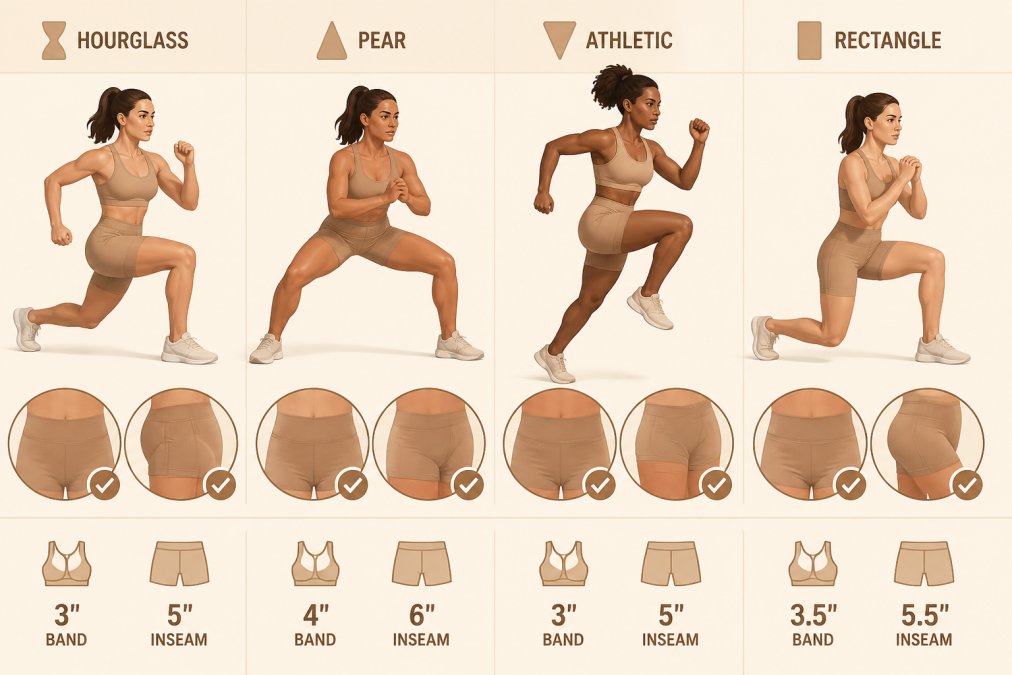
For wider hips or a pear-shaped build: High-rise waistbands are essential. They sit above your widest point, reducing the chance of rolling or gapping. Look for leggings or shorts with a slightly wider waistband that won't dig in. The fabric should have good compression through the hip and thigh without being so tight it restricts movement.
For petite frames: Shorter inseams and cropped lengths work better. Standard legging lengths often bunch at the ankles on smaller frames. Petite-specific cuts or cropped options prevent excess fabric that bunches and rolls. The waistband should still be high-rise to prevent rolling, but proportionally it should sit at your natural waist rather than significantly above it.
For taller athletes: Standard legging lengths often come up short. Look for extended or tall-length options. The waistband should still be high-rise, but the overall length should reach your ankles without bunching. Shorts should have a longer inseam to prevent them from riding up excessively during movement.
For athletic or linear builds: Compression fabrics work well because they follow your body shape closely without excess fabric to bunch. Four-way stretch is important because you likely move through full ranges of motion in training. Seamless construction prevents the seams from creating visible pressure points against your defined musculature.
The best approach is to test fit before committing. Most quality activewear brands, including Kritter Komfort, offer straightforward return policies. Buy the size you think fits best, try it through a full workout, and return if it doesn't perform as expected. Fit is personal, what works for one body type might not work for another.
Best Fabrics for Moisture-Wicking and Shape Retention
The best athletic fabrics for preventing bunching combine moisture-wicking performance with shape retention. Moisture-wicking keeps you dry; shape retention keeps the garment from deforming.
Polyester-nylon-spandex blends are the industry standard for good reason. Polyester wicks moisture efficiently and dries quickly. Nylon adds durability and abrasion resistance. Spandex provides stretch and elasticity. The ratio matters: typically 75-82% polyester, 12-18% nylon, and 5-8% spandex creates an optimal balance. This blend resists pilling, maintains shape through hundreds of wash cycles, and recovers quickly after stretching.
Recycled polyester performs identically to virgin polyester while reducing environmental impact. If sustainability matters to you, look for activewear made with recycled polyester. The performance characteristics are the same, moisture-wicking, durability, and shape retention.
Natural fiber blends like merino wool-nylon-spandex offer excellent moisture-wicking and temperature regulation, but they're less common in activewear because they cost more and require more careful washing. Merino wool is naturally antimicrobial, so garments stay fresher longer. However, the shape retention isn't quite as good as synthetic blends, and the fabric is more delicate.
Avoid 100% cotton or high-cotton blends for intense training. Cotton absorbs moisture instead of wicking it, becomes heavy when wet, and doesn't recover quickly from stretching. Cotton-spandex blends work fine for casual wear or low-impact activities, but they'll underperform during heavy lifting or cardio.
Look for fabrics labeled as "four-way stretch" with high spandex content (8% or more) for maximum shape retention. The spandex percentage directly correlates with how quickly the fabric recovers after stretching. Higher spandex means better recovery and less bunching.
The difference between athletic clothes that bunch and those that stay in place comes down to engineering. High-rise waistbands with anti-slip technology, four-way stretch fabrics with genuine recovery, seamless or gusseted construction, and proper fit for your body type eliminate the frustration of constant adjusting. Kritter Komfort's approach, combining breathable, stretch-friendly fabrics with durable stitching and athletic cuts that are true to size, addresses each of these factors. When you invest in activewear designed to perform through intense workouts, you're not just buying comfort; you're buying the freedom to focus on your training instead of your clothes. Shop All and experience the difference that proper engineering makes.
Frequently Asked Questions
Are there any leggings that don't roll down?
Yes. Leggings with high-rise waistbands, power mesh lining, and four-way stretch fabric are designed to stay in place. Look for models with silicone grip technology or anti-slip waistbands. Brands like Fabletics and Lululemon specifically engineer their high-rise options to prevent rolling. The key is finding a waistband that sits snugly without digging in, paired with fabric that recovers quickly after movement.
What fabric features prevent athletic clothes from bunching?
Four-way stretch, moisture-wicking properties, and strong fabric recovery are essential. Look for synthetic blends like nylon and spandex that bounce back into shape after compression. Seamless construction eliminates friction points where fabric bunches. Compression fabrics with elasticity maintain their form through high-intensity movement. Breathable, lightweight materials prevent excess fabric from gathering, especially in the thigh and waist areas during squats or cardio.
What makes seamless athletic wear better than traditional seams?
Seamless construction eliminates pressure points and friction that cause bunching and chafing. Without traditional seams, fabric sits flush against your skin, reducing the chance of material gathering or rolling during movement. Seamless designs also improve comfort during high-intensity workouts like lifting and cardio. The continuous knit structure distributes compression evenly, preventing the fabric from bunching at seam lines where different fabric panels meet.
How do I know if workout shorts will ride up on me?
Check for shorts with silicone leg grippers, wide elastic waistbands, and a snug (not tight) fit through the hips. Compression shorts with anatomical gusset design and anti-chafe technology stay in place better during dynamic movement. Before buying, verify the inseam length matches your thigh length, and look for models specifically designed for high-intensity activities. Customer reviews mentioning 'no-ride-up' performance and secure fit are reliable indicators.
This article was written using GrandRanker