

Table of Contents
- Understanding Your Athletic Build and Shoulder Structure
- How to Measure Shoulder Width for Clothing
- Best Shirts for V-Taper Physique
- Fabric Weight and Stretch for Athletic Cuts
- Tailoring Tips for Athletic Builds
- Balancing Proportions: Jackets, Blazers, and Layering
- Transitioning Athletic Wear to Professional Settings
- Common Mistakes to Avoid
Last Updated: August 13, 2026
Understanding Your Athletic Build and Shoulder Structure
An athletic build with broad shoulders presents unique fitting challenges. Your frame likely features wider shoulders relative to your waist, creating a V-taper physique. Standard sizing leaves excess fabric at the sides or sleeves that bunch awkwardly, while fitted options pull too tight across the chest and shoulders.
Shoulder seam placement, armhole depth, and waist suppression determine whether a shirt flatters your frame. When the shoulder seam sits at the actual edge of your shoulder, the garment hangs properly. When it's too narrow, fabric bunches. When it's too wide, the shirt looks oversized.
Kritter Komfort designs activewear specifically for athletic builds, focusing on proper shoulder seam placement and structured shoulders that support your natural frame without extensive tailoring. The athletic cut is true to size, delivering accurate proportions without guessing between sizes.
Heavier, structured fabrics work better for athletic builds because they drape cleanly rather than cling. Lightweight fabrics often highlight areas you'd prefer to downplay.
How to Measure Shoulder Width for Clothing
Knowing your actual shoulder width transforms your shopping experience. Taking accurate measurements takes five minutes and eliminates most fitting frustrations.
To measure shoulder width accurately:
Lay a well-fitting shirt you already own flat on a table. Measure straight across the back from shoulder seam to shoulder seam. This is your true shoulder width.
Next, measure your chest circumference by wrapping a soft measuring tape around the fullest part of your chest, keeping it parallel to the ground and snug but not tight. Finally, measure from your shoulder bone down to your wrist with your arm relaxed at your side to determine proper sleeve length.
Compare these three measurements to a brand's size chart before purchasing. Most quality brands list shoulder width, chest circumference, and sleeve length for each size. This data-driven approach beats guessing every time.
Best Shirts for V-Taper Physique
The best shirts for V-taper physique share three characteristics: structured shoulders, tapered waist suppression, and appropriate fabric weight.
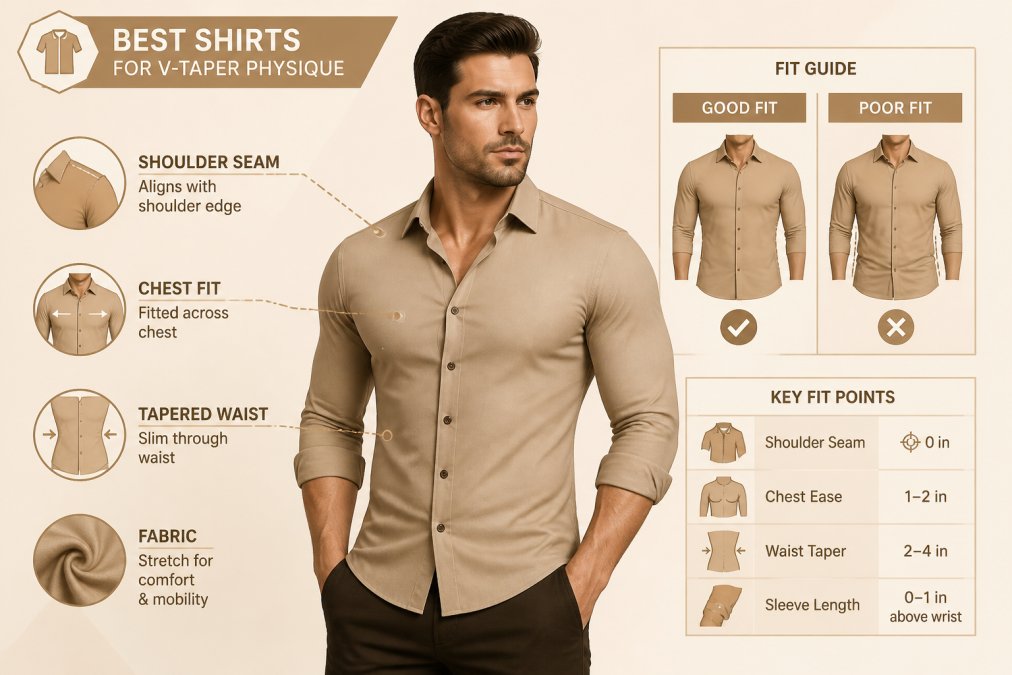
Structured shoulder construction prevents that droopy, oversized look. Fabric reinforcement at the shoulder seam keeps the garment sitting properly on your frame. Waist suppression through darting or strategic stitching cinches the waist without restricting movement, emphasizing the width differential between shoulders and waist.
Medium to heavy-weight fabrics (6-8 ounces) hold their shape and drape cleanly. Lightweight fabrics under 5 ounces tend to cling and highlight every muscle contour awkwardly.
Kritter Komfort's activewear uses breathable, stretch-friendly fabrics engineered for athletic frames with durable stitching that holds up through intense workouts. The machine-wash friendly construction means no premium care requirements. Real customers report the fit looks great and performs well during intense training, with garments holding up after months of regular use.
Neckline Depths and Collar Styles
Neckline depth significantly impacts how a shirt sits on broad shoulders. A crew neck sits closer to your collarbone and works well for most athletic builds. A V-neck creates vertical lines that balance wide shoulders with the torso below. A deeper V-neck works particularly well if you have a larger chest relative to your waist.
A standard collar works for casual settings and gym wear. A button-down collar adds structure and versatility for more formal environments. A camp collar (Cuban style) works for casual-to-smart-casual transitions but reads too casual for office settings.
Match neckline depth to your actual proportions. If your shoulders are significantly wider than your chest, a crew neck works fine. If you have both wide shoulders and a larger chest, a deeper V-neck or button-down collar provides better visual balance.
Sleeve Length and Armhole Placement
Sleeves should end at your wrist bone when your arm hangs naturally. Many standard sizes run short, leaving a gap that looks unfinished.
Armhole placement affects movement and comfort during workouts. A properly positioned armhole sits right at the top of your shoulder joint, allowing full range of motion without restriction. Too-low armholes create excess fabric under the arm. Too-high armholes restrict shoulder movement.
Athletic builds often benefit from slightly higher armholes than standard sizing provides. When trying on shirts, raise your arms overhead and rotate your shoulders. You should feel zero restriction.
Fabric Weight and Stretch for Athletic Cuts
Medium-weight fabrics (6-8 ounces) provide the sweet spot for athletic builds. They're substantial enough to drape cleanly without clinging, yet light enough for breathability during cardio. Heavier fabrics work for casual wear but often feel stiff during intense workouts.
Stretch content matters equally. Pure cotton has zero stretch and restricts movement. A blend with elastane (spandex), typically 5-10%, provides necessary mobility without sacrificing durability. Higher elastane percentages lose elasticity faster after repeated washing and sweating.
Look for fabrics with moisture-wicking properties that pull sweat away from your skin. Synthetic blends often outperform pure cotton for activewear. Cotton absorbs sweat and holds moisture, making you feel heavy and cold once you stop moving.
Tailoring Tips for Athletic Builds
Professional tailoring transforms off-the-rack clothing into garments that fit your specific proportions. For athletic builds with broad shoulders, strategic adjustments make a dramatic difference.
The most common tailoring adjustment is tapering the sides to create more waist suppression. A skilled tailor can add subtle darts that cinch the waist without creating visible seams. Sleeve length adjustments are straightforward and relatively inexpensive, hitting exactly at your wrist bone.
Shoulder adjustments are more complex and expensive but worthwhile for premium pieces. A tailor can adjust shoulder seam placement and add shoulder padding if needed. Armhole depth can also be adjusted to better accommodate your shoulder structure, reducing excess fabric under the arms.
Most tailoring costs between $20-60 per garment depending on adjustments needed. For premium pieces you'll wear frequently, tailoring investment pays dividends in fit and longevity.
Balancing Proportions: Jackets, Blazers, and Layering
Jackets and blazers present both opportunities and challenges for athletic builds. Proper construction creates stunning visual balance.

Structured shoulders in blazers work perfectly for athletic builds because they're intentionally designed to showcase shoulder width. The key is choosing blazers with shoulder seams that align exactly with your shoulder joint. Too-narrow shoulders feel constraining. Too-wide shoulders create an oversized look.
A standard blazer hits at your hip, which works well for athletic builds. Longer blazers can overwhelm your frame if your torso is relatively short. Shorter blazers work better if you have a longer torso relative to leg length.
Layering creates visual interest and allows transitions between gym and professional settings. A fitted long-sleeve shirt under a structured blazer creates clean vertical lines. Avoid horizontal stripes and wide horizontal seams, which visually widen your frame further. Vertical lines, vertical seams, and longitudinal color blocking create visual height and balance.
Jacket fabric should be structured enough to hold its shape. Unstructured blazers in lightweight fabrics tend to cling. Medium-to-heavy weight fabrics with structure maintain clean lines throughout the day.
Transitioning Athletic Wear to Professional Settings
Many people with athletic builds struggle transitioning from gym wear to professional environments. The challenge is finding pieces that feel appropriate in formal settings while maintaining the fit quality you expect from activewear.
Kritter Komfort's bold yet understated designs accomplish this balance. The apparel works for gym activities and everyday wear, seamlessly transitioning from the gym to the golf course to casual professional settings.
Solid colors work better than graphic prints for professional transitions. A fitted navy or charcoal shirt works in almost any setting. Subtle patterns add visual interest without reading as gym wear.
Fit quality matters more in professional settings. A shirt that fits perfectly across your shoulders and tapers at the waist looks intentional and put-together. Heavier, more structured fabrics read as more formal and intentional than lightweight, stretchy fabrics.
A front tuck or French tuck creates a more balanced silhouette while maintaining the fitted aesthetic, better suited to professional environments than a full tuck.
Common Mistakes to Avoid
Understanding what NOT to do prevents frustration and wasted money.
Buying standard sizing without checking measurements. Standard sizing assumes proportions that don't match athletic builds. Taking five minutes to measure and compare to size charts eliminates most fitting issues.
Choosing fabric too light for your frame. Lightweight fabrics under 5 ounces cling to muscle definition awkwardly. Medium-weight fabrics (6-8 ounces) work better across gym and casual settings.
Ignoring armhole placement. A properly positioned armhole is non-negotiable for comfort. Too-low armholes create excess fabric and restrict shoulder mobility.
Assuming tapered automatically means tight. Tapered fit means the garment gets progressively narrower from chest to waist, creating visual balance without necessarily being tight.
Neglecting shoulder seam alignment. The shoulder seam should sit right at your shoulder joint. This single detail makes more difference than any other factor in how a shirt looks.
Buying shirts that are too long. Oversized length emphasizes width and creates a shapeless silhouette. A properly fitted shirt should hit at your hip.
Choosing fabrics without stretch for workouts. Pure cotton without elastane restricts movement. Even 5% elastane makes a significant difference in comfort and performance.
Ignoring fabric quality for activewear. Budget activewear often pills after a few washes and loses shape quickly. Medium-weight, durable fabrics maintain appearance and performance through months of regular use.
Finding athletic cuts for broad shoulders requires understanding your specific proportions and how garment construction works. Proper shoulder seam placement, appropriate fabric weight, and strategic waist suppression create the fit quality that transforms how clothes look and feel on your frame. Kritter Komfort's activewear delivers these elements through breathable, stretch-friendly fabrics with durable stitching engineered for athletic builds. Whether you're transitioning from the gym to professional settings or looking for gear that performs through intense workouts, choosing pieces designed for your proportions eliminates the frustration of standard sizing. Shop All and discover how properly fitted athletic wear changes your entire wardrobe experience.
Frequently Asked Questions
What shirt fit works best for broad shoulders and a tapered waist?
Look for athletic cuts with structured shoulders, tapered waists, and proper armhole placement. The shoulder seam should sit exactly at your shoulder point, not drooping or pulling. Fabrics with stretch (elastane blends) accommodate muscle definition while maintaining shape. V-necks and deeper necklines create vertical lines that balance broader shoulder width. Avoid boxy fits that hide your frame or overly tight sleeves that restrict movement during workouts.
How do I know if my shoulder width requires custom tailoring?
Measure your shoulder width using a soft tape across the top of your shoulders from seam to seam. If you're between standard sizes or find most shirts gap at the neck or pull across the chest, tailoring is worth the investment. A tailor can adjust shoulder seams, add darting for better waist suppression, and modify armhole depth to match your frame. This is especially valuable for athletic builds where off-the-rack cuts often fail to balance proportions properly.
What fabrics hold up best for intense training with broad shoulders?
Choose fabric blends with elastane (spandex) content between 5-15% for stretch without losing structure. Nylon-elastane and polyester-elastane blends resist pilling and maintain shape through heavy lifting and cardio. Look for fabrics with weight and density that won't bag out over time. Machine-washable options with durable stitching prevent seam separation at stress points like shoulder seams and armholes, which take extra strain on athletic builds.
Can athletic cuts work for professional settings, or do I need different clothes for the office?
Athletic cuts transition seamlessly to professional wear when you choose structured fabrics, neutral colors, and tailored silhouettes. Pair fitted shirts with tailored trousers or blazers to maintain the clean aesthetic. Avoid overly graphic or bold designs in office settings. Quality athletic wear with proper proportioning actually looks more polished than ill-fitting traditional office clothes, especially for broad-shouldered frames where standard cuts often miss the mark.
This article was written using GrandRanker