

Table of Contents
- The Three-Layer System Explained
- Best Moisture Wicking Workout Shirts for Cold Weather
- Winter Running Gear Essentials You Actually Need
- How to Dress for Outdoor Weightlifting in Winter
- Layering Strategies for Different Temperatures
- Common Mistakes to Avoid When Layering for Winter Workouts
- Post-Workout Transition: What to Do When You Stop Moving
- Frequently Asked Questions
Last Updated: September 15, 2026
The Three-Layer System Explained
Learning how to layer workout clothes for winter starts with one principle: manage moisture first, trap heat second, block wind third. Once you understand it, every gear decision gets easier.
Most people dress for winter like they're standing still. You're not, you're generating heat, which changes everything.
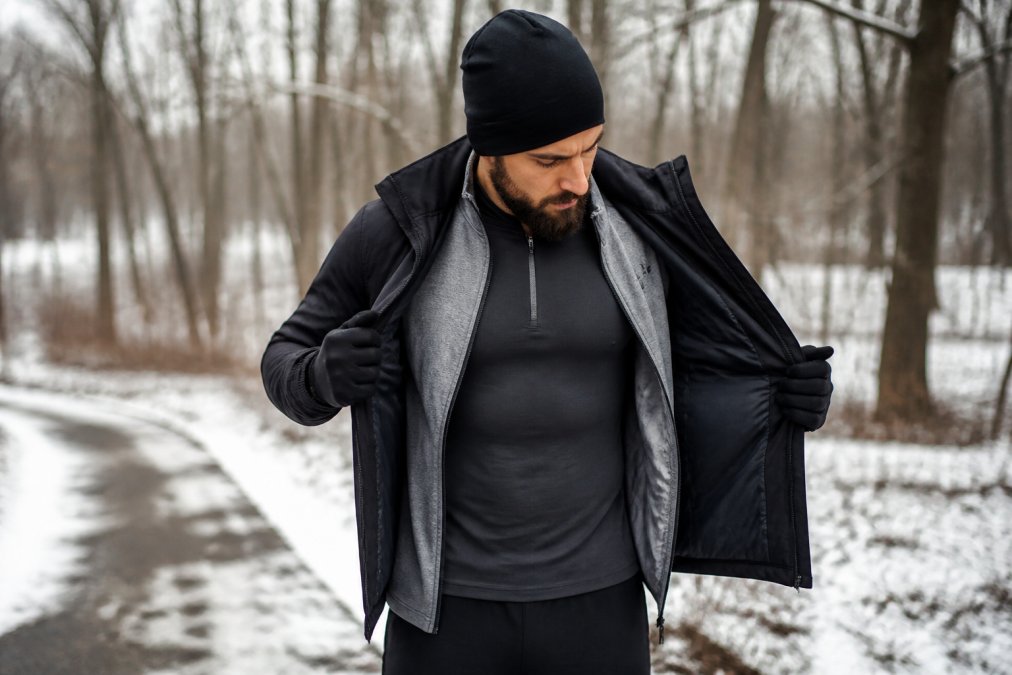
Here's how each layer earns its place:
Base Layer: Your Moisture-Wicking Foundation
The base layer sits against your skin, and its only job is moving sweat away from your body. Synthetic fabrics and merino wool both do this well. Cotton does not.
A moisture-wicking base layer is a fitted garment made from synthetic or wool fibers that pull sweat off your skin and spread it across the fabric surface, where it evaporates. That evaporation keeps you warm, because wet skin loses heat fast.
Fit matters more than brand here. A loose base layer can't move moisture efficiently.
Mid-Layer: Insulation That Traps Body Heat
The mid-layer traps the warmth your body produces. Fleece, grid fleece, and lightweight synthetic insulation all work. Thickness should match the temperature, not your ego.
This is the layer you adjust most often. If you're overheating ten minutes in, the mid-layer is usually the culprit.
Outer Shell: Windproof and Weather-Resistant Protection
The outer shell blocks wind and precipitation while letting some moisture escape. Wind chill strips heat faster than still air, so a windproof shell does more for warmth than an extra insulating layer.
Look for ventilation features like pit zips. Breathability and weather resistance pull against each other, and zippers let you manage that tension.
Best Moisture Wicking Workout Shirts for Cold Weather
The best moisture wicking workout shirts for cold weather fit close to the skin, use synthetic or merino fibers, and dry quickly. Everything else is preference.
What separates a good cold-weather base layer from a mediocre one:
- Fabric weight: Lightweight for high-output sessions, midweight for lifting and stop-start work
- Seam placement: Flatlock seams reduce chafing under a pack or barbell
- Stretch: You need full shoulder and waist range for lifting, swinging, or rowing
- Durability: Cheap synthetics pill and lose stretch after repeated washing
A common mistake is buying the thinnest, cheapest base layer and replacing it every season. Quality fabric costs more upfront and outlasts three cheap shirts.
Our breathable, stretch-friendly fabrics and durable stitching are built for hard training, and the athletic cut is true to size, so your base layer stays fitted the way moisture-wicking fabric needs to be. The gear is machine-wash friendly, which matters when you're rotating base layers several times a week.
Winter Running Gear Essentials You Actually Need
Winter running gear essentials come down to four items: a moisture-wicking base layer, an insulating mid-layer, a windproof shell, and accessories for your extremities. Everything else is optional.
Runners generate more heat than almost any other winter athlete, so the goal is shedding layers, not piling them on. Most overdress by one full layer on their first cold run.
A practical checklist:
- Moisture-wicking base layer, fitted, synthetic or merino
- Lightweight mid-layer you can remove mid-run
- Windproof, water-resistant shell with pit zips
- Gloves or mittens, hat or headband, wool socks
- Reflective elements if you run in low light
Start your run feeling slightly cool. You'll warm up within the first ten minutes, and that mild chill at the door is the sign you dressed correctly.
According to the American College of Sports Medicine's guidance on cold-weather exercise, layering and moisture management are central to safe cold-weather training, because wet clothing accelerates heat loss regardless of air temperature.
How to Dress for Outdoor Weightlifting in Winter
Dressing for outdoor weightlifting in winter means prioritizing mobility and heat retention during rest periods, not during the lift itself. Lifting is stop-start work, so you cool down fast between sets, the piece most generic guides skip.
The sequence that works:
- Start with a fitted moisture-wicking base layer
- Add a mid-layer you can strip off between sets
- Keep a windproof shell nearby for rest periods
- Protect your hands, since cold bars and dumbbells sap grip strength
- Change out of damp layers the moment you finish
The difference between lifting and running is the rest interval. During a run, your body keeps generating heat. Between sets, you stand still, and that's when hypothermia prevention becomes a concern. A lifter who dressed perfectly for the working set can be shivering two minutes later.
High-Intensity vs Low-Intensity Layering
High-intensity work (HIIT, sprint intervals, heavy compound lifts) generates heat fast, so you want thinner layers you can shed quickly. Low-intensity work (steady-state walking, yoga, mobility sessions, long slow distance) generates far less heat, so you need more insulation and better wind protection from the start.
A practical way to think about it:
- High-intensity: Dress as if it's 15-20°F warmer than it is. You'll warm up within the first ten minutes.
- Moderate-intensity: Dress as if it's 10°F warmer. Add a removable mid-layer.
- Low-intensity: Dress for the actual temperature, plus a windproof shell.
Mobility Matters More Than Insulation
The Rest-Period Problem
Post-Lift Transition
Layering Strategies for Different Temperatures
The Temperature and Intensity Matrix
| Temp | High Output (running, HIIT, uphill) | Moderate Output (lifting, cycling) | Low Output (walking, yoga, mobility) |
|---|---|---|---|
| 40-50°F | Base layer only; shorts or light tights | Base layer + light vest | Base layer + light fleece |
| 30-40°F | Lightweight base + optional vest | Midweight base + light fleece | Midweight base + fleece + light shell |
| 20-30°F | Midweight base + light fleece; shell only if windy | Midweight base + grid fleece + windproof shell | Midweight base + fleece + insulated shell |
| 10-20°F | Midweight base + grid fleece + windproof shell | Midweight merino + fleece + insulated shell | Heavy base + fleece + vest + insulated shell |
| Below 10°F | Midweight merino + fleece + shell; limit exposed skin | Heavy merino + fleece + vest + insulated shell | Consider indoor training; if outside, full system + face coverage |
30-40°F: The Overdressing Trap
20-30°F: Where the Full System Earns Its Keep
10-20°F: Insulation Plus Wind Protection
Below 10°F: When to Move Indoors
Adjusting on the Fly
Common Mistakes to Avoid When Layering for Winter Workouts
Others worth avoiding:
Post-Workout Transition: What to Do When You Stop Moving
What to do:
Frequently Asked Questions
What is the 3-3-3 rule for layering workout clothes in winter?
The 3-3-3 rule is a simple guideline: three layers (base, mid, outer shell), three fabric types (moisture-wicking, insulating, weather-resistant), and three temperature bands (mild, cold, freezing). It works because each layer has a specific job. The base layer moves sweat away from your skin, the mid-layer traps body heat, and the outer shell blocks wind and precipitation. Adjust which layers you wear based on the temperature rather than adding or removing all three at once.
What materials should you avoid when layering for cold weather workouts?
Cotton is the main one to skip. It absorbs sweat and holds it against your skin, which speeds up heat loss and raises your risk of hypothermia once you slow down. Denim and other heavy non-stretch fabrics also restrict movement and trap moisture. Stick with synthetic fabrics like polyester and nylon, or merino wool, for your base layer. These move sweat to the surface where it can evaporate, keeping you drier and warmer through the whole session.
How do you layer workout clothes for high-intensity cardio versus lifting?
Cardio generates more heat, so you need fewer layers and more breathability. A moisture-wicking base layer plus a light windproof shell often covers runs in the 30-40°F range. Lifting involves rest periods where your body cools fast, so add an insulating mid-layer you can zip open or remove between sets. For outdoor weightlifting in winter, a thermal base layer, a fleece or grid-fleece mid-layer, and a windproof jacket give you the flexibility to adjust as your output changes.
How do you prevent overheating while layering for winter workouts?
Start your session feeling slightly cool rather than warm. Your body will generate heat within the first few minutes of movement. Choose layers with zippers or vents so you can dump heat without stripping down. A breathable base layer like a moisture-wicking workout shirt keeps sweat moving away from your skin even when you are warm. If you are still sweating heavily after adjusting, remove the mid-layer and rely on your base plus shell for the rest of the session.
Cold-weather training rewards preparation, and the right gear makes layering simple instead of stressful. Kritter Komfort builds activewear with breathable, stretch-friendly fabrics, durable stitching, and an athletic cut that's true to size, so your base and mid-layers stay fitted, move with you, and hold up through hard training and frequent washing. Shop All and build a layering system that keeps you warm, dry, and comfortable from the first set to the walk back to your car.