

Table of Contents
- Why Sweat Stains Form on Synthetic Fabrics
- How to Get Deodorant Stains Out of Polyester
- Step-by-Step Sweat Stain Removal Process
- Removing Sweat Odor From Gym Clothes
- Preventing Yellow Pit Stains on Synthetic Shirts
- Natural Cleaning Agents That Work on Polyester
- What to Avoid: Protecting Your Synthetic Fabrics
- Frequently Asked Questions
Last Updated: September 19, 2026
Why Sweat Stains Form on Synthetic Fabrics
Sweat stains on synthetic fabrics happen because of how polyester and other synthetics interact with sweat, deodorant, and heat, making it important to know how to remove sweat stains synthetic materials effectively. Unlike natural fibers that absorb moisture, synthetic materials don't breathe the same way. Sweat and deodorant buildup sit on the surface and in the fibers, creating visible discoloration over time.
The real culprit isn't just sweat, it's the combination of sweat, aluminum compounds in deodorant, and the fabric's inability to release moisture quickly. When you wear synthetic shirts during workouts or hot days, the sweat mixes with deodorant residue. This creates a chemical reaction that bonds to polyester fibers. Heat from your body and the dryer accelerates this bonding, making stains harder to remove later.
Protein-based stains from sweat are acidic. Deodorant is alkaline. When they meet on synthetic fabric, they create a stubborn compound that regular washing often can't break down. This is why a fresh sweat stain is easier to remove than one that's been sitting in your gym bag for a week.
How to Get Deodorant Stains Out of Polyester
Deodorant stains on polyester require a different approach than fresh sweat. These stains are typically white, yellow, or brown discoloration that won't come out with regular washing. The aluminum in deodorant clings to synthetic fibers in ways that water alone can't fix.
Start by identifying what you're dealing with. White or chalky stains are usually deodorant residue that hasn't oxidized yet. Yellow or brown stains mean the deodorant has reacted with sweat and heat. Both need pre-treatment before washing.
For white deodorant residue, scrape off what you can with a dry brush or cloth. Don't wet it first, dry removal prevents the stain from spreading deeper into the fibers. Then apply a small amount of liquid detergent directly to the stain and rub gently with a soft brush for 30 seconds. Let it sit for 5 minutes before rinsing with cool water.
For yellow or brown deodorant stains, use white vinegar. Soak the stained area in a mixture of equal parts white vinegar and water for 15 minutes. The acidic vinegar breaks down the alkaline deodorant compound. After soaking, rinse thoroughly and apply detergent before washing normally.
Oxygen bleach works well for stubborn deodorant stains that won't respond to vinegar or detergent alone. Mix oxygen bleach powder with cool water to form a paste. Apply it to the stain and let it sit for 30 minutes to 1 hour. Rinse completely before washing. Oxygen bleach is safer for colored synthetic fabrics than chlorine bleach, which can damage or discolor polyester.
Step-by-Step Sweat Stain Removal Process
Removing sweat stains from synthetic shirts follows a proven sequence. Skip steps or rush the process, and you'll waste detergent and water without getting the stain out. The key is patience and the right order of operations.
Pre-Treatment and Soaking
Pre-treatment stops stains from setting deeper into polyester. Fresh sweat stains need immediate attention, ideally within 24 hours of wearing the shirt.
Start here:
- Turn the shirt inside out to examine the stain from both sides
- Rinse the stain area with cool water only, no soap yet
- Apply liquid detergent directly to the stain and let it sit for 5-10 minutes
- For stubborn stains, make a paste of baking soda and water, apply it to the stain, and let it sit for 15 minutes
- Gently rub the stain with a soft brush or cloth in circular motions
- Rinse thoroughly with cool water until no soap remains
For older or set-in stains, soaking works better than direct application. Fill a bucket or sink with cool water and add 1 cup of white vinegar per gallon of water. Submerge the stained area completely and let it soak for 30 minutes to 2 hours. The vinegar's acidity breaks down the protein and deodorant compounds bonded to the synthetic fibers.
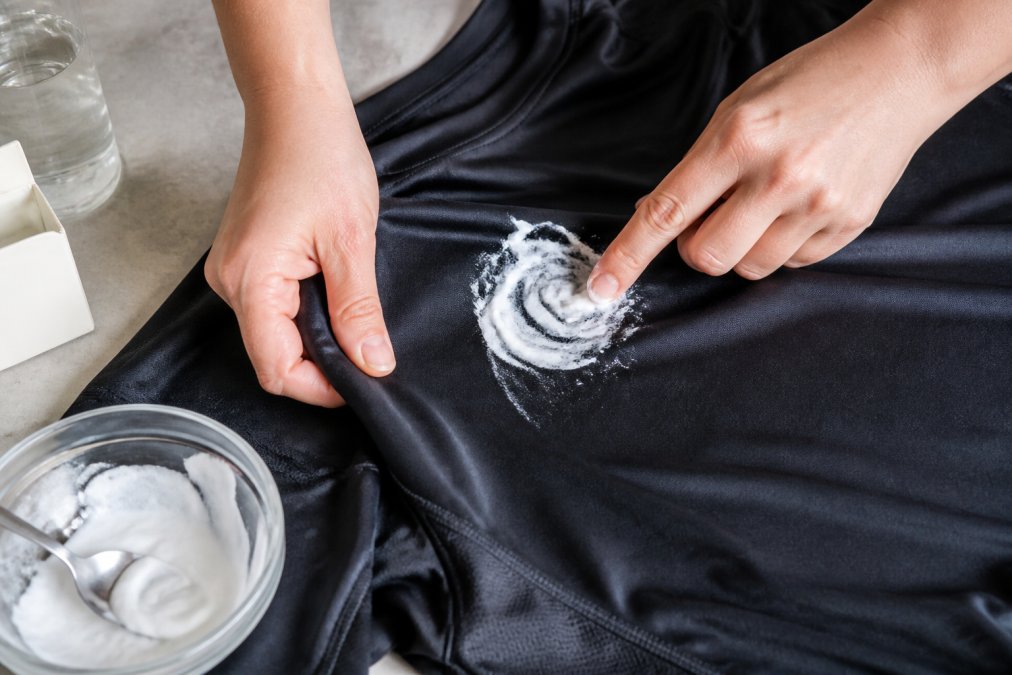
After soaking, remove the shirt and rinse the stained area under cool running water. Don't wring or twist the fabric, that drives the stain deeper. Gently squeeze water out and proceed to washing.
Washing and Rinsing
Machine washing comes next, but with specific settings for synthetic fabrics. Standard hot water and heavy agitation damage polyester and set stains permanently.
Use these settings:
- Water temperature: cool or lukewarm only
- Cycle: delicate or gentle cycle to minimize agitation
- Detergent amount: standard dose, don't overload with soap
- Detergent type: liquid detergent works better than powder on synthetics
Add the shirt to the machine with similar colors only. Run the cycle and let it complete fully. When the cycle ends, check the stain immediately before drying. If the stain is still visible, repeat pre-treatment and washing. Do not move to the dryer until the stain is gone.
Rinsing is critical. Run an extra rinse cycle to remove all detergent residue from the synthetic fibers. Leftover detergent can trap stain particles and make them visible again after drying.
Drying Without Heat Damage
This is where most people make mistakes. High heat from the dryer bonds remaining stain particles permanently to polyester. Even if you can't see the stain after washing, heat will reveal it.
Air dry your synthetic shirts whenever possible. Hang them on a clothesline or lay them flat on a clean surface away from direct sunlight. This takes longer, typically 4-8 hours depending on humidity, but it prevents heat damage and protects the fabric's stretch and breathability.
If you must use a machine dryer, use the lowest heat setting available. Many dryers have an "air dry" or "no heat" option, use that instead. Never use medium or high heat on synthetic fabrics with stains.
Avoid direct sunlight while air drying. UV rays can yellow synthetic fabrics over time, especially polyester. Choose a shaded, well-ventilated area indoors or on a covered porch.
Removing Sweat Odor From Gym Clothes
Sweat odor in gym clothes comes from bacteria breaking down sweat compounds, not from sweat itself (Microbiota and Malodor, Etiology and Management). Synthetic fabrics trap moisture and bacteria in ways that natural fibers don't, making odor worse over time.
Washing removes most odor, but stubborn smells need extra steps. White vinegar neutralizes odor-causing bacteria without adding chemical perfume. Add 1 cup of white vinegar to the rinse cycle or pre-soak the shirt in a vinegar-water solution for 30 minutes before washing.
Baking soda also works. Sprinkle dry baking soda directly on damp synthetic fabric and let it sit for 30 minutes to 1 hour. The baking soda absorbs odor compounds. Shake off the powder and wash normally.
For persistent gym odor, soak the shirt overnight in a solution of cool water with 1 tablespoon of white vinegar and 1 tablespoon of baking soda per gallon. The combination breaks down both the sweat residue and the bacteria producing the smell.
Never use hot water to wash gym clothes with odor. Heat activates bacteria and can make odor worse. Always use cool or lukewarm water for washing synthetic activewear.
Preventing Yellow Pit Stains on Synthetic Shirts
Prevention is easier and cheaper than removing set-in stains. A few simple habits stop yellow pit stains from forming on synthetic shirts in the first place.
Apply deodorant correctly. Let it dry completely before putting on your shirt. Wet deodorant transfers directly to the fabric and bonds faster. Apply deodorant at least 5 minutes before dressing.
Wash synthetic shirts within 24 hours of wearing them.
Natural Cleaning Agents That Work on Polyester
Commercial stain removers contain harsh chemicals that can damage synthetic fabrics. Natural alternatives work just as well and protect the integrity of polyester and other synthetics.
What to Avoid: Protecting Your Synthetic Fabrics
Certain practices damage synthetic fabrics while attempting to remove stains. Understanding what hurts polyester helps you protect your investment in quality activewear.
Frequently Asked Questions
Can old sweat stains be removed from synthetic fabrics?
Yes, old sweat stains on synthetic fabrics like polyester can be removed, though they require more aggressive treatment than fresh stains. Hardened stains respond well to soaking in a mixture of white vinegar and water for several hours, followed by application of oxygen bleach or enzyme-based cleaners. The key is patience, older stains may need multiple treatment cycles. Always patch test on an inconspicuous area first to ensure the fabric remains colorfast.
How do I get deodorant stains out of polyester?
Deodorant buildup on polyester requires both acidic and alkaline treatments. Start by rubbing the stain with white vinegar to break down the alkaline deodorant residue, then rinse. Next, apply a paste of baking soda and water to neutralize any remaining buildup. For stubborn stains, soak the garment in a solution of oxygen bleach and water for 30 minutes before washing. Always use cool water and avoid heat until the stain is completely gone, as heat can set deodorant residue permanently.
Is it safe to use bleach on synthetic activewear?
Chlorine bleach is not safe for most synthetic fabrics and can cause yellowing, weakening of fibers, and discoloration. Oxygen bleach, however, is safe for polyester and other synthetics when used as directed. Oxygen bleach works more gently than chlorine and breaks down stains through oxidation without the harsh chemical damage. Always dilute oxygen bleach according to package instructions and test on a hidden area of the garment first, especially on colored synthetics.
What's the best way to prevent yellow pit stains on synthetic shirts?
Prevention starts with managing sweat and deodorant buildup. Wash gym clothes within 24 hours of wearing them to prevent sweat proteins from bonding to synthetic fibers. Use the delicate cycle with cool water and liquid detergent rather than powder, which can leave residue. Allow clothes to air dry instead of using high heat, which can set stains. Consider applying antiperspirant the night before intense workouts to reduce sweat accumulation, and rotate between multiple shirts to give fabrics recovery time.