

Table of Contents
- Why Gym Clothes Lose Stretch: The Science Behind Fiber Degradation
- How to Wash Spandex Activewear Without Damaging Elasticity
- Does Fabric Softener Ruin Gym Clothes and Stretch Retention
- Why Machine Drying Damages Stretch and Fabric Recovery
- Average Lifespan of Gym Clothes and When to Replace
- Signs of Permanent Fabric Damage and Stretch Loss
- How Frequent Washing and Abrasion Affect Elasticity
- Extending the Life of Your Activewear
Last Updated: August 7, 2026
Why Gym Clothes Lose Stretch: The Science Behind Fiber Degradation
Gym clothes lose stretch because synthetic fibers break down under heat, moisture, sweat, body oils, and friction. These factors attack the polymer chains that give spandex and elastane their elasticity. Understanding the mechanics lets you slow this process dramatically. Elasticity erodes gradually, usually after 40-60 wears with careless washing, or 100+ wears with proper care. A single tumble-dry cycle causes more damage than five gentle washes combined.
Heat Exposure and Polymer Breakdown
Heat is the fastest way to destroy elastic fibers. Spandex and elastane are synthetic polymers; heat breaks apart their molecular chains, preventing them from snapping back. A 10-minute high-heat dryer cycle does more structural damage than weeks of gentle hand-washing in cool water. Hot water above 130°F also degrades elastane, though less severely than machine drying. Warm water (86-104°F) is gentler, but repeated exposure compounds damage over time.
Sweat, Oils, and Chemical Breakdown
Sweat contains salts, urea, and lactic acid; body oils are fatty compounds that break down polymer structure when they accumulate. Leaving sweaty gym clothes in a bag overnight causes noticeable elasticity loss as these compounds oxidize on the fabric. Detergent residue also weakens synthetic fibers if it builds up. Fabric softeners are worse, they coat fibers with silicone compounds that prevent elastic recovery. Using fabric softener on activewear is one of the most common mistakes people make.
Understanding Spandex and Elastane Fibers
Spandex and elastane are the same material (elastane is generic; spandex is trademarked). These fibers stretch 5-8 times their original length and snap back, but this elasticity depends on a delicate polymer structure vulnerable to heat, chemicals, and mechanical stress. Most gym clothes blend spandex with nylon or polyester, typically 88% nylon and 12% spandex. When spandex degrades, the entire garment loses its form-fitting properties. Nylon-spandex blends hold elasticity longer than polyester-spandex blends under repeated washing, though polyester resists moisture better.
How to Wash Spandex Activewear Without Damaging Elasticity
Proper washing is the foundation of extending activewear lifespan. Most people damage gym clothes in the wash and dryer without realizing it.
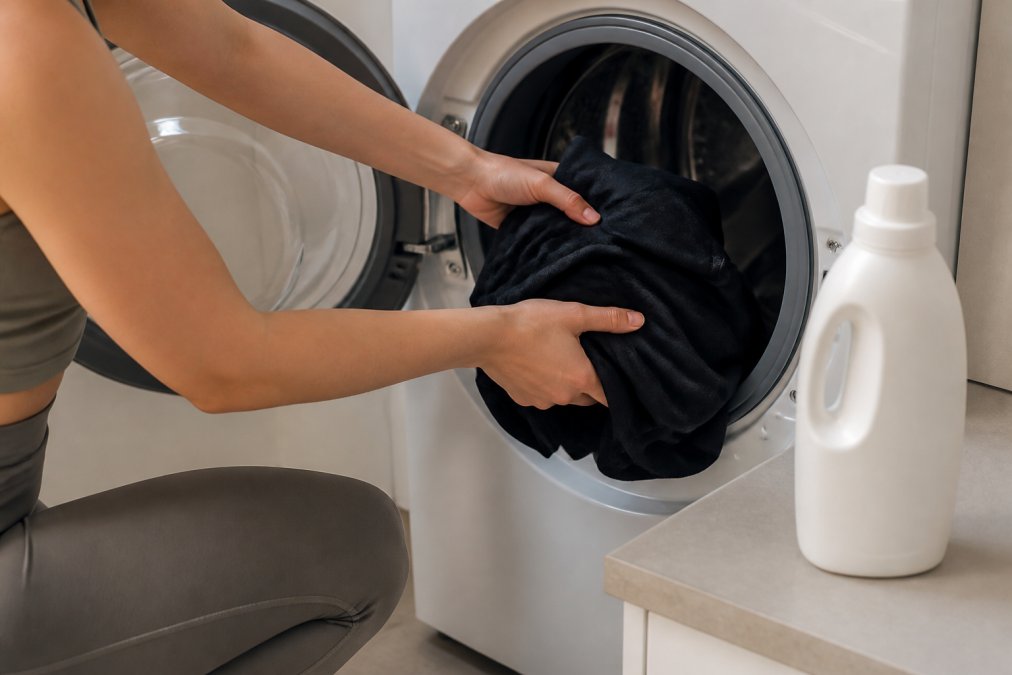
Step 1: Choose the Right Water Temperature
Wash in cold water between 60-75°F to minimize fiber damage. Cold water removes sweat and oils effectively while avoiding heat-induced polymer breakdown. This single choice extends activewear lifespan more than any other factor. Warm water (86-104°F) is acceptable occasionally but should be limited to once every 5-10 wears. Never use hot water above 130°F on spandex garments.
Step 2: Select Appropriate Detergent and Avoid Fabric Softeners
Use mild, pH-neutral detergent designed for delicates, such as Woolite Delicates or The Laundress Delicate Wash. Standard all-purpose detergents are too alkaline and degrade spandex over time. Use half the recommended dose, excess detergent leaves residue that accumulates and weakens elasticity. Never use fabric softener on activewear. Fabric softeners coat fibers with silicone compounds that prevent elastic recovery. After 3-5 washes with fabric softener, spandex garments permanently lose noticeable elasticity. The damage is irreversible.
Step 3: Use the Gentle Cycle and Air Dry
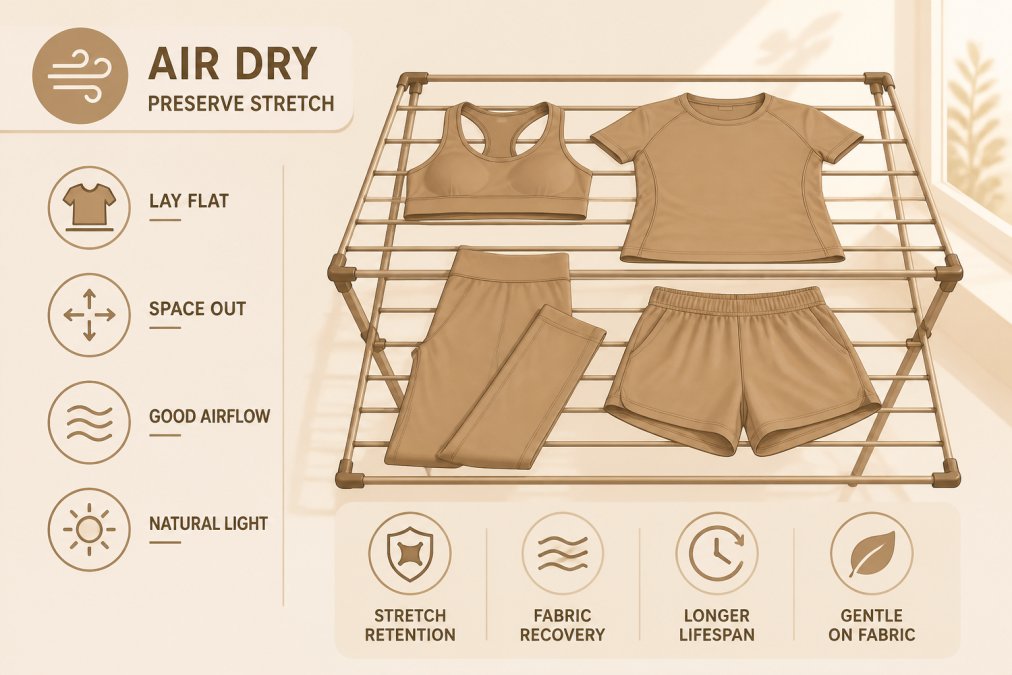
Select the gentle or delicate cycle, which reduces mechanical abrasion and fiber fatigue. A gentle cycle spins at 400-600 RPM compared to 800-1200 RPM on standard cycles. After washing, air dry by laying flat on a clean towel or hanging on a clothesline away from direct sunlight. Air drying takes 4-8 hours but eliminates 90% of the damage machine drying causes. If you must use a dryer, use the lowest heat setting and remove clothes while slightly damp.
Does Fabric Softener Ruin Gym Clothes and Stretch Retention
Yes, fabric softener permanently damages gym clothes. Silicone-based compounds coat fibers and prevent elastic fibers from contracting fully after stretching. After a few washes, spandex loses its ability to snap back; the garment becomes baggy and loses compression. The damage is cumulative and irreversible. Dryer sheets are equally damaging, they contain the same silicone compounds and transfer them to every garment in the load.
If you want soft activewear, use proper washing technique and air drying instead of chemical softeners. Gentle cycles, cold water, and mild detergent naturally preserve fiber softness.
Why Machine Drying Damages Stretch and Fabric Recovery
Machine drying is the fastest path to ruined activewear. Heat combined with mechanical tumbling destroys spandex fibers in ways washing never will. A single dryer cycle causes more elasticity loss than five gentle washes combined.
A standard dryer on high heat reaches 130-160°F. Spandex begins degrading noticeably at 120°F and accelerates above that. Even "low-heat" settings reach 100-120°F, causing cumulative damage. The tumbling action causes mechanical stress on weakened fibers, compounding heat damage. Once machine drying has damaged fabric recovery, the garment is permanently compromised. No future care can restore lost elasticity.
Average Lifespan of Gym Clothes and When to Replace
With proper washing and air drying, gym clothes typically last 100-150 wears before elasticity noticeably declines. With careless washing and machine drying, the same garment might last only 40-60 wears. One wear equals one complete workout session. Quality matters, premium activewear with higher-grade spandex and better nylon blends lasts 20-40% longer than budget options, even with identical care.
Most people notice elasticity loss around 80-100 wears with proper care. At this point, many replace garments even though they're still functional. With reduced compression tolerance, garments can last another 20-30 wears.
Signs of Permanent Fabric Damage and Stretch Loss
Visible pilling indicates mechanical wear but doesn't affect function. Baggy areas that don't recover after washing signal permanent elasticity loss, the garment will never fit the same way. Discoloration or stiffness may indicate detergent buildup; try washing with mild detergent and no softener. Visible fraying or holes mean the base fabric is breaking down. Loss of compression or support during workouts indicates spandex has degraded beyond acceptable levels, and replacement is usually best.
How Frequent Washing and Abrasion Affect Elasticity
Washing gym clothes after every wear is recommended, leaving sweat and oils on fabric accelerates chemical breakdown. The issue isn't washing frequency but washing method. You can wash activewear daily and maintain elasticity with cold water, gentle cycles, mild detergent, and air drying.
Gentle cycles reduce mechanical friction compared to standard cycles. Using a mesh laundry bag provides additional protection. Abrasion also occurs during wear in high-friction areas like waistbands and underarms, where elasticity typically fails first. Air drying eliminates the mechanical tumbling that causes dryer abrasion, reducing damage by 80-90%.
Extending the Life of Your Activewear
Rinse sweaty gym clothes in cool water immediately after workouts to remove fresh sweat and oils before oxidation occurs. Wash in cold water on a gentle cycle with mild detergent, skip fabric softener and dryer sheets, and air dry. Rotate gym clothes across multiple garments to distribute wear. Store activewear in a cool, dry place away from direct sunlight.
For intense training (heavy lifting, high-intensity cardio), invest in higher-quality activewear with reinforced seams and premium fabric blends. Kritter Komfort activewear is designed specifically for intense workouts, with durable stitching and breathable, stretch-friendly fabrics that withstand repeated stress.
Elasticity loss isn't inevitable wear, it's preventable damage. Most people accept baggy, stretched-out gym clothes as normal. Activewear should maintain its fit and compression for 100+ wears with proper care. The difference between clothes lasting 60 wears and 120 wears is simply how you wash and dry them.
Gym clothes lose stretch because synthetic fibers degrade under heat, chemical stress, and mechanical wear. You can't stop this entirely, but you can slow it dramatically. Cold water washing, gentle cycles, mild detergent, and air drying extend activewear lifespan by 50-100% compared to standard practices. Machine drying is the most destructive mistake, a single dryer cycle causes more damage than five gentle washes combined. If you're using fabric softener or dryer sheets on activewear, stop immediately; those practices permanently damage elasticity. At Kritter Komfort, we design activewear with breathable, stretch-friendly fabrics and durable stitching specifically for intense training. Pair that quality with proper care, cold water, no softener, air drying, and your gym clothes will maintain compression and support through 100+ wears.
Frequently Asked Questions
Why do gym clothes lose stretch over time?
Gym clothes lose stretch because spandex and elastane fibers, the polymers responsible for elasticity, break down under heat, sweat, detergent residue, and repeated mechanical stress. Heat exposure from washing and drying weakens polymer chains, while sweat and body oils cause chemical breakdown. Frequent washing accelerates this degradation, and tumble drying is particularly damaging because the high temperature and abrasion destroy fabric recovery. Most activewear loses 10-15% of its elasticity within the first 20-30 washes if not cared for properly.
Does fabric softener ruin gym clothes?
Yes, fabric softener damages gym clothes significantly. Softeners coat synthetic fibers with silicone-based compounds that reduce moisture-wicking, trap sweat, and prevent proper fabric recovery. This coating interferes with the elastic memory of spandex and elastane, causing permanent loss of stretch retention. Over time, the buildup also creates a waxy residue that reduces the garment's performance. For activewear, skip fabric softeners entirely and use only mild detergent designed for synthetic blends.
How long do gym clothes typically last?
The average lifespan of gym clothes depends on care and intensity of use. With proper laundry practices, cold water, gentle cycles, air drying, and no fabric softeners, quality activewear lasts 60-80 washes before noticeable elasticity loss. High-intensity training, frequent washing, or machine drying can cut this to 20-30 washes. Signs of end-of-life include visible pilling, loss of compression, permanent bagging at the knees or elbows, and inability to recover shape after stretching. Investing in proper care extends lifespan significantly.
Can you restore elasticity to gym clothes that have lost stretch?
Unfortunately, once polymer chains in spandex and elastane break down, elasticity cannot be fully restored. However, you can slow further degradation by switching to cold-water washing, eliminating fabric softeners, and air drying exclusively. Some temporary recovery may occur if you stop wearing the garment for several weeks, allowing elastic memory to partially reset. For permanent loss of stretch, replacement is the best option. Prevention through proper care from day one is far more effective than attempting restoration.
This article was written using GrandRanker