

Table of Contents
- Why Gym Shorts Ride Up: The Real Culprits
- Fix 1: Choose the Right Fabric and Construction
- Fix 2: How to Choose the Right Inseam Length for Gym Shorts
- Fix 3: Master the Fit for Your Body Type
- Fix 4: Use the Right Base Layer and Accessories
- Fix 5: Quick DIY Hacks That Actually Work
- Fix 6: Movement-Specific Adjustments for Squats and Runs
- Fix 7: Laundry Care That Keeps Shorts in Place
- Frequently Asked Questions
Last Updated: September 9, 2026
Few things derail a heavy squat set or a tempo run faster than the constant tugging of gym shorts creeping up your thighs, which is why learning how to prevent gym shorts from riding up is essential. We design activewear for lifting and cardio, and we have spent a lot of time thinking about how to prevent gym shorts from riding up so you can train without adjustment breaks.
The root cause is usually a mismatch between the fabric, the inseam, and your body mechanics. Below, we break down seven practical fixes, from fabric selection to laundry habits, that will keep your shorts locked in place during squats, runs, and everything in between.
Why Gym Shorts Ride Up: The Real Culprits
Shorts ride up because of static friction and the geometry of your legs. When you bend your knee or hinge at the hip, the fabric bunches, and the next stride or squat pushes that bunch upward. The fabric lacks enough grip on your skin to stay put, or the leg opening is too tight and acts like a wedge.
Poorly placed side seams catch on the quadriceps, creating a pulling effect. A short inseam also has less fabric weight to anchor it down, making it more susceptible to creeping.
Fix 1: Choose the Right Fabric and Construction
Most advice stops at "look for spandex," but the real fix lies in understanding how specific polymers interact with your skin and your sweat.
The Slip-and-Grip Mechanics of Polymer Blends
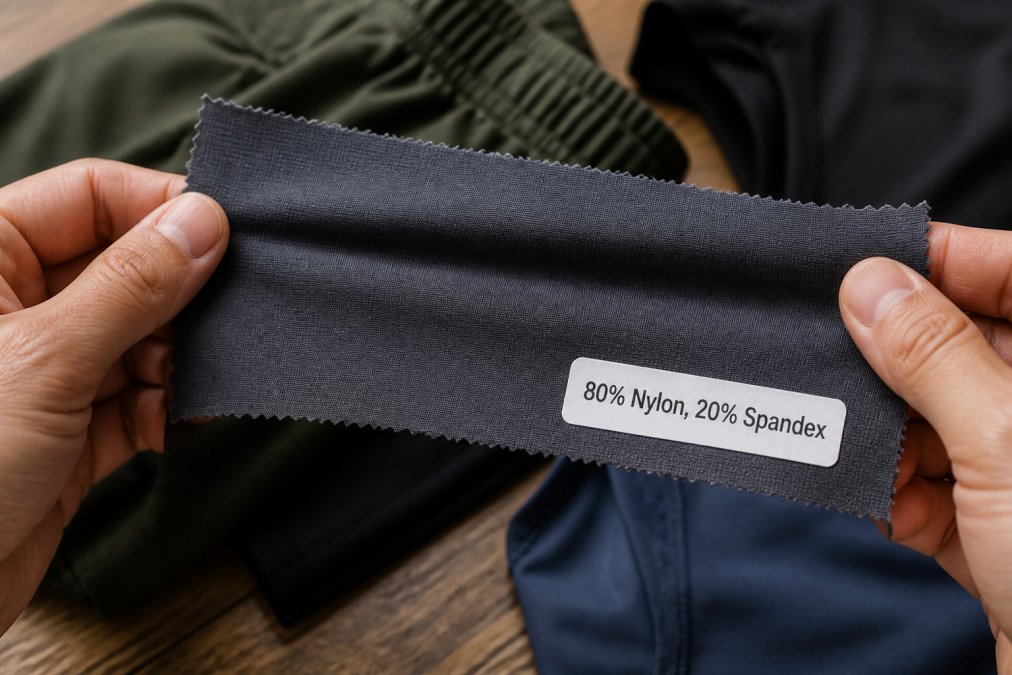
- Nylon (Polyamide): Nylon filaments are smooth and have a naturally low coefficient of friction against skin. This reduces the static friction that causes fabric to bunch and grab, so it is less likely to catch on micro-hairs and get pushed upward. However, pure nylon lacks stretch, so it is always blended.
- Polyester: Polyester fibers are slightly coarser and have a higher friction coefficient than nylon, giving the fabric more "grip" to anchor the hem. But if the blend lacks sufficient elastane, that grip turns into drag, causing the fabric to roll up. Look for a polyester-dominant blend only if the knit is tight and the elastane content is above 15%.
- Elastane (Spandex/Lycra): Elastane is the recovery engine. It provides the force that pulls the fabric back to its original shape after you bend your knee. The critical number is the stretch-and-recovery percentage. A fabric that stretches 50% but only recovers 85% will bag out at the knee and ride up at the hem (peer-reviewed research). High-quality activewear uses elastane that recovers at least 95%.
The Moisture Variable
Sweat changes the friction equation entirely. Water acts as a lubricant, but as it evaporates, it leaves behind salt crystals that increase drag. This is why a cotton-blend short feels fine for the first few minutes but starts to ride up after you break a sweat.
Performance fabrics solve this with hydrophilic (water-attracting) finishes that pull moisture away from the skin for faster evaporation, maintaining a consistent friction level. If a fabric feels slick when dry but sticky when wet, it lacks a proper moisture-wicking finish.
Construction Details That Matter
- Flatlock Seams: These lie flat against the skin, eliminating the raised ridge that can catch on the quadriceps during a squat.
- Gusseted Crotch: A diamond-shaped gusset allows the leg openings to move independently of the torso, preventing the "tent-pole" effect where the crotch seam pulls the hem upward.
- Hem Construction: A double-needle hem or a hem with a silicone print on the inside adds a mechanical anchor. Silicone dots on the inside of the hem are not just for dress pants; they are the same technology used in high-end running shorts to prevent creep.
The Anti-Slip Test
Before you buy, perform a quick test. Rub the inside of the fabric against your forearm. If it slides easily, it will slide on your thigh. If it has a slight tackiness or grip, it will stay put. This tactile test is more reliable than reading the marketing label.
Fix 2: How to Choose the Right Inseam Length for Gym Shorts
The correct inseam length depends on your height and thigh circumference. A 5-inch inseam is popular, but if your thighs are larger, it will often ride up because the leg opening grips the widest part of your thigh and travels north with every step.
A 7-inch inseam is the safer choice for most lifters and runners, as the extra length counteracts the upward pull (acefitness.org). For taller athletes, a 9-inch inseam offers maximum stability. A good rule of thumb is that the hem should sit below the widest part of your thigh when standing. This directly relates to how to choose the right inseam length for gym shorts, so measure your thigh and compare it to the inseam before buying.
Fix 3: Master the Fit for Your Body Type
Fit is about the relationship between the waist and the leg openings. The waistband should sit snugly on your hips without needing a drawstring, while the leg openings should move freely without gaping. A common mistake is sizing down to fix a loose waist, which makes the leg openings too tight and accelerates riding up.
Best Workout Shorts for Thick Thighs
For athletes with thick thighs, the search for the best workout shorts for thick thighs often ends in frustration. The solution is a short with a wider leg opening and a longer inseam. Look for cuts labeled "relaxed" or "bodybuilding" fit, which accommodate the quad sweep without constricting blood flow. If the leg opening is too narrow, the fabric will bunch and ride up immediately.
Fix 4: Use the Right Base Layer and Accessories
Compression shorts are the most reliable fix if your outer shorts still ride up. Wearing them underneath creates a smooth, grippy base layer that stays put, so the outer short moves against the compression fabric rather than your skin. This layering strategy is common among runners who deal with thigh chafing.
For anti-chafe balm for runners, applying a balm to your inner thighs reduces friction between your skin and the short's hem. It does not stop the short from moving, but it prevents painful chafing. Some athletes also use silicone grip tape on the inside of the leg hem, though this is a temporary fix.
Fix 5: Quick DIY Hacks That Actually Work
When you need a solution before your next session, these hacks range from a 30-second fix to a permanent alteration.
Hack 1: The Silicone Hem Strip (30 Seconds)
This is the most effective temporary fix. You need a roll of 3/4-inch silicone hem tape (available at any fabric store) or a silicone caulk strip. Cut a 2-inch piece and press it onto the inside of the leg hem, centered on the outer seam. The silicone creates a high-friction contact point that physically resists upward movement.
- Trade-off: The adhesive will degrade after 2-3 washes. You will need to reapply. Do not use this on delicate fabrics; the adhesive can leave a residue.
Hack 2: The Drawstring Lock-Off (1 Minute)
If your shorts have a drawstring, the issue is often that the waistband is not anchored. Tie the drawstring in a double knot inside the waistband, then pull the waistband up so it sits above your hip bone. This changes the angle of the leg openings, pulling them slightly away from the widest part of your thigh. By raising the rise, you reduce the circumference of the leg opening relative to your thigh, preventing the wedge effect.
- Trade-off: This only works if the waistband is already snug. If the waistband is loose, this hack will not help.
Hack 3: The Elastic Hem Insert (Permanent, 15 Minutes)
This is the most durable DIY fix. You will need:
- 1/4-inch wide elastic (cut to the length of the hem circumference minus 2 inches)
- A safety pin
- A needle and thread
Open a small seam at the hem's inner edge. Thread the elastic through the hem channel using the safety pin. Overlap the elastic ends by 1 inch and sew them together. Close the seam. The elastic creates a gentle, consistent grip around your thigh, similar to the silicone dots on premium shorts.
- Trade-off: This requires basic sewing skills. If you sew the elastic too tight, it will leave red marks and restrict blood flow. Aim for a tension that holds the fabric against your skin without indenting it.
Hack 4: The Fabric Grip Spray (5 Minutes)
A product like Scotchgard Fabric Grip or 3M Super 77 Spray Adhesive (used sparingly) can be applied to the inside hem. Spray a light, even coat on the inside of the leg opening, wait 2 minutes for it to become tacky, and then wear the shorts.
- Trade-off: This is the messiest option. Overspray can irritate skin. It will wash out after one wash. Use only in a well-ventilated area.
Hack 5: The Layering Trick (Zero Cost)
Wear a pair of compression shorts underneath. The outer short's hem will grip the compression fabric instead of your skin. Since compression fabric has a higher friction coefficient against cotton or polyester than skin does, the outer short stays anchored.
- Trade-off: Adds an extra layer of warmth. Not ideal for hot gyms.
Fix 6: Movement-Specific Adjustments for Squats and Runs
Different movements create different types of friction. For squats and deadlifts, the fabric bunches at the crease of the hip and gets pushed up as you stand. For running, the repetitive knee drive pulls the fabric upward with each stride.
For squats, focus on the waistband fit. A high-waisted short or one with a strong drawstring that sits above the hip bone will stay in place better than a low-rise short. For running, the inseam length is the primary factor. A longer inseam, around 7 inches, provides the stability you need for high-intensity interval training and distance runs.
Fix 7: Laundry Care That Keeps Shorts in Place
Laundry habits have a direct impact on how well your shorts hold their shape. The heat from a dryer breaks down the elastane fibers over time, causing the fabric to lose its recovery. Once the spandex degrades, the shorts stretch out and will not snap back, leading to bagging and riding up.
Wash your activewear in cold water and hang it to dry. This preserves the textile durability and the elasticity of the fabric. If you must use a dryer, use the lowest heat setting and remove the shorts while they are still slightly damp. A pair of shorts that has lost its shape is beyond saving, so proper care is the final step in your prevention strategy.
Shorts that ride up are a fixable problem, not a life sentence. By choosing the right fabric, sizing the inseam to your body, and adjusting your laundry routine, you can eliminate the constant tugging. At Kritter Komfort, we build our activewear with breathable, stretch-friendly fabrics and durable stitching to support intense workouts like lifting and cardio without bunching. Get started with Kritter Komfort and train without the distraction.
Frequently Asked Questions
Do compression shorts prevent riding up better than loose shorts?
Yes, compression shorts generally stay in place better than loose styles because the compressive fabric grips your thighs and creates friction against your skin rather than allowing fabric to bunch and migrate. The key is choosing the right inseam length for gym shorts: a 7-9 inch inseam gives enough fabric to anchor the leg openings. Look for moisture-wicking materials that maintain their stretch so the shorts don't sag mid-workout.
What can I use to stop my gym shorts from riding up during squats?
For squats specifically, try switching to shorts with a longer inseam, at least 7 inches, and a snug waistband with a functional drawstring. Fabric choice matters: spandex or elastane blends with four-way stretch move with your body instead of bunching. If the problem persists, wear compression shorts underneath as a base layer. You can also apply anti-chafe balm on your inner thighs to reduce friction that pulls fabric upward.
Does fabric choice affect how much shorts ride up?
Fabric choice is a major factor. Lightweight, slippery polyester without stretch offers little resistance, so it slides up easily. Look for performance fabric with at least 10-15% spandex or elastane, which provides the grip and recovery needed to stay put. Seam placement and a gusset also matter: flatlock seams reduce friction points, and a gusset allows natural leg movement without pulling the fabric. Avoid rough textures that cause chafing.