

Table of Contents
- Why Moisture-Wicking Fabrics Matter for Weightlifting
- How Moisture-Wicking Fabrics Work: Capillary Action and Evaporation
- Moisture-Wicking vs. Cotton Training Apparel
- Top Moisture-Wicking Fabric Options for Lifters
- Fabric Weight and Gym Climate: Why GSM Matters
- How to Wash Performance Fabrics Properly
- Durability and Microplastics: What Lifters Should Know
- Conclusion
Last Updated: August 28, 2026
Why Moisture-Wicking Fabrics Matter for Weightlifting
Cotton absorbs moisture and clings to your skin, restricting movement and causing chafing during intense training. Moisture-wicking fabrics pull sweat away from your body and allow it to evaporate, keeping you dry and focused on your lift. This is critical for weightlifters performing repetitive movements under load, where fabric performance directly impacts range of motion, durability, and comfort.
Lifters face unique fabric challenges that general activewear brands overlook. You need materials that resist pilling when rubbing against knurled bars, stretch in multiple directions without losing shape, and maintain performance after dozens of machine washes. This guide covers the best moisture-wicking fabrics for weightlifting, explains how they work, and shows you which options deliver real durability for serious training.
How Moisture-Wicking Fabrics Work: Capillary Action and Evaporation
Moisture-wicking fabrics move sweat rather than absorb it through capillary action, where liquid travels along tiny fibers and channels in the fabric structure, moving from your skin to the outer surface where it evaporates. This differs fundamentally from cotton, which absorbs moisture like a sponge and holds it against your skin.
The inner layer (closest to your skin) is hydrophilic, attracting moisture and pulling it away from your body. The outer layer is hydrophobic, pushing moisture outward and allowing it to evaporate quickly. Combined with breathability, this creates evaporative cooling that regulates your core temperature during intense lifting.
Synthetic fibers like polyester and nylon excel at this because their molecular structure naturally resists water absorption while allowing moisture transport. Tighter weaves with thinner fibers create more capillary channels, increasing the speed at which moisture moves away from your skin. During a heavy squat session, sweat spreads across the fabric surface and evaporates continuously, preventing the chafing that comes from fabric clinging to wet skin.
Moisture-Wicking vs. Cotton Training Apparel
Cotton can absorb up to 27% of its weight in water, adding significant weight and drag to your training (peer-reviewed research). That absorbed moisture sits against your skin, creating friction and promoting bacterial growth that leads to odor. Cotton also loses structural integrity when wet, fibers swell, the fabric becomes heavier, and it takes hours to fully dry.
Moisture-wicking synthetics dry 3-5 times faster than cotton because they don't absorb moisture (peer-reviewed research). Water passes through and evaporates, leaving the material dry to the touch within minutes. This means you can train multiple times per week in the same gear without waiting for it to dry between sessions.
Cotton also lacks the four-way stretch modern lifters need. While some cotton-blend shirts offer elasticity, they don't recover quickly after movement. Synthetic blends maintain their form across hundreds of training sessions. Additionally, cotton retains sweat, which bacteria feed on, creating persistent odor even after washing. Moisture-wicking synthetics dry so quickly that bacteria struggle to establish the wet environment they need to multiply.
Top Moisture-Wicking Fabric Options for Lifters
Polyester and Polyester Blends
Polyester is hydrophobic by nature, actively resisting water absorption while excelling at moisture transport. Polyester fibers are incredibly durable, resisting pilling better than most alternatives and maintaining shape through hundreds of wash cycles. Most performance brands use polyester in blends with spandex (typically 5-15%) for stretch and recovery, offering the best balance for weightlifting: superior moisture management, excellent durability, and four-way stretch.
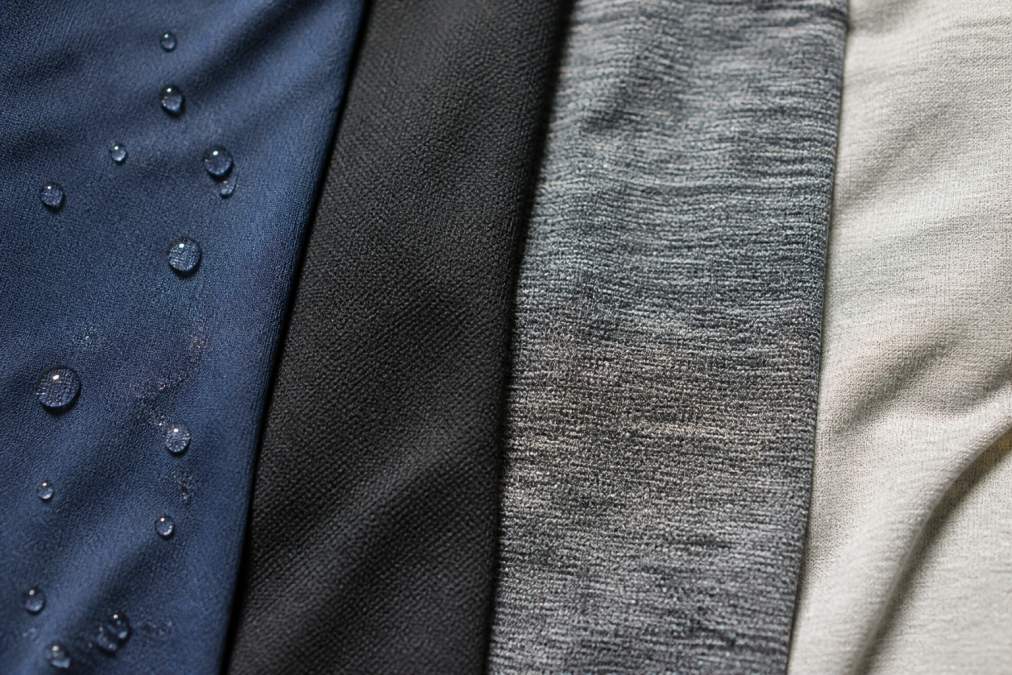
Nike's Dri-FIT technology uses polyester microfiber construction that's become an industry standard. The microfiber design creates more surface area for moisture transport, allowing sweat to spread quickly and evaporate before accumulating. Dri-FIT garments typically feature 88% polyester and 12% spandex.
Polyester blends range from budget-friendly to premium constructions. Lighter polyester (120-150 GSM) works best for hot gyms and high-intensity cardio. Medium-weight blends (150-200 GSM) offer the best balance for most lifters, providing durability and coverage without excessive heat retention. Heavier polyester (200+ GSM) works better in cooler climates.
The downside is that polyester can feel plasticky compared to natural fibers, and it contributes to microplastic shedding during washing.
Nylon and Nylon-Spandex Blends
Nylon offers a softer hand-feel than polyester while maintaining excellent moisture-wicking properties. It's more durable in high-friction applications, resisting abrasion better so your shirt won't pill or tear easily when rubbing against knurled bars.
Nylon-spandex blends (typically 85% nylon, 15% spandex) are popular in premium activewear because they combine durability with exceptional stretch and recovery. The higher spandex ratio gives you more elasticity, valuable for lifters needing maximum range of motion.
Under Armour's HeatGear line uses nylon-based constructions with proprietary moisture-wicking technology. Their compression design provides subtle support during heavy lifting, though compression isn't for everyone.
The trade-off with nylon is cost. Nylon blends typically cost more than polyester equivalents and require slightly more careful washing to maintain softness.
Merino Wool for Odor Control and Temperature Regulation
Merino wool is a natural fiber that performs like a synthetic. Unlike regular wool, merino is fine enough for bare skin and naturally resists odor better than any synthetic option. Proteins in the fiber inhibit bacterial growth, so merino gear stays fresher longer between washes.
Merino also excels at thermoregulation, naturally insulating when cold and releasing heat when warm. The fiber can absorb up to 30% of its weight in moisture while still feeling dry to the touch, creating a buffer against rapid sweat spikes.
The downsides are significant. Merino is expensive, typically costing 50-100% more than synthetic blends. It's less durable in high-friction applications and pills more easily when rubbed against rough equipment. Merino requires hand-washing or delicate cycles to maintain longevity, conflicting with the machine-wash approach most lifters prefer.
Four-Way Stretch Blends for Lifting Mechanics
Four-way stretch fabrics stretch and recover in all directions, forward/backward, side-to-side, and diagonally. This is critical for weightlifting because movement isn't linear. When you squat, your torso rotates, shoulders shift, and arms need unrestricted overhead mobility.
Four-way stretch blends typically combine polyester or nylon (85-90%) with higher spandex content (10-15%) than standard moisture-wicking fabrics. The increased spandex provides multi-directional elasticity needed for complex lifting movements and recovers faster after sets.
Premium four-way blends maintain elasticity for 50+ washes, while budget options may lose recovery after 15-20 washes. For lifters, this is the difference between a shirt that fits perfectly for six months versus one that feels loose after two months of regular training.
Fabric Weight and Gym Climate: Why GSM Matters
Fabric weight, measured in grams per square meter (GSM), directly impacts how a shirt performs in different environments. Lightweight fabrics (120-150 GSM) maximize airflow for hot environments and high-intensity training. Midweight fabrics (150-200 GSM) balance durability with breathability, offering the best balance for most lifters. Heavyweight fabrics (200+ GSM) provide maximum durability but sacrifice breathability, working best in cool environments.
Lighter weight equals faster evaporation but lower durability, while heavier weight offers durability at the cost of breathability. Your choice depends on your gym environment, training intensity, and personal preference.
How to Wash Performance Fabrics Properly
Proper care extends the lifespan of moisture-wicking fabrics and maintains their performance properties. Start with cold water, hot water breaks down synthetic fibers faster and damages spandex. Use a gentle or delicate cycle rather than heavy-duty. Avoid fabric softener entirely, as it blocks the moisture-wicking channels that make the fabric work.
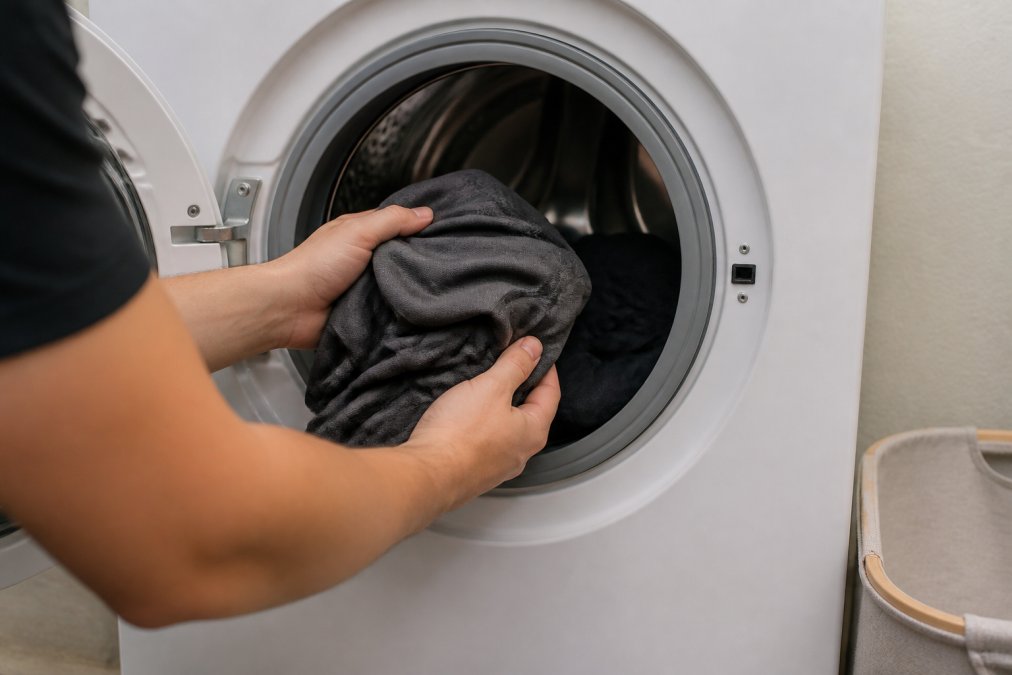
Wash with like colors and avoid washing performance fabrics with rough materials like jeans or towels. Turn your shirt inside out before washing to reduce abrasion on the outer surface.
For drying, skip the machine dryer. High heat damages synthetic fibers and accelerates spandex degradation. Hang dry or lay flat, most performance fabrics dry within 2-4 hours in normal room conditions. If you must use a dryer, use the lowest heat setting and remove the shirt while still slightly damp.
Durability and Microplastics: What Lifters Should Know
Synthetic performance fabrics shed microplastics during washing, tiny fibers that reach oceans and soil. Polyester and nylon shed more than natural fibers, with washing as the primary source. Tightly woven fabrics shed less than loosely woven ones, and higher-quality finishes reduce shedding.
Reduce microplastic shedding through proper care: wash in cold water with gentle cycles to produce less friction. Washing less frequently also matters, wearing gear 2-3 times before washing reduces total shedding over the garment's lifetime (peer-reviewed research). Some lifters use microfiber-catching washing machine filters or bags designed to trap shed fibers, reducing shedding by 50-80%.
Durability is the most important factor in reducing environmental impact. A shirt lasting three years has half the environmental impact of one lasting 18 months, even if the durable shirt sheds slightly more per wash. Investing in quality moisture-wicking fabrics that resist pilling and maintain properties through hundreds of washes is the more sustainable choice than buying cheaper shirts that degrade quickly.
| Fabric Type | Microplastic Shedding | Durability for Lifting | Best Care Practice |
|---|---|---|---|
| Polyester blend | Moderate | Excellent | Cold water, gentle cycle, air dry |
| Nylon blend | Low | Excellent | Cold water, gentle cycle, air dry |
| Merino wool | Minimal | Good (high-friction areas) | Hand wash or delicate cycle |
| Cotton | None | Poor | Not recommended for lifting |
Conclusion
The best moisture-wicking fabrics for weightlifting combine synthetic fibers (polyester or nylon) with spandex in midweight constructions that balance durability, breathability, and stretch. Polyester blends offer excellent value and proven performance, while nylon blends provide superior durability and comfort at a premium price. Merino wool works for specific use cases but requires careful maintenance. Four-way stretch fabrics are essential for dynamic movements demanding multi-directional mobility.
Your choice depends on your gym environment, training intensity, budget, and priorities. For most lifters, a polyester-spandex blend in the 150-180 GSM range delivers the best balance across all factors.
Kritter Komfort's activewear delivers the performance characteristics serious lifters need: breathable, stretch-friendly fabrics engineered for moisture management, durable stitching that withstands heavy training, and machine-wash friendly construction for practical everyday care. Our athletic cuts are true to size and designed to move with your body through complex lifting mechanics, while our bold but understated designs transition seamlessly from the gym to everyday wear. Shop All to find the moisture-wicking gear that supports your training without compromise.
Frequently Asked Questions
What fabric is most moisture-wicking for weightlifting?
Polyester and nylon blends rank highest for moisture-wicking in weightlifting because they're hydrophobic, meaning water beads on the surface rather than absorbing into the fiber. This allows sweat to move through capillary action to the outer layer where it evaporates quickly. Four-way stretch polyester-spandex blends are especially effective because they combine moisture transport with the range of motion lifters need for heavy compound movements like squats and deadlifts.
Why should you avoid cotton for weightlifting?
Cotton is hydrophilic, absorbing sweat rather than moving it away from your skin. Once saturated, cotton stays wet against your body, reducing breathability and creating chafing during heavy lifting. Cotton also dries slowly, holds odors, and loses elasticity when wet, which compromises your range of motion. For intense training, synthetic blends outperform cotton in every performance metric.
How do you prevent pilling on moisture-wicking fabrics during heavy lifting?
Pilling happens when friction causes fiber breakage, which is common in high-abrasion zones like the shoulders and underarms during weightlifting. To minimize pilling, wash inside-out in cold water, use a gentle cycle, avoid fabric softener (which weakens fibers), and dry on low heat or air-dry. Higher GSM (grams per square meter) fabrics resist pilling better than lightweight options, so choose 150-180 GSM for durability if you lift heavy.
What is the difference between moisture-wicking and breathable fabrics?
Moisture-wicking refers to how fast a fabric moves sweat away from your skin through capillary action and evaporation. Breathability refers to how much air passes through the fabric to allow heat escape. A fabric can wick moisture but have poor breathability if it's tightly woven, or be breathable but absorb sweat if it's made from cotton. The best weightlifting fabrics do both: polyester-nylon blends wick sweat while maintaining airflow for thermoregulation.
This article was written using GrandRanker