

Table of Contents
- Why Performance Apparel Works for Casual Wear
- Athleisure Styling Tips: The 5 Core Rules
- How to Layer Activewear for Any Setting
- Comfortable Gym Wear for Everyday Errands
- Styling Performance Apparel for the Office
- Evening Looks: From Workout to Dinner
- Fabric Care: Keeping Your Gear Looking Casual
- Your Capsule Wardrobe for Performance Style
- Frequently Asked Questions
Last Updated: September 7, 2026
Why Performance Apparel Works for Casual Wear
Performance apparel is clothing engineered with technical fabrics that manage moisture, stretch with your body, and hold their shape through repeated wear and washing. It works for casual settings because athletic brands stopped designing only for the gym and started designing for the life around it. When your tee wicks sweat and your joggers have four-way stretch, you are wearing the most functional version of casual clothing available.
That utility is why the category has blurred into everyday wardrobes. At Kritter Komfort, we build activewear with breathable, stretch-friendly fabrics and durable stitching so the same piece carries you from a lifting session to brunch. The trick is treating technical apparel as a foundation, not a costume: anchor the look with structured staples and let the performance features do the quiet work.
Below, we will show you exactly how to style performance apparel for casual wear using five core rules, layering methods, and outfit formulas that work from the office to dinner.
Athleisure Styling Tips: The 5 Core Rules
Athleisure styling tips start with a simple premise: let one performance piece lead and build the rest of the outfit around it. The five rules below give you a repeatable framework instead of guesswork.
- Anchor with neutrals. A color palette of black, gray, navy, olive, and white makes technical pieces look intentional rather than accidental.
- Mix one technical piece with two casual ones. Pair a performance tee with straight-leg denim and a leather belt. The contrast reads as style, not gym clothes.
- Choose a clean silhouette. Look for athletic cuts that are true to size. Baggy draws attention; a fit that follows your frame looks deliberate.
- Prioritize texture contrast. Soft cotton against a smooth technical shell prevents the outfit from looking like a uniform.
- Keep branding understated. Bold but minimal designs integrate with everyday wear. Logos plastered across the chest rarely translate outside the gym.
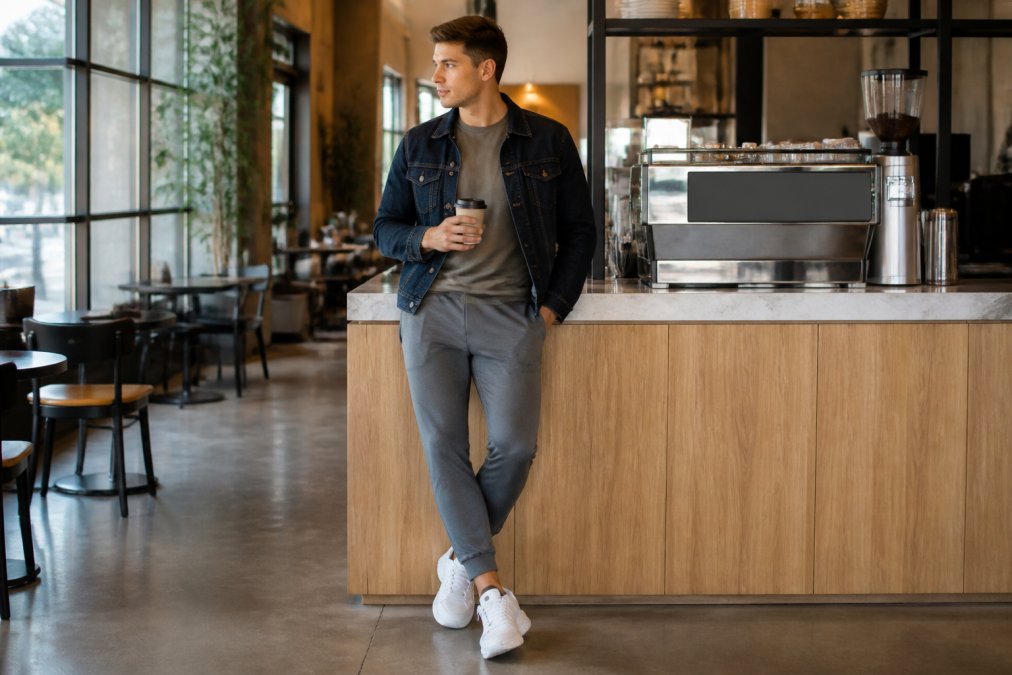
The goal is versatility. One well-chosen performance piece should work with items you already own, which is the core of functional fashion.
How to Layer Activewear for Any Setting
Layering activewear is the fastest way to move technical pieces between contexts. The method is simple: performance base, midlayer for warmth, structured outer layer to signal "casual." The difference between a look that works and one that misses lies in the specific choices at each step.
Start with a moisture-wicking base layer against your skin. This manages sweat whether you are commuting or heading to the gym later. For casual wear, a heavyweight performance tee (6 oz. or heavier) in a solid color drapes better than a lightweight, clingy training shirt. The heavier fabric holds its structure, so it doesn't look like an undershirt when you remove your outer layer.
Add a breathable midlayer like a lightweight hoodie or quarter-zip in a neutral tone. Here, fabric weight and finish matter. A French terry or loopback cotton-blend hoodie reads as casual and comfortable, while a shiny, slick running jacket signals athletic intent. If you're wearing a performance polo, a merino wool or cotton crewneck sweater over it adds warmth and texture without fighting the technical fabric's properties.
Finish with a structured piece such as a denim jacket, chore coat, or tailored blazer. That final layer separates an intentional outfit from gym clothes. A performance tee and joggers alone read as workout gear; throw on an unlined blazer or a crisp overshirt, and the same pieces read as smart-casual.
For cooler months, layer a performance long-sleeve under a fleece vest. The technical fabric keeps you dry while the vest adds warmth without bulk. When temperatures drop below 40°F, swap the vest for a quilted or padded jacket in a matte finish to prevent the athletic sheen that makes technical outerwear look out of place (the CDC).
A specific formula that works across settings: performance tee + unstructured blazer + tapered chinos + minimalist sneakers. The blazer provides the structure, the tee provides comfort, and the chinos bridge the gap. For a more casual version, replace the blazer with a denim jacket and the chinos with dark denim. The base layer stays the same; only the outer context changes.
Comfortable Gym Wear for Everyday Errands
Comfortable gym wear for everyday errands is about choosing pieces that perform during your workout and still look presentable at the grocery store or coffee shop. The solution is not a separate wardrobe but selecting the right versions of the gear you already train in.
Look for joggers with a tapered leg rather than a baggy sweatpant cut. The taper keeps the silhouette clean and prevents fabric from dragging. Choose a performance tee in a heavier-weight fabric that drapes well instead of clinging. A shirt that holds its structure off the mat will hold it in public.
Your sneakers do heavy lifting here. A minimalist white or neutral trainer pairs with nearly everything. Keep them clean, and they anchor the outfit. Avoid loud colorways and racing silhouettes for everyday wear, since those signal competition rather than casual.
The fit matters more than the brand. Athletic cuts that are true to size prevent the sloppy look that ruins otherwise good outfits. If the shoulders sit right and the hem hits at the right point, the piece looks intentional.
Styling Performance Apparel for the Office
Styling performance apparel for the office requires one rule above all: the technical piece must be the least visible element of the outfit, working best as the foundation under business casual layers.
A performance polo in a solid color under a tailored blazer is the easiest entry point. The moisture-wicking fabric keeps you dry through a commute, while the blazer provides the professional signal. Pair with chinos or tailored trousers, never shorts, and add a leather belt and a simple watch.
For a more relaxed office, swap the polo for a performance henley or long-sleeve tee in a dark neutral. Layer it under an unstructured jacket or cardigan. The clean silhouette of the athletic cut reads as modern, not sloppy.
Avoid wearing compression gear or items with visible logos in the office. Those pieces belong in the gym. Also avoid overly technical outerwear like running shells; a soft-shell jacket in a matte finish works, but shiny athletic jackets do not.
The result is an outfit that keeps you comfortable through a full day of sitting, walking, and meetings without sacrificing how you present yourself.
Evening Looks: From Workout to Dinner
Transitioning from the gym to dinner means changing one or two elements, not your entire outfit. The goal is a day-to-night shift that takes under five minutes.
Start with a dark performance tee or polo in a fitted cut. Dark colors read more formal than light ones. Swap your training joggers for tailored trousers or dark denim. This single change does the most work. Trade your running shoes for clean leather sneakers or minimalist trainers. Finally, add a structured layer like a bomber jacket or blazer.
The performance tee stays because its fabric is wrinkle-free and moisture-wicking. That is the advantage of technical apparel: it looks fresh hours after a workout. What changes is everything around it.
This system works because it relies on versatile pieces. A dark performance top is a wardrobe essential that serves both the gym and the dinner table.
Fabric Care: Keeping Your Gear Looking Casual
Fabric care determines whether your performance apparel looks like intentional casual wear or neglected gym clothes. Performance fabrics are engineered with specific properties, moisture-wicking, stretch recovery, and odor control, that degrade when you use the wrong care routine. Understanding the mechanism behind each care step separates a piece that lasts three years from one that pills and sags after a season.
The science of washing performance fabrics. Most technical apparel uses synthetic fibers like polyester, nylon, or elastane (spandex). These fibers are hydrophobic, they repel water, which is why they dry quickly, but they also attract and hold onto body oils and the bacteria that feed on them (peer-reviewed research). That's why a performance tee smells even after a wash if you use fabric softener, which coats the fibers with a waxy residue that traps odors and blocks wicking. The fix is simple: use a sports-specific detergent or a mild, fragrance-free option without softeners.
Wash in cold water, always. Heat breaks down the elastane fibers that give performance apparel its four-way stretch. Once those fibers degrade, the garment loses its recovery, it stretches out at the knees and elbows and never snaps back. Cold water (below 70°F) preserves the fiber structure; use a gentle cycle to reduce friction, which causes pilling (cleaninginstitute.org).
Air dry or use the lowest heat setting. The dryer is the single biggest killer of performance apparel. High heat shrinks synthetic blends and melts the microfibers that create the fabric's texture, leaving it stiff and shiny. If you must use a dryer, set it to the lowest heat and remove garments while still slightly damp, then hang them to finish drying.
Separate your activewear from heavy items like denim. The friction of zippers, rivets, and rough denim seams causes pilling on softer performance knits. Turn garments inside out before washing to protect the outer surface, reduce abrasion, and keep colors from fading.
Avoid bleach and harsh stain removers. These damage synthetic blends and cause discoloration; the chlorine in bleach attacks the polymer chains in nylon and polyester, weakening the fabric. Spot-treat stains with a gentle detergent or an enzyme-based sports stain remover. For stubborn odor, add a half-cup of white vinegar to the rinse cycle, it neutralizes the alkaline residue that bacteria leave behind without damaging synthetic fibers.
The longevity payoff. With proper care, performance pieces hold their stretch and color for years. A technical tee that costs $40 and lasts 200 washes costs $0.20 per wear; a fast-fashion cotton tee that costs $10 and falls apart after 20 washes costs $0.50 per wear. The math favors performance apparel when you protect the fabric's engineered properties.
Your Capsule Wardrobe for Performance Style
A capsule wardrobe for performance style pairs a small set of technical pieces with structured staples to maximize outfit combinations. You do not need a closet full of activewear, just roughly eight pieces that all work together.
The performance core:
- 2 performance tees in neutral colors (black, white, or gray)
- 1 performance polo in a dark tone
- 1 pair of tapered joggers
- 1 pair of technical chinos or travel pants
The structured staples:
- 1 denim jacket or chore coat
- 1 unlined blazer
- 1 pair of dark denim jeans
- 1 pair of minimalist leather or clean sneakers
With these eight pieces, you can build outfits for the gym, errands, the office, and dinner. The performance pieces provide comfort and flexibility; the structured staples provide the context that makes them appropriate for each setting.
The key is sticking to a consistent color palette. When every piece coordinates, any combination works, the essence of outfit coordination and modern tailoring applied to technical apparel.
Performance style is not about wearing gym clothes everywhere. It is about choosing technical apparel that earns its place in your everyday wardrobe through comfort, durability, and a clean aesthetic. Start with the capsule above, and the line between workout gear and casual wear disappears.
Building a wardrobe that moves from the gym to the office to dinner takes gear that performs at every step. Kritter Komfort designs activewear with breathable, stretch-friendly fabrics and durable stitching for intense training, then finishes it with athletic cuts that are true to size and bold but understated designs. The result is machine-wash friendly apparel that looks as good at the golf course or coffee shop as it does under a barbell. Get started with Kritter Komfort and build a wardrobe that works as hard as you do.
Frequently Asked Questions
How do you make performance apparel look professional?
Focus on fit and fabric. Choose performance pieces with a tailored, athletic cut that is true to size, avoiding baggy or overly shiny materials. Pair a solid, moisture-wicking polo with chinos or dark, structured trousers. Add a blazer in a neutral tone to elevate the look instantly. Complete the outfit with clean, minimalist sneakers or loafers. The goal is to mimic the silhouette of traditional office wear while keeping the comfort and flexibility of technical apparel.
What are the best layering techniques for athletic wear?
Start with a breathable, moisture-wicking base layer, like a performance t-shirt. Add a mid-layer such as a lightweight fleece or a stylish hoodie for warmth. Finish with an outer layer that provides structure, like a denim jacket, a bomber jacket, or a softshell. This system lets you adapt to changing temperatures and settings. For a more polished look, use a blazer as your outer layer over a simple performance tee.
Can performance fabrics be styled for a night out?
Yes, choose darker colors like black, charcoal, or deep navy for a sleeker silhouette. Select pieces with a matte finish rather than a shiny athletic sheen. Pair high-quality performance joggers with a fitted, dark knit polo or a casual button-down shirt. Swap your gym sneakers for clean, leather trainers or minimalist low-tops. This combination keeps you comfortable while looking intentional and put-together for dinner or drinks.
How do you balance comfort and style in everyday outfits?
The key is proportion. If you wear comfortable, relaxed-fit joggers, balance them with a more structured top, like a fitted henley or a crisp t-shirt. If your top is a loose, comfortable hoodie, pair it with tapered pants or well-fitted jeans. This contrast creates a stylish look. Sticking to a neutral color palette of blacks, grays, and earth tones makes mixing and matching these comfortable pieces easier.