

Table of Contents
- What 'True to Size' Actually Means for Athletic Apparel
- How to Measure for Workout Clothes Accurately
- Reading a Size Chart: What the Numbers Tell You
- Compression vs Regular Fit Athletic Gear: Which Performs Better
- Fabric Technology and How It Impacts Sizing
- Tips for Buying Activewear Online Without Guessing
- Common Sizing Pitfalls and How to Avoid Them
- Sizing Guide by Activity Type
What 'True to Size' Actually Means for Athletic Apparel
True to size means garment measurements align with standard sizing charts without requiring you to size up or down. However, true to size doesn't mean the same thing across all brands, and it doesn't account for how different fabrics behave after washing or how compression levels change the fit experience.
At Kritter Komfort, we've built our sizing around this principle: your listed size should fit you without guesswork. For lifters, runners, and anyone doing serious training, fit directly affects performance. A shirt that's too loose creates drag and reduces your range of motion feedback. Too tight, and you're fighting the fabric instead of focusing on the workout.
How to Measure for Workout Clothes Accurately
Taking accurate body measurements is the foundation of finding clothes that fit right. Most people either skip this step entirely or measure incorrectly, which explains why they end up with gear that doesn't perform as expected.
Essential measurements: chest, waist, inseam, and shoulder width
These four measurements cover 95% of what determines whether activewear will fit your body properly. Chest measurement tells you if the shirt will allow full range of motion across your shoulders and arms. Waist measurement ensures pants and shorts sit where they should without bunching or sliding during movement. Inseam length is critical for leg work, too short and you're exposed, too long and fabric bunches at your ankles. Shoulder width determines whether the armhole sits correctly and whether you'll have restriction during overhead movements.
Chest measurement should be taken at the fullest part of your chest, directly across your nipples, standing naturally without flexing. For waist, measure at the narrowest point, usually just above your hip bones. Inseam runs from your crotch down to the inside of your ankle bone. Shoulder width is measured across the back from the edge of one shoulder to the edge of the other.
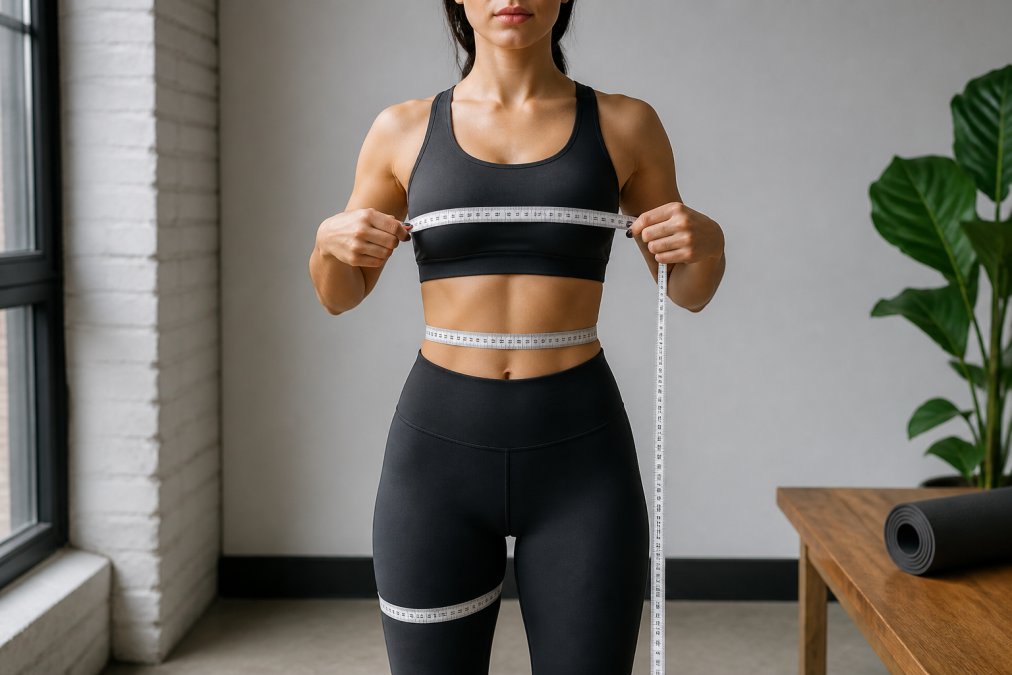
Using a measurement tape correctly
The biggest mistake people make is pulling the tape too tight. You want snug contact with your skin, not compression. Use a fabric measuring tape, not a rigid ruler. Stand in front of a mirror so the tape runs parallel to the ground and isn't twisted. Take each measurement twice and average them. Record your measurements to the nearest half inch. If you're between sizes on a brand's chart, check their fit notes or customer reviews to see which direction they tend to run.
Reading a Size Chart: What the Numbers Tell You
A size chart shows you the exact dimensions of each size, usually broken down by chest, waist, length, and sleeve length for tops. Find your measurements on the chart, then look at the range for that size. If your chest is 38 inches and the size large shows 38-40 inches in the chest column, you're at the lower end of that size. Pay attention to how the brand measures, some measure garments laid flat on a table, others measure on a form or body. These methods can give different results.
Length measurements matter more than people think, especially for anyone who's taller or shorter than average. A shirt that's technically true to size in the chest but cut too short in the body will bunch when you raise your arms.
Compression vs Regular Fit Athletic Gear: Which Performs Better
Compression gear applies graduated pressure to your muscles, which increases blood flow and can reduce muscle oscillation during movement. Regular fit gear has no compression, it's just fabric that moves with your body. The question isn't which is objectively better, but which serves your specific activity and body type.
How compression levels affect performance and recovery
Compression comes in different levels: mild (15-20 mmHg), moderate (20-30 mmHg), and high (30+ mmHg). During intense training, moderate compression can reduce muscle fatigue and improve performance by reducing muscle oscillation. For recovery, compression worn after training may help reduce soreness, though the evidence is mixed.
The trade-off is that compression requires a tighter fit, which means sizing becomes more critical. If you order compression gear in your normal size and it's too tight, you've restricted blood flow instead of optimizing it. If it's too loose, you've lost the compression benefit entirely.
Compression for different activities: lifting, cardio, and flexibility work
For heavy lifting, moderate compression in the legs and core can reduce strain and improve stability. Cardio benefits from compression primarily in the lower body, compression socks or tights can reduce leg fatigue during long runs and improve recovery afterward.
Flexibility work like yoga or Tai Chi doesn't benefit much from compression. In fact, compression can restrict your range of motion slightly, which works against the goal of flexibility training. Regular fit gear that allows full movement is better for these activities.
Fabric Technology and How It Impacts Sizing
Modern athletic fabrics are engineered, not just woven. Four-way stretch, moisture-wicking, and anti-chafe treatments all affect how a garment fits and performs.
Four-way stretch and fabric elasticity explained
Four-way stretch means the fabric stretches in four directions: horizontally, vertically, and diagonally in both directions. This gives you more freedom of movement because the fabric accommodates motion from any angle.
Elasticity is the fabric's ability to return to its original shape after stretching. High-elasticity fabrics snap back quickly. Spandex content drives elasticity. Most quality athletic wear contains 10-20% spandex mixed with nylon or polyester. The sweet spot for most activities is 15-18% spandex, enough for excellent recovery without diminishing returns.
Post-wash shrinkage: what to expect from different synthetic fibers
Synthetic fabrics shrink differently depending on their composition. Nylon shrinks less than polyester when washed in hot water, but both can shrink 3-5% if you're not careful. Machine washing in cold water with a gentle cycle minimizes shrinkage. Dryer heat accelerates it.
Check the care tag before buying. If it says "lay flat to dry," that's a signal the brand knows their fabric is prone to shrinkage or damage from the dryer. Kritter Komfort gear is designed for machine washing because we know most people aren't going to hand wash their workout clothes. Our fabrics are treated to maintain their shape and fit through repeated washing, which means that true to size fit stays true to size.
Tips for Buying Activewear Online Without Guessing
Online shopping for athletic wear requires a different strategy than shopping in a store where you can try things on. You're working with limited information, so you need to be strategic about which brands you trust and what signals you look for.
Comparing fit across brands and sizing standards
Different brands use different sizing standards. The only reliable way to know is to check recent customer reviews specifically mentioning fit. When comparing across brands, look for reviews from people with similar body types to yours. Check the return policy before ordering. A 30-day return window with free returns means you can order multiple sizes and keep the one that fits.
Return policies and fit guarantees that protect you
The best return policies are unrestricted: 60 days, free returns, no questions asked. These brands are confident their sizing is accurate. Fit guarantees are rarer but valuable. Some brands promise that if you follow their measurement guide and the item doesn't fit, they'll exchange it for free. Keep receipts and photos of items in their original condition.
Common Sizing Pitfalls and How to Avoid Them
People make the same sizing mistakes repeatedly. Knowing these pitfalls saves you money, time, and frustration.
Why sizing varies so much between brands
Sizing variation exists because there's no universal standard for athletic wear. Each brand decides their own sizing based on their target customer, manufacturing location, and design philosophy. A brand targeting competitive athletes cuts tighter than a brand targeting casual fitness enthusiasts. The solution is to never assume your size carries across brands. Always check the size chart.
Fit for non-standard proportions and inclusive sizing
Not everyone fits the standard model of athletic apparel. If you're broader in the shoulders, longer in the torso, or have a larger waist relative to your chest, standard sizing might not work for you. Some brands offer extended sizing or proportional sizing, different length options for the same chest size, for example. If you're consistently struggling to find gear that fits, some brands offer customization or made-to-measure options for an additional cost.
Garment fit and its impact on performance and comfort
How a garment fits directly affects how well it performs. A shirt that's too loose creates drag and reduces your ability to feel your body position during movement. Too tight, and you're fighting the fabric instead of focusing on the exercise. The Goldilocks zone is snug enough that the fabric moves with you without excess material, but loose enough that you're not restricted. If a garment is fitted correctly, you'll notice it during your workout, you'll move more freely and be less distracted by the gear.
Sizing Guide by Activity Type
Different activities have different fit requirements because they demand different ranges of motion and different relationships between your body and the garment.
Lifting and strength training: what fit works best
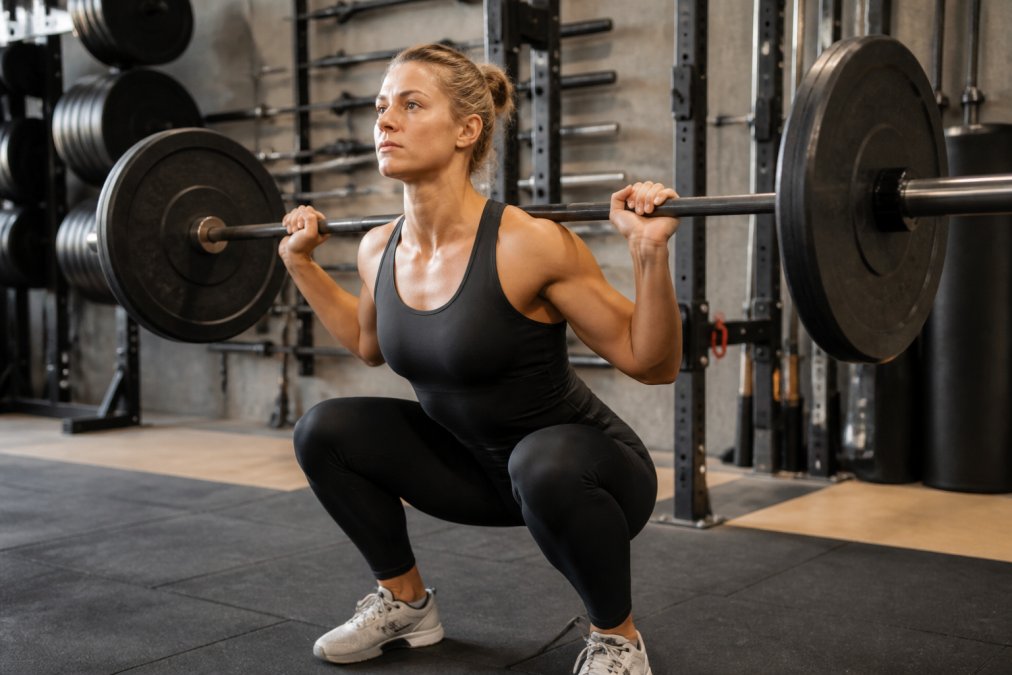
Lifting requires a snug fit that doesn't restrict your range of motion. You want enough room in the shoulders and chest to move through a full range of motion during presses and pulls. You want the fit snug enough in the torso that the shirt doesn't ride up when you bend forward for deadlifts. You want enough room in the legs that you can move through a full squat without the fabric bunching or restricting.
For heavy lifting, many people prefer a slightly tighter fit because it provides feedback about body position and reduces the distraction of loose fabric moving around. Compression in the core and legs can help stabilize your torso during heavy compound movements.
Cardio and running: flexibility and moisture-wicking priorities
Running and cardio require a fit that's snug enough to prevent chafing but loose enough to allow full stride length. Chafing happens where fabric moves against skin repeatedly, so you want minimal excess material in the underarm area, on the sides, and in the inner thigh.
Moisture-wicking becomes more important in cardio because you're generating significant sweat volume. A slightly tighter fit actually performs better for moisture-wicking because the fabric stays in contact with your skin instead of sagging away. Inseam length is critical; an inseam that's an inch too long creates a safety hazard because the fabric can bunch at your ankles.
Golf and Tai Chi: range of motion and unrestricted movement
Golf and Tai Chi both demand unrestricted movement through many planes. Golf requires full shoulder rotation and hip rotation without the fabric pulling or bunching. Tai Chi requires flowing, continuous movement through all planes without any restriction.
For golf, you want a fit that's loose enough to allow full shoulder turn without the fabric pulling across your back. For Tai Chi, you want maximum freedom of movement in every direction. Compression is counterproductive because it can restrict the flowing movements that are central to the practice.
Finding true to size athletic apparel means understanding what that term actually means, measuring yourself correctly, and knowing how different fabrics and fits serve different activities. At Kritter Komfort, we've engineered our gear to fit true to size because we know that consistency builds trust. When you order a piece, you get the fit you expect, the breathable and stretch-friendly fabrics perform as designed, and the durable stitching holds up through months of intense training. That's not just sizing, that's a promise we back up every time you wear it.
Frequently Asked Questions
What does 'true to size' mean for athletic apparel?
True to size athletic apparel means the garment fits your standard measurements without running large or small. Unlike some brands that size up or down unpredictably, true to size apparel allows you to order your usual size with confidence. However, fit also depends on fabric elasticity, compression levels, and garment construction. Always check the brand's size chart and read customer reviews about fit consistency before ordering online.
How do I measure myself accurately for workout clothes?
Use a soft measurement tape and measure while wearing minimal clothing. For chest, measure around the fullest part horizontally. For waist, measure at your natural waistline where your body naturally bends. For inseam, measure from your inner thigh to your ankle while standing. For shoulder width, measure across your back from shoulder bone to shoulder bone. Take measurements while relaxed, not flexed, and repeat twice to ensure accuracy. Compare your measurements directly to the brand's size chart rather than relying on your usual clothing size.
What's the difference between compression and regular fit athletic gear?
Compression fit athletic gear applies gentle, sustained pressure to muscles, improving blood flow and potentially reducing muscle fatigue during and after workouts. Regular fit provides freedom of movement without pressure. Compression works best for intense lifting and recovery, while regular fit suits cardio, flexibility work like Tai Chi, and activities requiring maximum range of motion. Compression levels vary from mild (15-20 mmHg) to moderate (20-30 mmHg). Your activity and personal comfort preference determine which performs better for you.
Why do athletic clothing sizes vary so much between brands?
Athletic sizing varies because brands use different sizing standards, fabric blends, and garment construction methods. A medium at one brand may fit like a large at another due to differences in how much stretch the fabric provides, whether the cut is slim or relaxed, and regional sizing conventions. Synthetic fibers like spandex content also affect how snug or loose a garment feels. Always consult each brand's specific size chart and read customer fit reviews rather than assuming your usual size will work across all brands.
How should I check for shrinkage before machine washing athletic apparel?
Most modern athletic apparel made from synthetic fibers resists shrinkage, but post-wash changes can occur. Check the care label for fiber content and washing instructions. Fabrics with higher spandex content (over 20%) may lose elasticity faster than those with lower percentages. Machine wash in cold water and air dry to minimize shrinkage risk. If durability and stretch retention matter for intense training, choose apparel with four-way stretch technology and durable stitching designed to handle frequent washing and high-intensity workouts.
What should I look for in a size chart before buying athletic apparel online?
A reliable size chart shows specific garment measurements (chest width, sleeve length, inseam) rather than just small, medium, large labels. Compare these measurements to your body measurements, not your usual clothing size. Look for charts that include fit notes, such as 'slim fit' or 'relaxed fit,' and check whether the brand runs true to size or tends to fit large or small. Read customer reviews mentioning fit consistency. Brands offering easy returns or fit guarantees provide extra protection when ordering online without trying on first.
Is athletic wear supposed to be tight or loose for best performance?
Athletic wear should fit snugly without restricting movement or causing chafe. For lifting and strength training, a closer fit prevents excess fabric from bunching and allows better form visibility. For cardio and running, a slightly looser fit permits unrestricted breathing and movement. For flexibility-focused activities like Tai Chi, loose fit that allows full range of motion works best. The ideal fit depends on your activity, body type, and personal preference. Try on or test with a brand's return policy to find your optimal fit.
What fabric technologies should I prioritize for true-to-size fit consistency?
Look for four-way stretch fabrics that maintain elasticity through washing and intense use. Moisture-wicking synthetic fibers help prevent fabric degradation from sweat. Higher spandex content (15-20%) provides better stretch recovery but may require gentler washing. Brands using technical apparel construction with reinforced seams and durable stitching maintain their fit longer. Check customer reviews specifically mentioning durability after months of intense training, as fabric quality directly impacts whether a garment stays true to size or stretches out over time.
This article was written using GrandRanker