

Table of Contents
- Fabric Comparison Table: Quick Reference for Versatile Activewear
- Polyester: The Industry Standard for Moisture-Wicking Activewear
- Synthetic vs Natural Activewear Materials: Performance, Comfort, and Trade-Offs
- Nylon Spandex Blends: Stretch, Recovery, and Soft Hand-Feel
- Nylon Spandex Blends: Stretch, Recovery, and Soft Hand-Feel
- Merino Wool, Bamboo, and TENCEL: Natural and Eco-Friendly Activewear Fabrics
- Fabric Weight (GSM) and Seasonal Suitability: What Most Guides Skip
- Fabric Weight (GSM) and Seasonal Suitability: What Most Guides Skip
- How to Wash Performance Fabrics Properly to Protect Stretch and Breathability
- Frequently Asked Questions
Last Updated: September 10, 2026
Fabric Comparison Table: Quick Reference for Versatile Activewear
Choosing what fabrics are best for versatile activewear comes down to matching fiber composition to your training intensity, climate, and how often you wash your gear. This guide breaks down every major fabric category so you can stop guessing and start buying with confidence.
The short answer: polyester and nylon-spandex blends handle high-intensity work best, while TENCEL™, merino wool, and bamboo serve low-impact and everyday wear. Below, we'll show you exactly how each fabric performs, where it fails, and which one fits your routine.
| Fabric | Moisture-Wicking | Stretch/Recovery | Durability | Best For |
|---|---|---|---|---|
| Polyester | Excellent | Moderate | High | Running, gym, outdoor sports |
| Nylon Spandex | Good | Excellent | High | Yoga, lifting, compression wear |
| TENCEL™ Lyocell | Good | Low (unless blended) | Moderate | Low-impact, athleisure |
| Merino Wool | Good | Low | Moderate | Hiking, multi-day trips |
| Bamboo | Good | Low (unless blended) | Moderate | Light exercise, lounging |
| Organic Cotton | Poor | None | Moderate | Yoga, walking, recovery days |
Polyester: The Industry Standard for Moisture-Wicking Activewear
Polyester is the most widely used performance fabric because it moves sweat away from skin faster than any natural fiber and holds up to repeated machine washing. Its hydrophobic structure pushes moisture to the surface where it evaporates quickly, keeping you dry during high-sweat sessions.
What most guides miss is that polyester's real advantage isn't just sweat management. It resists shrinking and stretching, takes sublimation printing exceptionally well, and provides UV resistance for outdoor training. The trade-off? It can hold onto odors more than natural fibers, and its hand-feel is slightly less soft than nylon.
Pros and Cons of Polyester
Pros:
- Excellent moisture-wicking and quick drying
- Strong UV resistance for outdoor versatility
- Highly durable through frequent washing
- Affordable compared to nylon blends
Cons:
- Retains odors more than natural fibers
- Slightly rougher texture than nylon spandex
Synthetic vs Natural Activewear Materials: Performance, Comfort, and Trade-Offs
The synthetic vs natural activewear materials debate matters most when you understand what each category does well at the fiber level, not just at the marketing level. Synthetic fibers like polyester and nylon excel at sweat management, durability, and elasticity. Natural fibers like merino wool, bamboo, and organic cotton prioritize breathability, odor control, and skin comfort.
Here's the practical difference: synthetic fibers are hydrophobic, meaning they repel water and push sweat outward along the fiber surface where it can evaporate. Natural fibers are hydrophilic, absorbing moisture into the fiber itself. That makes naturals feel comfortable at rest but heavy and slow-drying during intense training. For high-impact work, synthetics win. For yoga-specific or low-impact movement, naturals hold their own.
The Mechanism Behind the Split
Synthetic wicking works because manufacturers engineer the fiber cross-section, think channels, trilobal shapes, or hollow cores, to create capillary action that pulls liquid away from skin. That engineering is why a 150 GSM polyester tee can feel dry in 10-15 minutes after a hard run, while a comparable cotton tee stays damp for an hour or more. Natural fibers rely on the fiber's own structure: merino's crimped, scaly surface traps air and moves vapor, while cotton's flat, absorbent cellulose simply soaks liquid up and holds it.
That difference shows up in real numbers. Cotton can hold roughly 25 times its weight in water before it feels saturated, which is why it's a poor choice for high-sweat sessions (peer-reviewed research). Merino can absorb up to about 30% of its weight in moisture vapor without feeling wet, a much smaller ceiling, but one that keeps the fabric feeling dry against skin (peer-reviewed research).
The Microplastic Problem Nobody Talks About
Here's the angle most fabric guides skip: every time you wash a synthetic garment, it sheds microplastics. A single synthetic fleece or legging can release hundreds of thousands of microfibers per wash cycle, and those fibers are small enough to pass through municipal wastewater treatment. Research from ocean-conservation groups has traced a meaningful share of ocean microplastic pollution back to synthetic textile laundering.
That doesn't mean you should throw out your polyester. It means the synthetic-vs-natural decision has an environmental dimension beyond biodegradability:
- Wash less often. Spot-clean and air out between wears. Every skipped wash is a skipped shed cycle.
- Use a microfiber-catching wash bag. These capture a large share of shed fibers before they reach the drain.
- Choose front-loading machines on gentle cycles. Top-loaders with agitators shed more fibers than front-loaders.
- Consider natural or semi-synthetic blends for low-sweat use cases where performance demands are lower.
A Quick Decision Framework
| Your Priority | Better Choice | Why |
|---|---|---|
| High-sweat, high-intensity training | Polyester or nylon-spandex | Fastest wicking, best recovery |
| Multi-day trips, odor control | Merino wool | Antimicrobial by nature, regulates temperature |
| Low-impact, everyday athleisure | TENCEL™, bamboo, cotton blends | Softer hand-feel, lower environmental load |
| Lowest microplastic footprint | Natural or semi-synthetic | Biodegrades, sheds less plastic |
Nylon Spandex Blends: Stretch, Recovery, and Soft Hand-Feel
Nylon Spandex Blends: Stretch, Recovery, and Soft Hand-Feel
Nylon spandex blends deliver the best combination of four-way stretch, shape recovery, and soft texture available in performance fabrics. The spandex content provides elasticity while nylon contributes durability and a smooth, almost buttery hand-feel that polyester can't match.
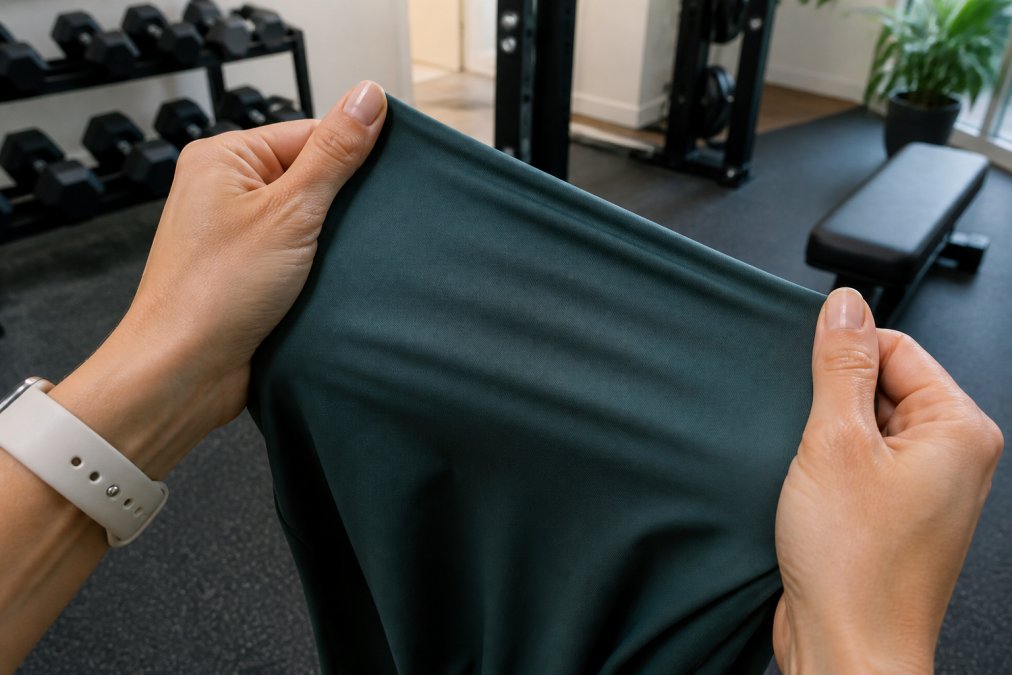
These blends shine in compression garments, yoga pants, and anything requiring unrestricted movement. The recovery property means the fabric snaps back to its original shape after stretching, which prevents sagging and bagging over time.
Pros and Cons of Nylon Spandex
Pros:
- Superior four-way stretch and recovery
- Soft, luxurious texture against skin
- Excellent shape retention through repeated wear
Cons:
- More expensive than pure polyester
- Can be less breathable than natural blends
Merino Wool, Bamboo, and TENCEL: Natural and Eco-Friendly Activewear Fabrics
Eco-friendly activewear fabrics have improved dramatically, and three stand out for versatility. But the differences between them matter more than the eco label, each has a distinct hand-feel, care profile, and best-use case that determines whether it actually works for your training.
Merino Wool: The Temperature Regulator
Merino wool regulates temperature naturally, keeping you warm in cold conditions and cool in heat while providing antimicrobial odor control. The mechanism is the fiber's crimped structure, which traps air pockets for insulation while still allowing moisture vapor to pass through. Merino can absorb a meaningful percentage of its weight in moisture vapor without feeling damp, which is why it works for hiking and multi-day trips where you can't wash gear daily.
The trade-offs are real: merino is more expensive than synthetics, requires delicate care (cold hand-wash or gentle cycle, lay flat to dry), and can pill under high friction. It also has a distinct hand-feel, soft but slightly wooly, that some athletes love and others find itchy against skin.
Bamboo: Softness With Caveats
Bamboo fabric offers a silk-like softness with natural moisture-wicking and antibacterial properties. Most bamboo activewear on the market is actually bamboo viscose (or rayon), a semi-synthetic produced by chemically processing bamboo pulp, so the "natural" label deserves scrutiny. Bamboo lyocell, made with a closed-loop solvent process, is the more sustainable version and worth seeking out.
Where bamboo falls short is durability under high friction and stretch recovery without a spandex blend. It can lose shape over time and doesn't handle high-abrasion areas like inner thighs or underarms well. Blending with 5-10% spandex solves most of these issues.
TENCEL™ Lyocell: Smooth, Sustainable, Sensitive-Skin Friendly
TENCEL™ Lyocell, derived from wood pulp, delivers smooth comfort with sustainable production. The closed-loop manufacturing process recovers most of the solvent used, which is why it carries a stronger sustainability story than bamboo viscose. The fiber surface is exceptionally smooth, smoother than cotton, which gives it a cool, almost silky hand-feel that many people with sensory sensitivities prefer over wool or textured synthetics.
TENCEL™ wears faster in high-abrasion areas than nylon or polyester, so it's best for low-impact training, athleisure, and recovery wear rather than high-friction sessions.
The Sensory Angle Most Guides Ignore
If you're neurodivergent or have sensory processing differences, fabric texture isn't a nice-to-have, it's the deciding factor. Tags, seams, and fiber hand-feel can make a garment unwearable regardless of how well it wicks sweat. Here's how the eco-fibers stack up on hand-feel:
- TENCEL™ Lyocell: Smoothest, coolest, most consistent texture. Often the safest pick for tactile sensitivity.
- Bamboo viscose: Very soft, slightly heavier drape. Watch for pilling, which creates texture changes over time.
- Merino wool: Soft but variable. Fine-gauge merino (17-19 micron) feels dramatically smoother than standard wool; coarser grades can feel prickly.
Flatlock seams, tagless labels, and blended constructions (natural fiber plus 5-10% spandex) reduce the sensory friction points that make activewear uncomfortable for this group.
Fabric Weight (GSM) and Seasonal Suitability: What Most Guides Skip
Fabric Weight (GSM) and Seasonal Suitability: What Most Guides Skip
Fabric weight, measured in GSM (grams per square meter), determines whether a garment works for summer running or winter training. Most activewear guides skip this entirely, but it's the single biggest factor in seasonal comfort.
- Lightweight (120-160 GSM): Best for hot weather, high-sweat activities, and layering
- Midweight (160-220 GSM): Year-round versatility, most gym and golf apparel
- Heavyweight (220+ GSM): Cold-weather training, compression wear, durability-focused pieces
A 140 GSM polyester tee and a 220 GSM nylon spandex legging serve completely different purposes. Buying midweight fabrics (around 180-200 GSM) gives you the most versatility across seasons and activities.
How to Wash Performance Fabrics Properly to Protect Stretch and Breathability
Washing performance fabrics properly means cold water, mild detergent, no fabric softener, and air drying when possible. Heat is the enemy of elasticity. Hot water and dryer cycles break down spandex fibers, causing permanent stretch loss.
Follow this routine to protect your gear:
- Turn garments inside out before washing
- Use cold water on a gentle cycle
- Add a sport-specific detergent, never fabric softener
- Skip the dryer or use the lowest heat setting
- Hang dry in shade to preserve elasticity and color
For more detailed guidance, REI's guide to washing technical clothing covers fabric-specific care instructions. Machine-wash friendly construction handles this routine without shrinking or losing stretch, which matters when you're washing gear several times a week.
Finding versatile activewear that performs across lifting, cardio, golf, and everyday wear comes down to fabric blends that balance stretch, breathability, and durability. Kritter Komfort builds apparel with breathable, stretch-friendly fabrics and durable stitching designed for exactly this range. The athletic cut is true to size, the designs stay bold but understated, and every piece is machine-wash friendly. Shop All at Kritter Komfort.
Frequently Asked Questions
What is the best fabric for activewear?
There is no single best fabric for versatile activewear. Polyester and nylon spandex blends work well for high-intensity training because they wick moisture and hold their shape. Merino wool and TENCEL suit low-to-medium impact workouts and all-day wear. The right choice depends on your activity intensity, climate, and how often you wash the garment. A blend that combines a synthetic base with a small percentage of spandex usually offers the best balance of performance and comfort.
Is 100% polyester considered dri-fit?
Dri-fit is a trademarked term for moisture-wicking technology, not a fabric composition. While many dri-fit garments are made from 100% polyester, not all polyester is dri-fit. The wicking ability depends on how the fabric is knit and finished, not just the fiber content. Look for specific moisture-wicking claims on the label rather than assuming all polyester performs the same way.
How do synthetic and natural fibers compare for high-intensity training?
Synthetic fibers like polyester and nylon spandex excel at moisture-wicking, quick drying, and shape retention during high-intensity training. Natural fibers such as organic cotton and bamboo absorb sweat but stay wet longer, which can cause chafing and heaviness. Merino wool is an exception among naturals because it regulates temperature and resists odors. For lifting, cardio, and sweaty sessions, synthetic blends generally outperform natural fibers for sweat management and durability.
What should I look for in moisture-wicking activewear?
Check the fabric composition first. Look for polyester, nylon, or blends that list moisture-wicking as a fabric property, not just a marketing claim. A small percentage of spandex (usually 5-15%) adds four-way stretch and recovery. Fabric weight matters too: lighter GSM works for hot weather and high sweat, while heavier weights suit cooler conditions. Antimicrobial finishes help with odor control, and flatlock seams reduce chafe-resistance issues during long sessions.
How do I wash performance fabrics properly?
Turn garments inside out and wash in cold water on a gentle cycle with mild detergent. Avoid fabric softener and dryer sheets because they coat the fibers and block moisture-wicking properties. Skip the dryer or use low heat, since high temperatures break down spandex elasticity. Air drying preserves stretch and shape. For merino wool, hand wash or use a wool cycle and lay flat to dry. Following these steps keeps breathability, elasticity, and odor control intact wash after wash.
Do versatile activewear fabrics pill or fall apart after intense training?
Pilling and breakdown depend on fiber quality, knit density, and how you care for the garment. Polyester and nylon blends with high tensile strength resist pilling better than loose-knit natural fabrics. Fabric density (GSM) also plays a role: denser knits hold up longer under friction from weights, barbells, and repeated washing. Washing inside out in cold water and avoiding high-heat drying significantly extends the life of any performance fabric.