

Table of Contents
- Athletic Fit vs Regular Fit T-Shirt: What Actually Changes
- Why Athletic Cuts Work for Everyday Wear
- Durable Golf Shirts for Broad Shoulders: Fit and Function
- Matching Athletic Cuts to Your Body Type
- How to Style Performance Wear for Daily Life
- Durability and Care: What Holds Up Over Time
- Frequently Asked Questions
Last Updated: September 12, 2026
Athletic Fit vs Regular Fit T-Shirt: What Actually Changes
Are athletic cuts good for everyday wear? Yes, for most people with an active build, an athletic cut outperforms a regular fit in comfort, movement, and how the shirt looks untucked. The difference comes down to geometry, not marketing. An athletic fit takes in the waist and opens the chest and shoulders, while a regular fit keeps the same width from armpit to hem.
Athletic fit is a garment cut with extra room through the chest, shoulders, and upper arms, tapering toward a narrower waist. Regular fit keeps a straighter, boxier silhouette with consistent width top to bottom.
That single change matters more than most buyers expect. At Kritter Komfort, we build our tops around that taper because a shirt that fits the shoulders but billows at the waist looks sloppy whether you're lifting or grabbing coffee. The American Society for Testing and Materials apparel sizing standards exist precisely because body proportions vary this much between people.
Here's the practical breakdown:
| Feature | Athletic Fit | Regular Fit |
|---|---|---|
| Chest and shoulders | Roomier, structured | Standard width |
| Waist | Tapered | Straight, boxy |
| Sleeves | Fitted around the arm | Loose |
| Best for | V-taper and muscular builds | Average and straight builds |
| Untucked look | Clean, defined | Can look baggy |
The tradeoff is real. Athletic cuts feel restrictive on a straight or husky frame, and a regular fit swallows a lean lifter. Knowing your chest-to-waist ratio is the fastest way to pick correctly.
Why Athletic Cuts Work for Everyday Wear
Athletic cuts work for daily wear because they solve the two problems regular clothing creates for active bodies: restricted movement and a silhouette that fights your frame. A tapered waist keeps the fabric close without squeezing, and the added shoulder room means you can reach, drive, or carry without the shirt pulling across your back.
Most people assume athletic cuts are gym-only. The opposite is true. The same ergonomic design that lets you press overhead keeps a shirt comfortable through a full workday.
Range of Motion and Comfort
Range of motion is where athletic cuts separate themselves from fashion-first fits. Four-way stretch fabric combined with a tapered waist means the garment moves with your shoulders and hips instead of binding at the seams. In practice, this is the difference between a shirt you forget you're wearing and one you're constantly adjusting.
A common mistake is buying an athletic cut two sizes up to get shoulder room, which destroys the taper and defeats the purpose. The fit profile should match your build, not compensate for it.
Breathability and Moisture Management
Breathability determines whether an athletic cut is wearable past the gym. Moisture-wicking fabric pulls sweat away from skin and lets it evaporate, so the shirt stays dry through a commute or an afternoon of errands. Fabric composition matters here: cotton holds moisture and gets heavy, while performance blends stay light.
Many buyers find that breathable activewear doubles as smart casual wear precisely because it handles sweat without showing it. That's the quiet advantage of athletic cuts for daily life.
Durable Golf Shirts for Broad Shoulders: Fit and Function
Durable golf shirts for broad shoulders need shoulder ease, a tapered waist, and fabric that survives a full swing without bunching. The problem for broad-shouldered players is that standard polos pull tight across the chest at the top of the backswing, then bunch at the waist on the follow-through.
An athletic cut fixes both ends of that motion. The extra chest and shoulder room lets the fabric rotate with your torso, and the tapered waist keeps the hem from ballooning when you twist. For anyone who trains and plays, this is the same fit logic that works in the gym.
Textile Exchange guidance on performance fabric durability notes that garment construction, not just fiber type, drives how long activewear holds its shape. Reinforced stitching at stress points is what keeps a golf shirt from failing at the shoulder seam after a season of swings.
What most guides miss: a golf shirt and a training shirt can share the same athletic cut and still feel completely different, because sleeve length and hem drop change how the fabric moves. Test the swing, not just the mirror.
Matching Athletic Cuts to Your Body Type
The right athletic cut depends on your build, not the label. A fit that flatters a V-taper physique will feel tight on a husky frame and loose on a slim one. Sizing standards vary between brands, so measure your chest, waist, and shoulders before buying rather than trusting a size tag.
The single most useful number is your chest-to-waist drop, chest circumference minus waist circumference, measured at the fullest part of the chest and the narrowest part of the waist. Most off-the-rack athletic cuts are drafted for a drop of roughly 6 to 10 inches. If your drop is smaller, a true athletic cut will pull at the midsection; if it's larger, a regular fit will billow. That one measurement predicts fit better than height, weight, or the size you wear in other brands.
Slim, Muscular, and Husky Builds
For slim builds, a slim fit with light taper adds shape without swimming in fabric. Muscular and V-taper frames get the most from a true athletic cut, which accommodates the chest-to-waist ratio without billowing. Husky builds often do better with a regular fit or a relaxed athletic cut that skips the aggressive waist taper.
The confusion worth clearing up: "athletic" in sizing language does not mean "for athletes." It describes a taper pattern, not a fitness level. A husky frame with a modest chest-to-waist drop is not the body an aggressive athletic cut was drafted for, and forcing it produces the pull-and-ride-up problem people complain about in forums. The fix is not to size up, it's to choose a cut whose taper matches your actual drop, or to buy for the waist and have the shoulders taken in.
A practical way to sort builds:
| Build | Chest-to-waist drop | Best cut |
|---|---|---|
| Slim | Under ~4 in | Slim fit with light taper |
| Athletic / V-taper | ~6-10 in | True athletic cut |
| Husky | Under ~4 in with fuller midsection | Regular or relaxed athletic cut |
| Broad-shouldered, straight torso | Wide shoulders, minimal drop | Regular fit, shoulders tailored |
Kritter Komfort cuts its tops true to size for this reason. Our customers tell us the fit lands "not too tight, not too loose," which is the target: a silhouette that follows your shape instead of fighting it.
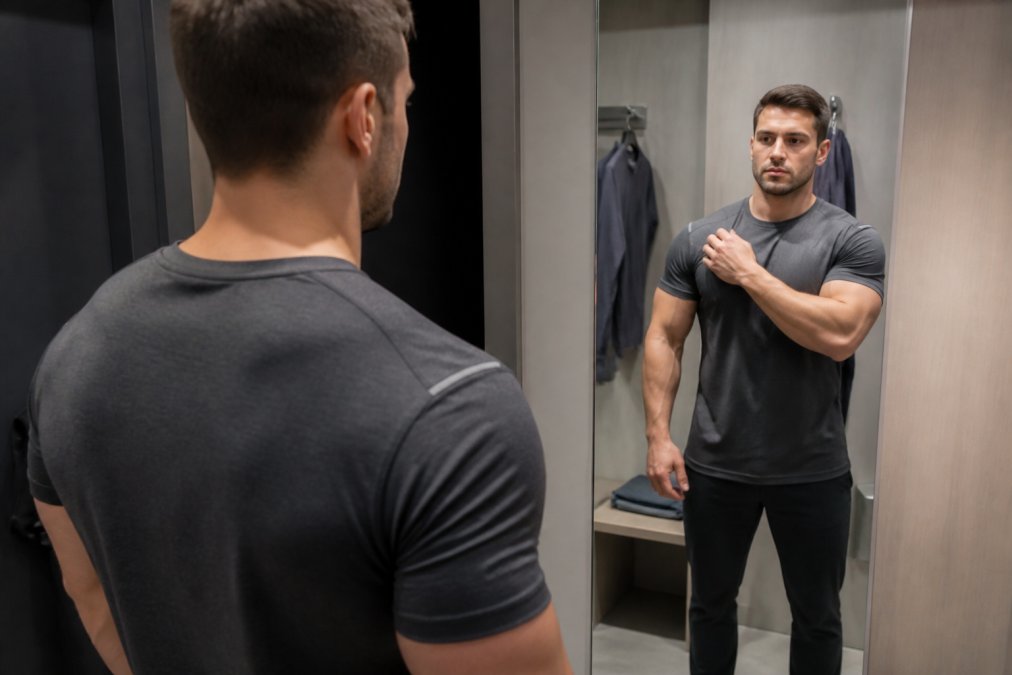
How to Style Performance Wear for Daily Life
Styling performance wear for daily life comes down to pairing athletic cuts with structured pieces that pull the outfit toward smart casual. A tapered performance tee under a blazer reads as intentional. The same tee with baggy sweatpants reads as gym clothes. Fabric and fit do the work; the rest is pairing.
Keep the color palette understated so the athletic cut reads as tailoring rather than sportswear. Neutral tops, clean sneakers, and one structured layer handle most situations.
Layering Mechanics: Why Athletic Cuts Bunch, and How to Stop It
This is the part most guides skip. A tapered waist is designed to sit close to the body on its own, which means it behaves differently under a jacket or sweater than a boxy tee does. Two things go wrong:
- The hem rides up. When you raise your arms, a tapered tee slides up because there's no slack at the waist to anchor it. Under a jacket, that bunched fabric shows at the hip.
- The jacket fights the taper. A structured blazer is drafted with its own waist suppression. Worn over an athletic cut, the two tapers stack and the midsection pulls.
The fix is to think about which garment owns the silhouette. If the outer layer is structured (blazer, chore coat, bomber), the base layer should be a slim or regular fit, not an aggressive athletic cut, you want the jacket to do the shaping. If the outer layer is unstructured (cardigan, overshirt, quarter-zip), the athletic cut can stay, because the soft outer piece will follow the taper instead of fighting it.
A few mechanics that hold up in practice:
- Tuck or half-tuck the base layer under a structured jacket so the hem can't ride up.
- Choose a shorter hem on the athletic tee if you plan to wear it untucked under an open layer, a long hem on a tapered shirt curls at the sides.
- Match sleeve length to the outer layer. A fitted athletic sleeve under a roomy jacket sleeve looks pinched; a slightly looser base sleeve fills the gap cleanly.
- Avoid stacking two tapered pieces. Athletic tee plus athletic-fit jacket equals pull at the waist every time.
From Gym to Office to Dinner
The gym-to-office transition works when the garment doesn't look like it just left a workout. Breathable fabric that dries fast and resists odor is the enabler here. International Organization for Standardization textile testing standards cover how fabrics are evaluated for these performance claims, which is why "moisture-wicking" on a label should mean something measurable.
For layering, start with a fitted performance base, add a structured overshirt or blazer, and finish with chinos or technical pants. The athletic cut keeps the base layer clean under the outer piece instead of bunching at the waist, provided the outer piece is unstructured enough to follow the taper rather than compete with it.
Durability and Care: What Holds Up Over Time
Durability is where cheap activewear gives itself away. Pilling, stretched-out collars, and faded color show up after a handful of washes, and no fit looks good on a shirt that's lost its shape. The fix starts with construction: durable stitching at the shoulders and hem, plus fabric that resists pilling under friction.
Machine-wash friendly garments that hold their stretch are the practical benchmark. If a shirt shrinks or sags after a few cycles, the fit you paid for is gone. Look for reinforced seams and fabric blends engineered to keep their structure, not just their softness.
A simple care routine extends the life of athletic cuts:
- Wash cold on a gentle cycle to protect stretch fibers
- Skip the dryer or use low heat to prevent shrinkage
- Turn garments inside out to reduce pilling and fading
- Avoid fabric softener, which coats performance fibers and reduces wicking
- Air dry when possible to preserve the fit profile
Kritter Komfort builds its gear machine-wash friendly with durable stitching for exactly this reason, so the fit you buy is the fit you keep.
Choosing everyday clothing that fits an active body is harder than it should be, because most brands cut for an average frame that doesn't match how you're built. Kritter Komfort solves that with athletic cuts that are true to size, breathable stretch-friendly fabrics, and durable stitching that survives hard training and repeated washing. The bold but understated designs move from the gym to the office to dinner without a costume change. Get started with Kritter Komfort and build a daily wardrobe that fits the body you actually have.
Frequently Asked Questions
Is athletic fit baggier than regular fit?
No, athletic fit is typically more tapered than regular fit. It provides extra room in the chest, shoulders, and thighs while narrowing at the waist and leg opening. Regular fit is straighter and looser throughout. If you have a muscular build, athletic cuts reduce excess fabric without feeling tight, giving you a cleaner silhouette than standard regular fit garments.
Can you wear activewear every day?
Yes, many people wear activewear daily, especially pieces designed with athletic cuts and understated designs. The key is choosing items that balance performance fabrics with a polished look. Moisture-wicking shirts, four-way stretch pants, and tapered shorts can work for errands, casual offices, and social outings. Avoid overly technical logos or neon colors if you want a more versatile daily wardrobe.
Are athletic cut shirts appropriate for business casual settings?
Athletic cut shirts can work in business casual settings if the fabric and design are understated. Look for solid colors, wrinkle-resistant materials, and structured collars. A well-fitted athletic cut shirt in a neutral tone pairs well with chinos or dress pants. Avoid gym-specific features like reflective strips or large logos. The tapered fit actually looks more professional than a baggy regular fit shirt.
How should an athletic fit shirt fit on the shoulders and waist?
The shoulder seams should sit at the edge of your shoulders, not hang past them. The chest should feel snug but not restrictive, allowing full range of motion. The waist should taper slightly without billowing or clinging. You should be able to raise your arms without the shirt riding up excessively. If the waist is too loose, try a smaller size or a brand that offers true-to-size athletic cuts.
What is the difference between slim fit and athletic fit?
Slim fit is narrow throughout, including the chest, waist, and sleeves. Athletic fit adds room in the chest, shoulders, and thighs while tapering at the waist. This accommodates muscle without excess fabric. If you have a V-taper or broad shoulders, athletic fit usually works better than slim fit. Slim fit suits leaner builds with less muscle mass in the upper body.