

Table of Contents
- Why Athletic Wear That Transitions to Office Matters
- Best Fabrics for Versatile Activewear
- Essential Pieces for Business Casual Athletic Wear
- How to Style Gym Clothes for Work
- Dressing Up Performance Wear for After-Work Plans
- Maintaining a Polished Appearance All Day
- Conclusion
Last Updated: August 23, 2026
Why Athletic Wear That Transitions to Office Matters
The line between gym and office has blurred. Professionals now demand clothing that performs during intense workouts yet looks polished enough for the boardroom. Athletic wear that transitions to office isn't a luxury; it's a practical necessity for anyone juggling multiple roles throughout their day.
The real challenge is finding a single piece that excels at both without compromise. Most athletic gear looks too casual for professional settings. Most office wear restricts movement and falls apart after intense training. Athletic wear that transitions to office bridges that gap, combining performance fabrics with tailored silhouettes that work in either context.
At Kritter Komfort, we've built our entire brand around this principle. Our activewear features breathable, stretch-friendly fabrics and durable stitching designed for intense workouts, but with athletic cuts and understated designs that transition seamlessly to everyday professional life. This guide covers the specific fabrics, silhouettes, and styling strategies that make athletic wear functional in the office without sacrificing gym performance.
Best Fabrics for Versatile Activewear
The fabric is everything. A piece can look professional and fit perfectly, but if it pills after three workouts, wrinkles excessively, or loses its stretch after a few washes, it fails. The best fabrics for athletic wear that transitions to office share specific characteristics: they wick moisture, resist wrinkles, maintain their shape, and look polished in both settings.
Moisture-Wicking and Breathable Materials
Moisture-wicking fabrics pull sweat away from your skin and dry quickly. This keeps you comfortable during intense lifting or cardio and prevents visible sweat marks during office meetings.
Look for synthetic blends: polyester, nylon, and spandex combinations. An 85% nylon and 15% spandex blend, for example, offers the stretch you need for movement while maintaining moisture management (peer-reviewed research).
Cotton blends can work if mixed with performance synthetics, but pure cotton absorbs moisture rather than wicking it. Avoid 100% cotton activewear if you plan to transition directly from the gym to the office.
Breathability comes down to fabric weight and weave. Mid-weight fabrics provide structure while remaining breathable. Performance blends excel here, engineered to be both supportive and breathable in ways natural fibers alone cannot achieve.
Wrinkle-Resistant and Durable Blends
Wrinkles kill the professional look. Wrinkle-resistant fabrics either have chemical treatment applied during manufacturing or are blended with materials that naturally resist creasing. Polyester resists wrinkles better than cotton. Nylon resists wrinkles better than linen. The synthetic content directly determines wrinkle resistance (peer-reviewed research).
Durability matters equally. Reinforced seams, especially at stress points like the crotch and armpits, prevent blowouts. Double-stitched hems and seams extend lifespan significantly. Mid-weight performance blends solve the durability-breathability trade-off by using denser weaves rather than thicker material.
Higher-quality performance fabrics resist pilling because they use longer fibers and tighter weaves (peer-reviewed research). This is one area where spending more delivers measurable results.
Essential Pieces for Business Casual Athletic Wear
Not every athletic piece works in an office. The pieces that work are those with tailored silhouettes, neutral colorways, and structured fabrics that read as intentional rather than purely functional.
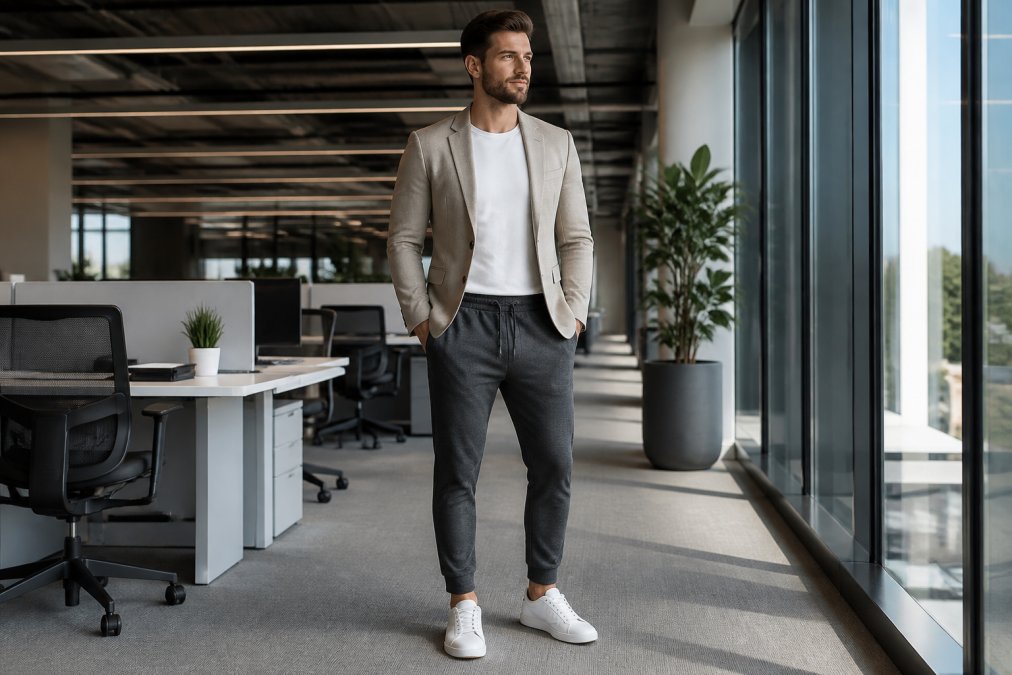
Tailored Joggers and Performance Pants
Tailored joggers have become office-acceptable in business casual environments. The key word is "tailored." A jogger with a fitted waist, tapered leg, and structured fabric looks intentional. A jogger with a loose elastic waistband and baggy legs looks like gym wear.
Performance pants designed for commuting use the same moisture-wicking and stretch fabrics as gym wear, but cut them with a more formal silhouette.
When evaluating tailored joggers or performance pants, check three things: the rise (how high the waistband sits), the taper (how narrow the leg is at the ankle), and the fabric drape. A mid-rise works better in an office than a low-rise. A tapered leg looks more intentional than a straight leg. Fabric that drapes smoothly rather than clinging reads as more professional.
Kritter Komfort's approach emphasizes athletic cuts that are true to size. If you're a medium in most activewear, you'll be a medium here. The fit accommodates athletic builds, which matters if you've spent time in the gym building muscle.
Structured Blazers and Layering Tops
A blazer transforms any outfit from casual to professional. The trick is choosing one that fits over athletic wear without bunching or restricting movement. Look for blazers with stretch fabric or a more generous cut through the shoulders and chest. Some performance brands now make blazers specifically designed to layer over athletic wear, using four-way stretch fabric that moves with you rather than restricting motion.
Color matters significantly. A structured blazer in navy, charcoal, or black works with nearly any athletic piece underneath. Neutral blazers are versatile and look professional without drawing attention to the fact that you're wearing gym clothes underneath.
Layering tops, fitted long-sleeves, half-zips, or mock-necks, serve as the bridge between gym wear and office wear. Choose pieces that fit close to your body without being tight. A loose layering top will bunch under a blazer. A fitted one reads as intentional.
How to Style Gym Clothes for Work
Styling athletic wear for the office is about intentionality. The goal is to make it look like you chose these pieces deliberately for a professional setting.
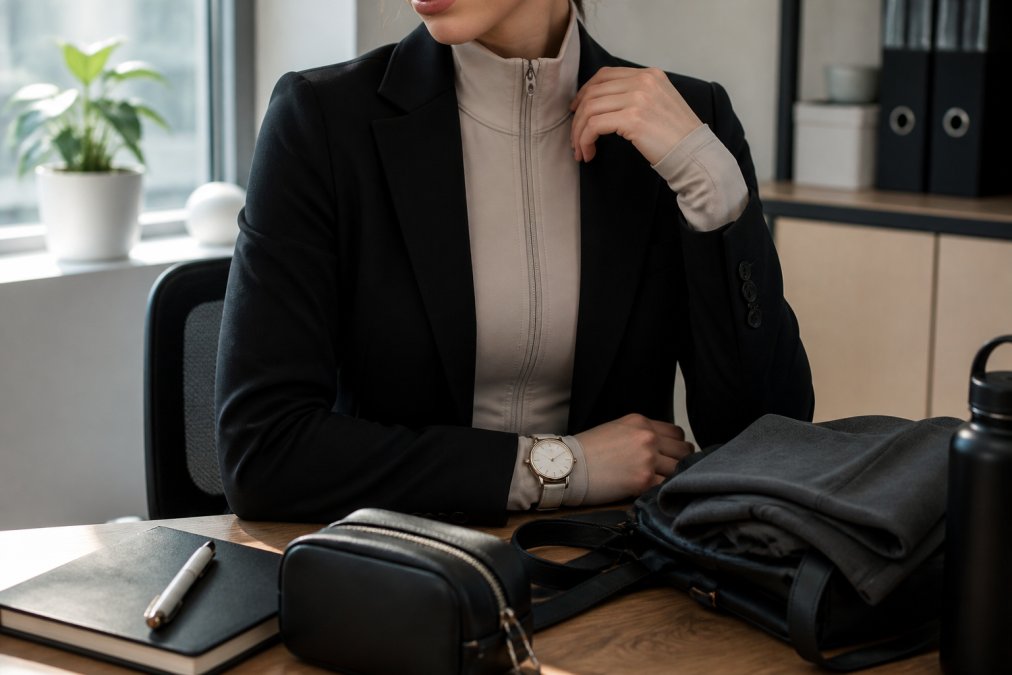
Layering Strategies for Office Environments
Layering transforms athletic wear. A performance tank alone reads as gym wear. The same tank under a structured blazer reads as an intentional office outfit. The blazer signals professionalism and provides the visual structure that makes the piece acceptable in a formal setting.
Start with a fitted base layer in a neutral color: black, white, gray, navy, or earth tones. Avoid bright neon or bold patterns that scream "activewear." Layer a structured blazer or cardigan on top. The blazer is your professional signal. A blazer with stretch fabric works better than traditional suiting because it accommodates athletic builds and doesn't restrict movement.
Add a third layer if needed: a lightweight sweater, structured cardigan, or performance fleece. The key is choosing pieces that layer cleanly without creating bulk. A fitted cardigan works better than an oversized sweater.
Accessories matter more in layered outfits. A watch, simple jewelry, or a professional bag signals that this is a considered outfit. These small details change how people perceive the entire outfit.
Color Palettes for Professional Settings
Neutral colors are your foundation. Black, white, gray, navy, and earth tones work in virtually any office. These colors are professional, versatile, and pair with nearly everything. They also hide sweat marks better than lighter colors.
A monochromatic outfit reads as more intentional than a mismatched combination. An all-gray outfit (light gray base layer, charcoal blazer, dark gray pants) looks polished. Accent colors work if used sparingly, one colored scarf, patterned blazer, or bold shoe. Multiple accent colors read as chaotic.
Avoid athletic-specific colors in the office. Neon, bright pastels, or bold primary colors signal "activewear" even if the silhouette is tailored. Save these colors for the gym.
Footwear That Bridges the Gap
Footwear makes or breaks the transition. Obvious athletic sneakers don't work in an office. Professional footwear, dress shoes, loafers, or minimalist sneakers, works in both settings.
Minimalist sneakers are the easiest bridge. A clean white leather sneaker, simple black slip-on, or neutral canvas shoe reads as casual-professional rather than athletic. Avoid anything with visible cushioning, bold branding, or athletic-specific design elements.
Comfort matters. You're wearing these shoes all day through workouts and office hours. A minimalist sneaker with good support or a loafer with cushioning works better than a dress shoe that causes pain. Color coordination is simple: match your shoes to your neutral palette.
Dressing Up Performance Wear for After-Work Plans
The real test of athletic wear that transitions to office is whether it works for after-work plans. A tailored jogger in a neutral color with a structured blazer and minimalist shoes works for casual dinner or drinks. A performance pant with a fitted top and structured blazer works similarly. The key is the blazer, it's your professional signal and also your dressing-up tool.
Accessories are crucial for dressing up. A watch, professional bag, simple jewelry, or scarf transforms the outfit. Avoid mixing too many textures or materials. A performance pant, fitted top, blazer, and minimalist shoes is clean and intentional. The venue matters: casual dinner works with your gym-to-office outfit, but upscale restaurants require more polished footwear and intentional styling.
Maintaining a Polished Appearance All Day
The challenge with athletic wear that transitions to office is keeping it looking polished through multiple settings and activities. A piece that's wrinkled, stained, or showing visible sweat doesn't transition well, regardless of design.
Start with quality fabrics. Wrinkle-resistant blends maintain their appearance better than natural fibers. A mid-weight performance fabric holds its shape better than lightweight material. Machine-wash pieces in cold water and hang dry when possible. Heat damages elastic and degrades performance fabrics. Kritter Komfort's apparel is machine-wash friendly, so you can throw pieces in the wash without special treatment.
Address stains immediately. A coffee spill or sweat mark that sits for hours becomes much harder to remove. Keep a stain pen at work for quick cleanup. Invest in quality basics, a few high-quality pieces that you rotate work better than many lower-quality pieces. One excellent pair of tailored joggers worn three times a week will look better after six months than three cheaper pairs.
Fit matters for appearance. A piece that fits perfectly looks polished. Kritter Komfort's approach is to cut pieces that fit athletic builds properly, so you're not fighting the fit all day. Simple grooming extends the polished look. A quick freshen-up in the bathroom, washing your face, fixing your hair, or changing your shirt if needed, makes a significant difference.
The goal of athletic wear that transitions to office isn't to pretend you didn't just work out. It's to choose pieces engineered for both settings so you don't need to change. The right fabrics, silhouettes, and styling strategies make this possible. You can train hard in the morning, look professional all day, and transition to after-work plans without a wardrobe change. That's efficiency. And that's exactly what Kritter Komfort delivers: premium activewear with breathable, stretch-friendly fabrics and durable stitching that performs in the gym and reads professional in the office. Shop all our pieces and build a wardrobe that works as hard as you do.
=== FAQ ANSWERS (audit these too, same rules) ===
[1] Q: Is it appropriate to wear athletic wear that transitions to office in a business casual environment? A: Yes, when styled correctly. Athletic wear that transitions to office works in business casual settings if you choose pieces that read as professional: tailored joggers, structured blazers, and performance fabrics that don't look overtly athletic. Pair them with neutral colors, polished accessories, and appropriate footwear. The key is selecting activewear designed specifically for this dual purpose rather than standard gym wear.
[2] Q: What fabrics should I look for in athletic wear that transitions to work? A: Look for best fabrics for versatile activewear like four-way stretch blends, moisture-wicking materials, and wrinkle-resistant finishes. Nylon and spandex blends offer durability and shape retention. Performance fabrics with breathable properties keep you comfortable during workouts while maintaining a polished appearance in the office. Avoid overly textured or obviously athletic fabrics like mesh or heavy nylon.
[3] Q: How can I style gym clothes to look professional for the office? A: Start with neutral base colors like black, navy, or gray. Layer a structured blazer over performance tops to instantly elevate the look. Add professional accessories like watches, simple jewelry, and quality footwear. Choose high-waisted pants or joggers with a tailored silhouette rather than loose-fitting styles. Ensure your clothes fit properly, not too tight or too loose, and avoid visible logos or bold graphics that read as purely athletic.
[4] Q: What colors work best for professional-looking athletic wear? A: Stick to neutral palettes: black, navy, charcoal gray, white, and earth tones. These colors create a polished, professional aesthetic and are easy to layer. Avoid bright neons or bold patterns that scream 'gym wear.' If you want color, opt for muted jewel tones or pastels that feel more office-appropriate. Neutral colors also make it easier to transition pieces between workouts and work settings.
Frequently Asked Questions
Is it appropriate to wear athletic wear that transitions to office in a business casual environment?
Yes, when styled correctly. Athletic wear that transitions to office works in business casual settings if you choose pieces that read as professional: tailored joggers, structured blazers, and performance fabrics that don't look overtly athletic. Pair them with neutral colors, polished accessories, and appropriate footwear. The key is selecting activewear designed specifically for this dual purpose rather than standard gym wear.
What fabrics should I look for in athletic wear that transitions to work?
Look for best fabrics for versatile activewear like four-way stretch blends, moisture-wicking materials, and wrinkle-resistant finishes. Nylon and spandex blends offer durability and shape retention. Performance fabrics with breathable properties keep you comfortable during workouts while maintaining a polished appearance in the office. Avoid overly textured or obviously athletic fabrics like mesh or heavy nylon.
How can I style gym clothes to look professional for the office?
Start with neutral base colors like black, navy, or gray. Layer a structured blazer over performance tops to instantly elevate the look. Add professional accessories like watches, simple jewelry, and quality footwear. Choose high-waisted pants or joggers with a tailored silhouette rather than loose-fitting styles. Ensure your clothes fit properly, not too tight or too loose, and avoid visible logos or bold graphics that read as purely athletic.
What colors work best for professional-looking athletic wear?
Stick to neutral palettes: black, navy, charcoal gray, white, and earth tones. These colors create a polished, professional aesthetic and are easy to layer. Avoid bright neons or bold patterns that scream 'gym wear.' If you want color, opt for muted jewel tones or pastels that feel more office-appropriate. Neutral colors also make it easier to transition pieces between workouts and work settings.
This article was written using GrandRanker