

Table of Contents
- Why Breathable Gym Shorts for Summer Matter More Than You Think
- How Moisture-Wicking Workout Shorts Manage Sweat and Body Temperature
- Preventing Chafing During Summer Workouts: Fabric, Fit, and Friction
- How to Choose Gym Shorts for Cardio (and Lifting, and Golf)
- The Performance Payoff: Breathability, Heat Dissipation, and Training Output
- Sustainability, Care, and Making Breathable Gym Shorts Last
- Frequently Asked Questions
Last Updated: September 13, 2026
Why Breathable Gym Shorts for Summer Matter More Than You Think
Most people treat summer training gear as an afterthought, then wonder why performance drops when the temperature climbs. Your body generates heat during exercise, and when it can't escape, core temperature rises, your heart works harder, and fatigue arrives earlier. This guide from Kritter Komfort breaks down what breathable fabric does, how to match short styles to your training, and how to make a good pair last.
Breathable gym shorts are engineered to move heat and moisture away from your skin faster than cotton or heavy blends allow, a design goal that changes how you feel mid-workout.
Breathability isn't one feature. It's the combined result of fiber choice, fabric weight, weave structure, and ventilation placement. A pair can feel light and still trap heat if the weave is too dense or the fit blocks airflow.
How Moisture-Wicking Workout Shorts Manage Sweat and Body Temperature
Moisture-wicking workout shorts move sweat off your skin and spread it across the fabric surface, where it evaporates and cools you, the core mechanism behind every performance short worth buying.
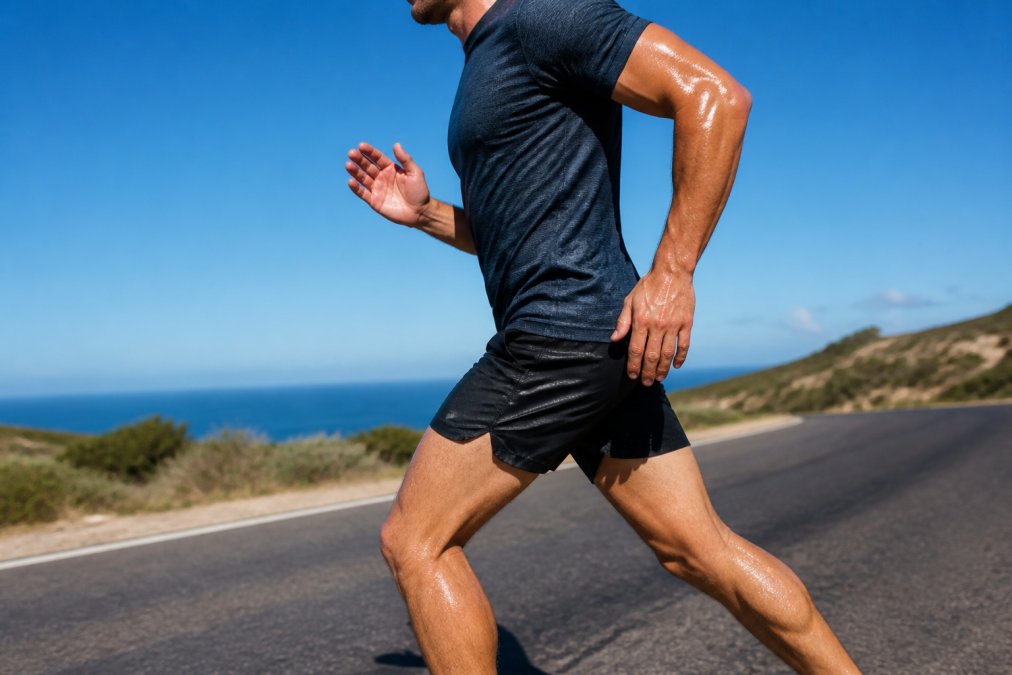
Sweat left on your skin blocks heat dissipation and creates a wet, heavy layer that clings and rubs. When it moves into the fabric and evaporates, your body sheds heat more efficiently and your skin stays drier, which is why fiber choice matters.
Synthetic Fibers vs. Cotton: What Actually Dries Faster
Synthetic fibers dry faster than cotton, and it isn't close. Polyester, nylon, and spandex blends are hydrophobic, they repel water. Cotton is hydrophilic, soaking up sweat and holding it against your skin.
In humid summer conditions, a cotton short gets heavy, stays damp, and loses its shape. A synthetic performance fabric keeps its structure, dries quickly, and keeps moving sweat outward, often the single biggest comfort upgrade athletes make.
The Fabric Science Most Guides Skip: Polyester vs. Nylon vs. Elastane
"Breathable" is not a single property. It's the combined result of fiber chemistry, fabric weight (grams per square meter, or GSM), weave or knit structure, and ventilation placement. Two shorts labeled breathable can behave completely differently on a 95-degree afternoon.
Here's how the three fibers most performance shorts use actually differ:
- Polyester is the workhorse of moisture-wicking activewear. It's naturally hydrophobic, holds very little water, and dries fast. Its weakness is that it can feel clammy against skin when saturated and tends to hold odor because oils cling to the fiber. Most lightweight summer shorts are polyester-dominant for exactly this reason.
- Nylon is stronger and more abrasion-resistant than polyester, with a slightly softer hand. It absorbs a small amount of moisture (more than polyester, far less than cotton), which can make it feel cooler against skin in dry heat but slower to dry in humidity. It's common in shorts built for durability and in 2-in-1 designs where the liner takes the friction.
- Elastane (spandex) is never the main fiber. It's added at roughly 5 to 20 percent to give the fabric four-way stretch and recovery. Too much elastane and the short feels compressive and holds heat; too little and it loses shape through repeated washing.
Fabric weight matters just as much. A lightweight knit (120 to 150 GSM) moves air and dries quickly but clings when wet; a midweight fabric (180 to 220 GSM) holds its shape but traps more heat. For peak summer training, lighter is usually better if the weave is open enough to vent.
Weave and knit structure decide how air moves. A dense flat knit blocks airflow even if the fiber is hydrophobic, while an open mesh or birdseye knit lets air pass between yarns. That's why a thin polyester short with a tight weave can feel hotter than a heavier nylon short with an open knit.
Mesh Panels, Ventilation, and Airflow Where It Counts
Mesh panels place open-weave fabric where the most heat builds: the back of the knees, inner thighs, and waistband, increasing airflow exactly where trapped heat causes the most discomfort.
Not all mesh is equal. Larger open weaves move more air but offer less durability; denser mesh holds shape longer but vents less. The best designs use both, placing open mesh in high-sweat zones and structured fabric where support matters. If you train outdoors in summer heat, prioritize ventilation.
How to Read a Fabric Label Before You Buy
You don't need a lab to judge a pair of shorts. A few label and hand-feel checks get you most of the way:
- Check the fiber blend. A polyester-dominant blend with a small elastane percentage is a strong summer default. A high cotton percentage means it will hold sweat.
- Look at the knit against a light. If you can see daylight through the fabric, air can move through it. If it's opaque and dense, it will trap heat.
- Squeeze and release. Good performance fabric springs back quickly. Fabric that stays wrinkled or stretched out has lost its recovery, often from too much heat in the wash.
- Check the seams. Flatlock seams lie flat against skin and reduce friction. Overlocked seams create ridges that rub when you sweat.
How [moisture-wicking fabrics(/blogs/news/best-moisture-wicking-fabrics-for-weightlifting) are classified and tested | astm.org]
Those four checks take thirty seconds in a fitting room and tell you more than any tag claim.
Preventing Chafing During Summer Workouts: Fabric, Fit, and Friction
Preventing chafing during summer workouts comes down to three variables: fabric smoothness, fit accuracy, and friction reduction at contact points. Get one wrong and you'll feel it by mile two.
Chafing happens when damp skin rubs against damp fabric or itself. Sweat softens skin, and heat increases surface blood flow, worsening irritation. Flatlock seams, smooth fabric, and a fit that doesn't bunch or ride up all reduce friction, loose fabric that twists is a common culprit people blame on the fabric itself.
Sizing up to avoid tightness is a common mistake: extra fabric shifts, folds, and creates new friction points. True-to-size athletic cuts keep fabric where it belongs.
Built-In Liners and Compression: Pros and Cons
| Feature | Pros | Cons | Best For |
|---|---|---|---|
| Built-in liner | Eliminates separate base layer, reduces friction | Less flexibility in layering, must launder more often | Running, cardio, high-sweat sessions |
| Compression fit | Supports muscles, reduces movement, aids blood flow | Can feel restrictive, warmer in extreme heat | Lifting, sprint work, recovery days |
| Loose fit | Maximum airflow, casual comfort | More fabric movement, higher chafe risk | Golf, casual wear, light training |
Compression and liners both reduce movement and friction, but retain heat. In peak summer conditions, many athletes prefer a light liner over full compression.
How to Choose Gym Shorts for Cardio (and Lifting, and Golf)
Choosing gym shorts for cardio means prioritizing lightweight fabric, a secure fit, and an inseam short enough to clear your stride. Lifting and golf have different demands.
Inseam Length, Stretchability, and Athletic Mobility
Inseam length decides how much freedom your legs have. A 5-inch inseam suits running and cardio, where a longer hem catches on the thigh. A 7-inch inseam works for lifting, offering coverage without restriction. A 9-inch inseam fits golf and casual wear.
Stretchability matters just as much. Four-way stretch moves with your hips and shoulders through a full range of motion, look for fabric that flexes through a golf swing without bunching at the waist.
Matching Short Style to Workout Type
- High-intensity training and cardio: 5-inch inseam, lightweight synthetic, mesh ventilation, secure waistband
- Weightlifting: 7-inch inseam, four-way stretch, flatlock seams, no loose hem
- Golf and casual wear: 9-inch inseam, structured fabric, understated design that transitions off the course
- Tai chi and mobility work: soft stretch fabric, relaxed fit, no restrictive waistband
The Performance Payoff: Breathability, Heat Dissipation, and Training Output
Breathability affects training output because your body diverts energy to cooling when heat builds up. Better airflow means less energy spent managing temperature and more available for the work itself.
You'll notice it in the details: steadier reps in the last set, faster heart-rate recovery between intervals, and finishing a summer run without the heavy, overheated feeling that forces you to stop early. Those gains compound across a training block.
The reverse is also true: gear that traps heat shortens your effective training window, especially in high-intensity sessions. Many athletes find upgrading summer gear does more for performance than adding another training day.
Sustainability, Care, and Making Breathable Gym Shorts Last
Care determines how long breathable gym shorts hold their performance properties. Cold-water washing and air drying preserve stretch and moisture-wicking ability far better than hot cycles.
Heat is the enemy of performance fabric: hot water and dryer cycles break down spandex fibers, which is why shorts lose stretch and shape. Skip fabric softener too, it coats fibers and blocks moisture transfer.
A Wash Routine That Protects Breathability
Most performance fabrics are engineered to work, then ruined by the wrong laundry routine within a season. Here's a routine that keeps wicking and stretch intact:
- Wash cold. Cold water (around 60 to 80 degrees Fahrenheit) cleans effectively without breaking down elastane or shrinking polyester. Hot water accelerates fiber fatigue.
- Turn shorts inside out. This protects the outer face from pilling and keeps zippers and drawcords from snagging other garments.
- Use a mild detergent, not fabric softener. Softener leaves a waxy coating on fibers that blocks moisture transfer. That coating is why a short that wicked well in June feels clammy by August.
- Skip the dryer. Air drying preserves stretch and shape. If you must tumble, use the lowest heat setting and remove the shorts while still slightly damp.
- Wash less often than you think. If a short isn't visibly soiled or heavily sweated through, airing it out between wears extends its life and reduces microfiber shedding.
The Sustainability Angle Most Guides Ignore
Synthetic activewear sheds microfibers during washing, tiny plastic filaments that slough off polyester and nylon and pass through wastewater systems (the EPA). The concern is growing, and more buyers now factor environmental impact into their gym gear decisions.
A few practical steps reduce shedding without sacrificing performance:
- Use a mesh laundry bag or a microfiber-catching wash bag. These trap a meaningful share of shed fibers before they reach the drain.
- Wash full loads on a lower spin cycle. More water and agitation per garment means more shedding. A gentler cycle sheds less.
- Choose front-loading machines when you can. They typically use less water and are gentler on fabric than top-loaders.
- Buy fewer, better-made pairs. The single biggest sustainability move available to most athletes is not buying recycled fabric, it's buying shorts that last. A pair that survives three summers has a fraction of the environmental footprint of three pairs that each last one season.
How to Tell When a Pair Is Actually Worn Out
Performance fabric degrades in stages, and knowing the signs helps you retire a pair before it causes chafing or holds sweat:
- Lost stretch. If the waistband no longer snaps back or the fabric sags at the thigh, the elastane has fatigued. This is usually a heat-damage issue.
- Pilling on the inner thigh. Friction pilling is normal over time, but heavy pilling means the fabric surface is breaking down and will rub more.
- Persistent odor after washing. Odor that survives a cold wash usually means oils and bacteria have bonded to the fiber. A diluted vinegar soak can help, but once it's set in, the short is near the end of its useful life.
- Wicking that stopped working. If sweat pools on your skin instead of moving into the fabric, the fibers are coated or fatigued. This is the clearest sign it's time to replace.
Kritter Komfort builds its activewear around breathable, stretch-friendly fabrics with durable stitching, so the gear holds up through lifting, cardio, and everything between. The machine-wash-friendly construction means you can train hard, wash cold, and keep the fit and performance intact. Customers regularly note the fabric holds up through lifting and cardio without pilling or losing shape.
Frequently Asked Questions
Are sweat shorts good for hot weather?
Sweat shorts made from performance fabric work well in hot weather because they wick moisture and dry quickly. Cotton sweat shorts absorb sweat and stay heavy and wet, which can lead to chafing and skin irritation. Look for moisture-wicking gym shorts with mesh panels or ventilation zones for airflow. If you train outdoors in summer, quick-dry synthetic fibers keep you cooler than cotton every time.
What are the primary benefits of moisture-wicking fabrics in gym shorts?
Moisture-wicking fabrics pull sweat away from your skin to the surface of the fabric, where it evaporates faster. This supports thermoregulation, reduces chafing, and prevents the heavy, soaked feeling cotton gives you. Many performance fabrics also add odor resistance and stretchability. For high-intensity training or cardio in summer, moisture-wicking workout shorts keep you drier, cooler, and more comfortable than standard cotton shorts.
What should you look for in breathable shorts for high-intensity training?
Prioritize moisture-wicking synthetic fibers, mesh panels or ventilation zones, and a built-in liner if you want extra chafing protection. Check the inseam length: shorter for mobility, longer for coverage during lifts. Stretchability matters for squats and lunges, and durable stitching holds up to repeated washing. Lightweight fabric with quick-dry properties keeps you comfortable through back-to-back sessions. Fit should be true to size with room to move.
Do breathable shorts help prevent skin irritation during summer exercise?
Yes. Breathable shorts reduce skin irritation by limiting moisture buildup and friction. When sweat sits on skin, it softens the outer layer and makes chafing more likely. Moisture-wicking fabric moves sweat away, and ventilation features speed evaporation. A built-in liner or compression layer can further reduce friction between thighs. Combined with a proper fit, breathable gym shorts for summer significantly cut down on irritation during long or intense workouts.
Summer training punishes gear that can't handle heat and sweat, and most wardrobes are full of shorts that quietly work against the athlete wearing them. Kritter Komfort makes breathable, stretch-friendly activewear with athletic cuts that are true to size, durable stitching for hard training, and bold but understated designs that move from the gym to the golf course without a costume change. Shop All and build a summer rotation that keeps you cool, dry, and moving.