

Table of Contents
- Does Machine Washable Activewear Shrink?
- The Role of Heat in Fabric Shrinkage
- How to Wash Polyester Spandex Without Causing Shrinkage
- The Dangers of Fabric Softener and Other Laundry Products
- How to Fix Shrunken Workout Clothes
- Common Washing Mistakes That Damage Synthetic Fibers
- Conclusion
Last Updated: August 8, 2026
Does Machine Washable Activewear Shrink?
Yes, machine washable activewear can shrink, even when labeled as machine-safe. The culprit isn't the washing machine itself, it's heat. Polyester and spandex, the synthetic fibers found in most activewear, respond to temperature changes in ways that cotton or wool don't. When exposed to hot water or high heat in the dryer, these polymers relax and contract, causing your favorite workout gear to lose its fit and elasticity. At Kritter Komfort, we've worked with customers who've experienced shrinkage after just a few washes because they didn't realize how sensitive synthetic fibers are to temperature fluctuations.
The good news: shrinkage is almost entirely preventable with the right care routine. Understanding why synthetic fibers shrink and how to protect them means your activewear will maintain its shape, stretch, and performance through hundreds of workouts. This guide walks you through the science of fabric shrinkage, the specific washing and drying methods that prevent it, and what to do if your gear has already shrunk.
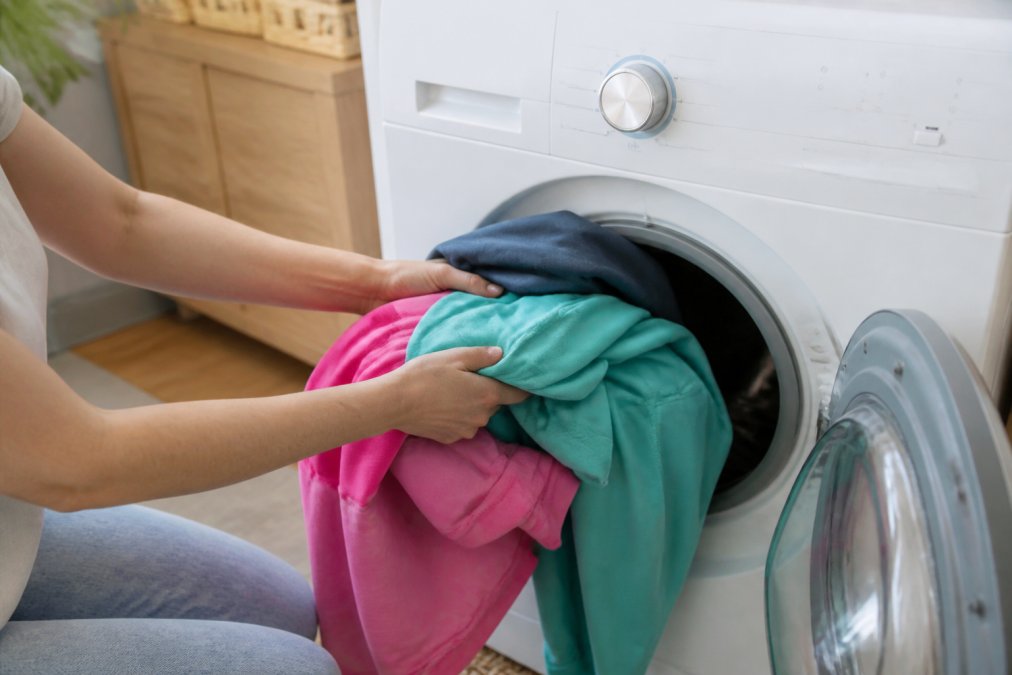
The Role of Heat in Fabric Shrinkage
Heat is the primary driver of shrinkage in synthetic fabrics. Unlike natural fibers, polyester and spandex are polymers, long-chain molecules engineered to have specific properties like elasticity and moisture-wicking. When heat is applied, these polymer chains relax and contract, a process called fiber relaxation. The hotter the water or air, the more dramatic this relaxation becomes.
This happens because synthetic polymers have a "memory" built into their molecular structure. Manufacturers set that memory during production using heat and tension. When you expose the fabric to temperatures above what it was designed for, you're essentially resetting that memory. The fibers shrink back toward their natural state, which is smaller and less elastic than the engineered state.
Dryer heat is particularly destructive. A standard dryer runs between 130 and 160 degrees Fahrenheit, far hotter than most washing machine water. Even brief exposure to this temperature can cause noticeable shrinkage, especially in blends with higher spandex content. A garment with 15-20% spandex is more vulnerable than one with 5% spandex, because spandex is more sensitive to heat than polyester.
The combination of heat plus agitation makes things worse. Mechanical friction in the washing machine, combined with warm water, accelerates fiber relaxation. This is why the delicate cycle exists, it reduces agitation, which slows the process. Cold water alone won't fully prevent shrinkage if the garment then goes into a hot dryer, but it's still a critical first step.
How to Wash Polyester Spandex Without Causing Shrinkage
Preventing shrinkage starts with understanding that every step in your laundry routine matters. The washing machine settings, water temperature, detergent type, and drying method all contribute to whether your activewear maintains its shape or shrinks.
Washing Machine Settings for Activewear
The delicate or gentle cycle is non-negotiable for synthetic activewear. This setting reduces the spin speed and agitation intensity, which minimizes mechanical stress on the fibers. Standard cycles spin at speeds up to 1,200 RPM; delicate cycles typically run at 400-600 RPM. That difference protects the elasticity of your spandex and prevents the fabric from being stretched and stressed.
Use cold water exclusively. Cold water washing benefits your activewear in multiple ways: it prevents polymer relaxation, preserves dye integrity, and reduces static cling. Water temperature should stay below 60 degrees Fahrenheit. Many modern machines have a "cold" setting that uses water around 40-50 degrees, which is ideal.
Load size matters more than most people realize. Overstuffing your washing machine creates friction between garments and forces the machine to work harder, increasing agitation. Wash activewear in smaller loads, aim for filling the drum about two-thirds full. This gives fabrics room to move freely without excessive mechanical stress.
Avoid fabric softener entirely. Fabric softener coats synthetic fibers with a waxy residue designed to reduce friction and static. On activewear, this coating traps moisture, reduces breathability, and can degrade the moisture-wicking properties that make the gear functional. The dangers of fabric softener go beyond just reduced performance, it can also cause pilling and accelerate wear.
Select a mild detergent formulated for delicates or athletic wear. Standard detergents contain harsher surfactants that can damage synthetic fibers over time. Look for detergents labeled as "gentle" or "sport-specific." These formulations clean effectively without the aggressive chemicals that break down fiber integrity.
Cold Water Washing Benefits
Cold water washing benefits extend beyond just preventing shrinkage. Cold water reduces the rate of dye fading, which means your bold but understated designs stay vibrant longer. It also minimizes color bleeding, which is especially important if you're washing multiple colors together.
From a fiber perspective, cold water keeps polymer chains stable. The lower temperature means less molecular movement, which preserves the engineered elasticity of your spandex. This is why cold water washing is the single most important variable in preventing shrinkage.
Cold water also uses less energy, which is a practical benefit for your wallet and the environment. Many people avoid cold water because they worry about cleaning power, but modern detergents are formulated to work effectively in cold water. For activewear, which typically isn't heavily soiled, cold water is entirely adequate.
Proper Drying Techniques for Workout Gear
How you dry your activewear determines whether your washing effort pays off. The tumble dryer is the enemy of synthetic fabrics. Even on the lowest heat setting, a dryer exposes your gear to sustained temperatures that cause significant shrinkage.
Air drying is the gold standard. Lay your activewear flat on a clean surface or hang it on a drying rack near a window. Flat-laying prevents stretching that can occur when wet garments hang from their own weight. If you must hang-dry, use padded hangers to distribute weight evenly and prevent shoulder distortion.
A drying rack positioned near natural light accelerates drying without heat. Most activewear dries completely within 4-8 hours when air-dried indoors. If you're in a humid climate, position the rack near a fan to improve air circulation. Never place activewear in direct sunlight for extended periods, as UV exposure can fade colors and degrade synthetic fibers over time.
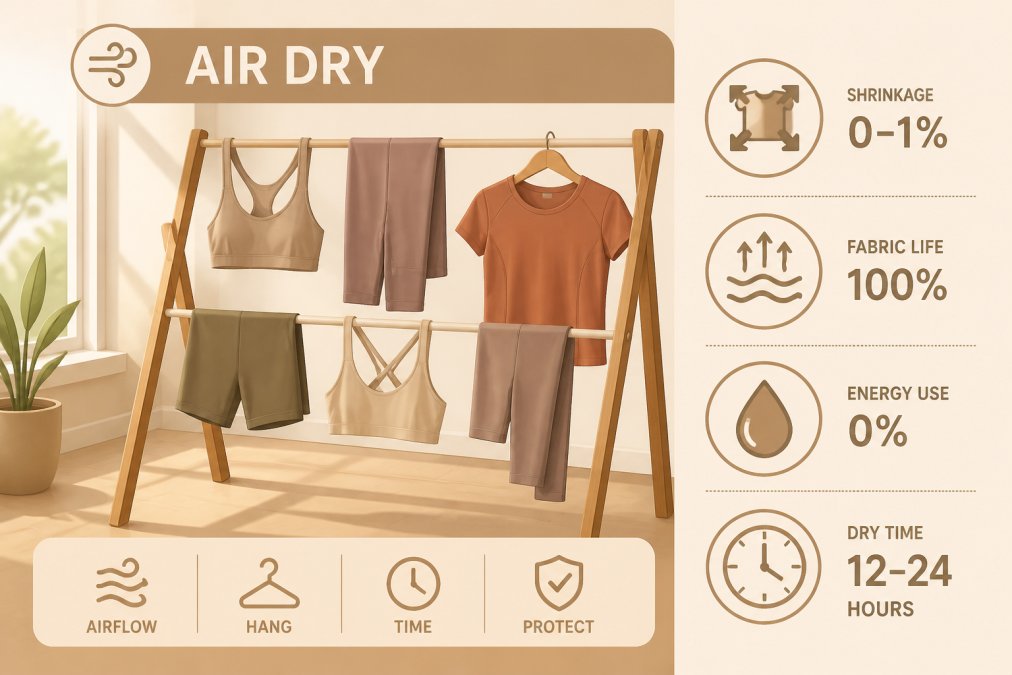
If you absolutely must use a dryer, use the lowest heat setting available, typically labeled "delicate" or "air fluff." Run the cycle for 15-20 minutes maximum, then remove garments immediately. Better yet, remove them while still slightly damp and allow them to finish air-drying. This hybrid approach minimizes heat exposure while still offering some convenience.
Never use high heat or even medium heat for synthetic activewear. The damage happens quickly. A single cycle on medium heat can cause permanent shrinkage that no amount of stretching will fix.
The Dangers of Fabric Softener and Other Laundry Products
Fabric softener is particularly problematic for activewear because it directly conflicts with the performance properties you're paying for. The waxy coating that makes fabrics feel soft reduces moisture-wicking, traps sweat against your skin, and can cause the fabric to pill or break down faster.
Dryer sheets carry the same risk. They deposit a lubricating residue onto fabrics during the drying cycle, which sounds beneficial but actually compromises the moisture-wicking engineering of your activewear. If you're concerned about static cling, use wool dryer balls instead, they reduce static through mechanical action without chemical residue.
Bleach and oxygen-based cleaners should never touch synthetic activewear. These products break down the polymer chains that give spandex its elasticity. Even diluted bleach can cause permanent damage to the fibers and lead to yellowing or weakening of the fabric.
Enzyme-based detergents, while effective for natural fibers, can also degrade synthetic polymers over time. Stick with detergents formulated specifically for athletic or delicate fabrics. These products are designed to clean without attacking the molecular structure of polyester and spandex.
Water hardness plays a role too. Hard water contains minerals that can accumulate on synthetic fibers, reducing breathability and trapping detergent residue. If you live in an area with hard water, consider using a water softener or adding a chelating agent to your wash cycle. This prevents mineral buildup that accelerates wear and reduces the lifespan of your gear.
How to Fix Shrunken Workout Clothes
If your activewear has already shrunk, you have options, though the earlier you act, the better your chances of recovery. The key is understanding that you're not trying to reverse the shrinkage permanently; you're trying to relax the fibers back to their original state temporarily.
Fill a sink or bathtub with cool water and add a gentle hair conditioner or a specialized fabric relaxer product. The conditioner works because it contains similar lubricating compounds to those in fabric softener, but in a much gentler formulation. Submerge the shrunken garment and let it soak for 10-15 minutes. The conditioner helps relax the polymer chains without damaging the fibers.
After soaking, gently squeeze out excess water without wringing or twisting. Lay the garment flat on a clean towel and carefully stretch it back to its original dimensions. Work slowly and gently, aggressive stretching can damage the fibers further. Use your hands to pull the fabric in the direction it shrunk, focusing on length and width.
Pin the garment to the towel at the edges to hold it in the stretched position as it dries. This prevents it from shrinking again as the fibers cool and set. Allow it to air-dry completely in this position, which typically takes 24-48 hours.
This method works best on minor shrinkage. If a garment has shrunk significantly, recovery is unlikely to be complete. Severe shrinkage usually indicates that the polymer chains have been permanently altered, and no amount of stretching will fully restore the original fit.
Prevention is always more effective than repair. This is why understanding how to wash polyester spandex correctly from the start matters so much. Kritter Komfort activewear is designed to withstand intense workouts, lifting, cardio, golf swings, and everything in between, but only if you protect it with proper care.
Common Washing Mistakes That Damage Synthetic Fibers
The most common mistake is assuming that because something is labeled "machine washable," you can treat it like regular cotton clothing. Machine washable doesn't mean machine-safe at all temperatures and settings. It simply means the garment won't fall apart in a washing machine, but it can still shrink, lose elasticity, and degrade significantly.
Washing activewear with heavy items like jeans or towels is another frequent error. These heavier fabrics create excessive friction against your activewear during the wash cycle, which can cause pilling, snagging, and accelerated wear. Wash activewear separately or with other lightweight garments only.
Using hot water "just this once" is a trap. Even a single wash cycle in warm or hot water can cause noticeable shrinkage, especially in garments with higher spandex content. There's no such thing as a safe exception, every wash should use cold water.
Ignoring the care label is surprisingly common, even among people who understand the risks. The care label on your activewear specifies the safest washing temperature, cycle, and drying method for that specific garment. Follow it exactly. If a label says "hand wash only" or "lay flat to dry," those instructions exist because that garment is particularly sensitive to standard washing.
Mixing activewear with items that shed, like new towels, dark jeans, or heavily dyed clothing, introduces lint and dye transfer risks. Lint sticks to synthetic fibers and can be difficult to remove. Dye transfer can permanently stain light-colored activewear. Wash your gear separately, especially the first few times.
Leaving wet activewear in the washing machine for extended periods creates an environment for mildew and odor development. Remove garments immediately after the cycle completes and either hang-dry or lay them flat. Delaying this step can result in permanent odor that no amount of rewashing will remove.
Machine washable activewear will maintain its shape, stretch, and performance for years if you follow these care principles. The key is consistency: cold water every time, delicate cycle always, air drying exclusively. These aren't suggestions, they're the foundation of activewear longevity. When you invest in quality gear like Kritter Komfort activewear, built with breathable, stretch-friendly fabrics and durable stitching, protecting that investment through proper care ensures you get the full benefit of your purchase. Start with cold water and air drying today, and you'll notice the difference in how your activewear looks and feels after dozens of workouts.
Frequently Asked Questions
Will activewear shrink in the dryer?
Yes. High heat from the dryer is the primary cause of shrinkage in polyester spandex blends. The heat breaks down the polymer structure of synthetic fibers, causing them to relax and contract. Even 'tumble dry low' settings can damage elasticity over time. Air drying is the safest option to maintain your activewear's shape retention and longevity.
What is the best way to wash synthetic workout clothes?
Wash in cold water on a delicate or gentle cycle using mild detergent. Turn your activewear inside out before washing to reduce friction and pilling. Avoid fabric softener, which coats synthetic fibers and breaks down their moisture-wicking properties. Always air dry on a rack or lay flat, never use high heat. This method protects fiber integrity and prevents shrinkage.
Does cold water prevent activewear from shrinking?
Cold water significantly reduces shrinkage risk in machine washable activewear. Heat is the main trigger for fiber relaxation and contraction in polyester spandex. Cold water washing, combined with gentle agitation and proper drying, preserves elasticity and shape retention. However, cold water alone won't prevent shrinkage if you use a hot dryer afterward, drying method matters equally.
How can I fix activewear that has already shrunk?
Try soaking the shrunken garment in lukewarm water mixed with a small amount of hair conditioner or glycerin for 15-30 minutes. The conditioner can help relax the fibers. Gently stretch the item to its original shape while damp, then lay flat to air dry. For severe shrinkage, this method has limited success, so prevention through proper washing and drying is your best defense.
This article was written using GrandRanker