

Table of Contents
- Moisture Wicking vs Compression Shirts: The Core Difference
- How Moisture-Wicking Technology Works During Running
- Benefits of Compression Shirts for Runners
- Best Moisture Wicking Fabrics for Cardio Training
- Compression Shirt Recovery Benefits Explained
- Choosing the Right Shirt for Your Running Style
- Durability and Care: Making Your Gear Last
Last Updated: August 25, 2026
Moisture Wicking vs Compression Shirts: The Core Difference
When you're deciding between moisture wicking and compression shirts for running, you're making a choice that affects how your body feels during every stride. At Kritter Komfort, we understand that runners need gear engineered for performance, not just comfort. These two technologies solve different problems, and picking the wrong one can leave you uncomfortable, chafed, or struggling through your workout.
Moisture-wicking shirts pull sweat away from your skin and move it to the fabric's outer surface, where it evaporates quickly. This keeps you dry and prevents the heavy, clingy feeling of sweat-soaked cotton. Compression shirts use snug, elastic fabric to support your muscles, reduce unwanted movement, and improve blood circulation during and after your run. Think of wicking as your cooling system and compression as your muscle support system.
The real difference comes down to what your body needs most. If you're running in warm conditions and struggle with sweat pooling on your skin, moisture wicking is your priority. If you're doing high-intensity intervals or long distances where muscle fatigue becomes the limiting factor, compression offers targeted support that can extend your time to exhaustion. Many runners benefit from both technologies combined, but understanding how each works helps you choose the right shirt for your specific running style.
How Moisture-Wicking Technology Works During Running
Moisture-wicking fabric doesn't absorb sweat the way cotton does. Instead, it uses hydrophobic fibers, synthetic materials that repel water, to transport moisture away from your skin through capillary action. When sweat forms on your skin, the wicking fibers pull it outward, spreading it across a larger surface area of the fabric where it can evaporate more efficiently.
Here's what happens in practice: as you run, your body temperature rises and sweat glands activate. With a moisture-wicking shirt, that sweat moves away from your skin almost immediately. You stay drier, which prevents the chafing that occurs when fabric stays wet against your body. The evaporation process also creates a cooling effect, as moisture leaves the fabric surface, it carries heat with it, helping regulate your body temperature during intense effort.
The fabric construction matters here. Most performance wicking shirts use polyester or nylon blends because these synthetic fibers have low moisture absorption rates (peer-reviewed research). Some advanced designs incorporate ventilation zones, strategically placed breathable knit panels in high-heat areas like your underarms and back. These zones increase airflow by allowing more sweat evaporation in the spots where your body generates the most heat.
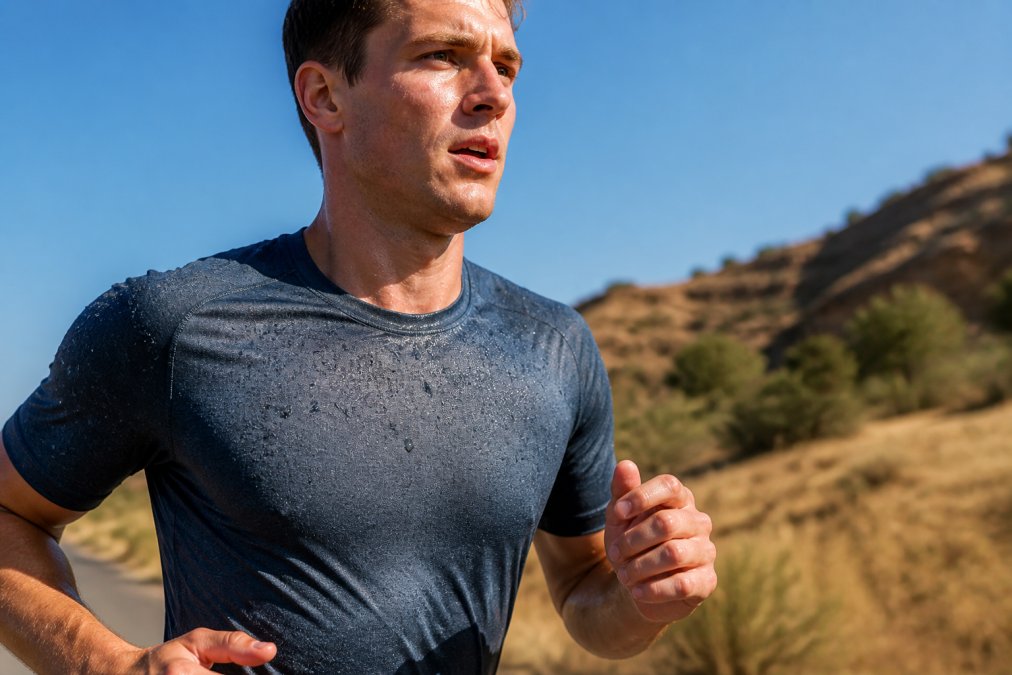
The difference between a basic wicking shirt and an advanced one often comes down to sweat evaporation speed. A quality moisture-wicking fabric dries significantly faster than standard athletic wear, which means you stay comfortable longer. This is especially important on longer runs where moisture management directly affects your performance and recovery.
Benefits of Compression Shirts for Runners
Compression shirts apply sustained pressure to your muscles, which reduces muscle oscillation, the micro-movements your muscles make during running. This constant jiggling increases muscle fatigue and contributes to soreness. By stabilizing your muscles, compression reduces this unwanted movement and helps your muscles work more efficiently.
The support also improves proprioception, which is your body's awareness of where it is in space and how it's moving. Better proprioception means better form, which translates to more efficient running and less wasted energy. Many runners report that compression shirts make them feel more grounded and controlled, especially during high-intensity intervals or speed work.
Blood circulation improvements are another key benefit. The gentle pressure from compression encourages better blood flow to working muscles, which means more oxygen delivery during your run and faster nutrient delivery during recovery. This is why compression is particularly valuable for post-run recovery, wearing a compression shirt after your workout can reduce muscle soreness and speed up the recovery process.
The muscle support also helps with form stability. When your muscles are stabilized, you're less likely to develop compensatory movement patterns that lead to injury. This is especially valuable if you're increasing your mileage or intensity, the extra support gives your body more stability as it adapts to harder training.
Best Moisture Wicking Fabrics for Cardio Training
Polyester remains the gold standard for moisture-wicking performance. It's hydrophobic by nature, meaning water doesn't cling to the fibers. Polyester also dries quickly and maintains its shape through repeated washing, making it ideal for the machine-wash friendly gear that active runners need.
Nylon blends offer similar wicking performance with slightly better elasticity. A polyester-nylon blend gives you the wicking efficiency of polyester with the stretch and recovery of nylon, which is why many high-performance running shirts use this combination. The blend also tends to be more durable than pure polyester when subjected to intense training.
Merino wool is worth mentioning for cooler-weather running. While it's technically a natural fiber, merino has natural moisture-wicking properties and excellent temperature regulation. It won't perform as quickly as synthetic wicking fabrics in warm conditions, but for fall and winter running, merino offers comfort that synthetics sometimes struggle to match.
The fabric weight matters too. Lightweight wicking fabrics (under 4 ounces per square yard) work best for warm-weather running and high-intensity efforts where breathability is critical. Midweight fabrics (4-6 ounces) offer more durability and work well for varied conditions. Heavy fabrics are rarely ideal for running because they retain more moisture and take longer to dry.
Kritter Komfort's approach focuses on breathable, stretch-friendly fabrics that handle intense cardio while maintaining durability through repeated washing. The combination of quality synthetic fibers and thoughtful construction means your gear performs consistently across lifting, running, and everyday wear.
Compression Shirt Recovery Benefits Explained
The recovery benefits of compression extend well beyond your run. When you finish a hard workout, your muscles have accumulated metabolic byproducts like lactate and hydrogen ions. The improved blood circulation from compression helps clear these waste products faster, which reduces the soreness you feel in the days following your run (the NIH).
Wearing compression immediately after your run creates an optimal environment for recovery. The sustained pressure encourages fluid movement out of the muscles and back toward the heart, reducing inflammation. This is why many runners wear compression shirts for 2-4 hours post-workout, the timing matters for maximizing recovery benefits.
The muscle support also reduces delayed-onset muscle soreness (DOMS), that deep ache you feel 24-48 hours after a hard effort. Studies on compression garments show that runners wearing compression after intense workouts report less soreness and faster return to normal function compared to runners without compression (peer-reviewed research).
For back-to-back training days, compression becomes even more valuable. If you're running hard today and again tomorrow, wearing compression between sessions helps your muscles recover faster, so you can perform better in your next workout. This is why serious runners often have compression shirts as part of their recovery routine, not just their training wardrobe.
The psychological benefit shouldn't be overlooked either. Many runners report that wearing compression makes them feel more supported and confident, which can improve mental resilience during tough workouts. That confidence translates to better pacing decisions and more consistent effort.
Choosing the Right Shirt for Your Running Style
Your running style determines which shirt technology serves you best. If you're a distance runner tackling 10+ miles, moisture-wicking becomes your priority because sweat management directly affects your comfort over extended periods. Long runs in warm conditions demand excellent evaporation, and that's where wicking excels.
If you're doing speed work, intervals, tempo runs, or track sessions, compression offers more value. The muscle support helps you maintain form when fatigue sets in, and the reduced muscle oscillation means you can push harder without accumulating as much soreness. High-intensity efforts benefit from the stability compression provides.
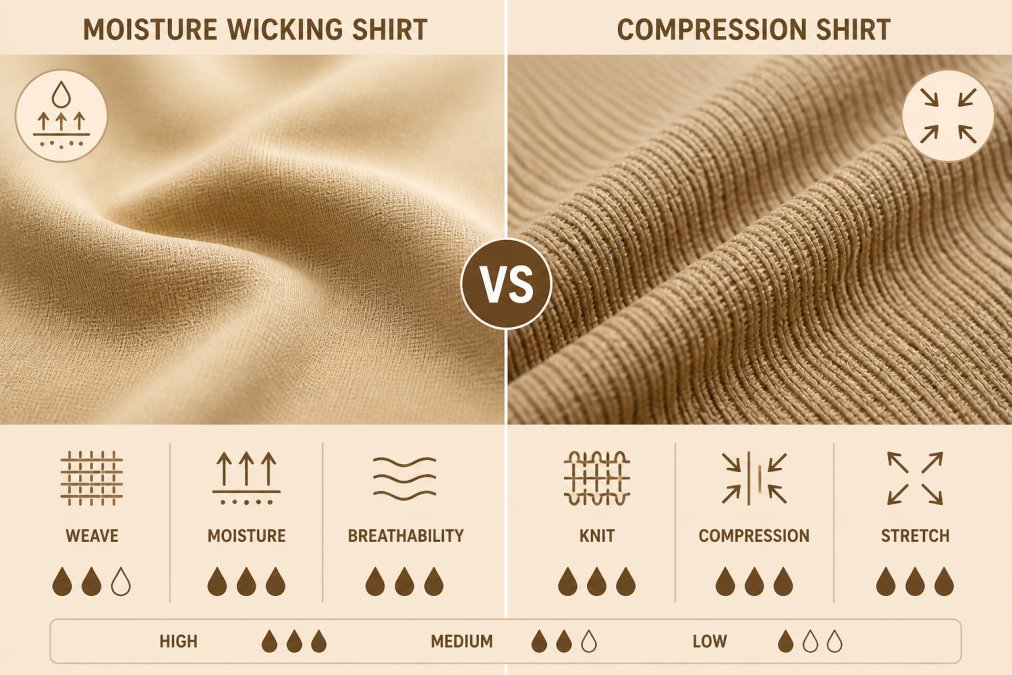
Consider your climate too. Warm-weather runners benefit most from advanced moisture-wicking technology with ventilation zones. Cold-weather runners can prioritize compression and muscle support since sweat management is less critical. Transitional seasons call for layering, a compression base layer under a moisture-wicking outer layer gives you both muscle support and sweat management.
Your body type matters as well. Runners with a broader build or longer torso need shirts with thoughtful ergonomic fit that won't bunch or ride up. Kritter Komfort's athletic cut is true to size, which means you get the right fit without guessing. The durable stitching handles the demands of serious training, whether you're lifting, running, or doing both.
If you're training for a specific goal, match your shirt choice to your training phase. During base-building phases with longer, easier runs, moisture-wicking keeps you comfortable. During peak training with harder efforts and higher intensity, compression supports your performance and recovery.
Many runners find that owning both types serves their training better than choosing just one. A moisture-wicking shirt for easy runs and longer distances, paired with a compression shirt for speed work and recovery, gives you optimal gear for every situation. This approach also extends the life of each shirt since you're not wearing the same one for every run.
Durability and Care: Making Your Gear Last
The durability difference between quality and cheap activewear shows up in the wash. Low-quality compression fabrics lose their elasticity after a few months of regular washing. Quality compression uses high-quality elastic fibers that maintain their stretch through dozens of wash cycles. The same applies to moisture-wicking fabrics, cheap polyester blends pill and deteriorate, while quality synthetic fibers maintain their wicking performance indefinitely.
Machine washing is fine for quality activewear, but technique matters. Wash in cold water to preserve fabric integrity and elastic properties. Hot water breaks down synthetic fibers faster and reduces the effectiveness of compression. Turn your shirts inside out before washing to reduce pilling and friction damage.
Skip the dryer. High heat damages both moisture-wicking and compression fabrics. Air drying preserves the fabric's structure and elastic properties, extending the life of your gear significantly. A shirt that survives the dryer might only last a year, while the same shirt air-dried lasts three years.
Avoid fabric softener and bleach. Fabric softener coats the fibers and reduces wicking efficiency. Bleach breaks down synthetic fibers and elastic materials. Mild detergent and cold water do the job effectively without damaging your gear.
Proper care transforms activewear longevity. Runners who wash correctly and air dry can get 2-3 years of consistent performance from quality shirts. Those who use the dryer and fabric softener often replace their gear annually. The difference isn't the shirt, it's the care.
Kritter Komfort's machine-wash friendly design means you don't need special handling, but following these care guidelines still matters for maximizing durability. Quality stitching and breathable fabrics are built to last, but they perform best when treated with basic care.
Choosing between moisture-wicking and compression shirts comes down to matching the technology to your running goals. Distance runners benefit from advanced moisture-wicking that keeps sweat from pooling on your skin. Speed workers gain performance from compression that reduces muscle fatigue and supports form under high intensity. The best approach often combines both, moisture-wicking for comfortable, efficient long runs and compression for high-intensity efforts and recovery support. Kritter Komfort's breathable, stretch-friendly activewear supports both approaches with durable stitching and athletic cuts that work for serious training. Shop our collection to find the right gear for your running style.
Frequently Asked Questions
Should I wear a compression shirt while running?
Compression shirts work best for runners focused on muscle support and recovery rather than pure sweat management. If you prioritize reducing muscle oscillation and post-run soreness, compression is beneficial. For long-distance runs in warm conditions, moisture-wicking fabrics may feel more comfortable. Many runners use compression for speed work and shorter efforts, then switch to moisture-wicking for easy, longer runs. Your choice depends on your training goals and personal comfort preference.
What are the disadvantages of compression shirts?
Compression shirts can feel restrictive, especially around the chest and shoulders during explosive movements like sprinting or lifting. Some runners find them too warm for hot-weather training. The snug fit may limit freedom of movement for those accustomed to looser athletic wear. Additionally, compression shirts typically cost more than standard moisture-wicking options, and the compression force diminishes over time with repeated washing, reducing their recovery benefits.
Is a compression shirt good for sweating?
Compression shirts manage sweat but aren't primarily designed for it. While many compression fabrics include moisture-wicking properties, their main function is muscle support, not sweat evaporation. If sweat management is your priority, pure moisture-wicking shirts with advanced fabrics like polyester blends or synthetic fibers perform better. Compression shirts work best when you need both sweat control and muscle support, such as during high-intensity interval training or recovery-focused workouts.
Does compression gear actually improve running performance?
Research shows compression gear reduces muscle oscillation and can lower perceived fatigue during and after running. This leads to faster recovery times and may help with proprioception (body awareness). However, direct performance improvements during the run itself are modest. The real benefit appears in recovery: compression reduces post-run muscle soreness and accelerates blood circulation to aid muscle repair. For competitive runners, compression is most valuable as a recovery tool rather than a performance enhancer during the actual run.
This article was written using GrandRanker